Tuesday, 2 June 2020

How Not to Let Cognitive Bias Control Us When Dealing with COVID-19

Why have so many people made so many bad decisions around COVID-19? On the one hand, many ignored the information about the pandemic at first, dismissing its importance. Plenty believed — and some continue to believe — COVID-19 is no worse than the flu and shouldn't be a concern. Others thought the US medical system would easily cope with it, as it did with SARS and other respiratory infections. Many think it will blow over soon, disappearing with the warm weather in the summer. On the other hand, plenty of people have taken aggressive — and unhelpful — actions to address their fears. Many have engaged in panic buying, stocking up on more toilet paper than they can use in a year and getting canned goods that they will never eat. Others turned to hyped-up miracle cures offered by modern-day snake oil salespeople, despite health experts clearly conveying that there's no known treatment or cure for COVID-19. Such poor decision making stem from dangerous judgment errors that cognitive neuroscientists like myself call cognitive biases((American Psychological Association: On the reality of cognitive illusions)). These mental blind spots impact all areas of our life, from health to relationships and even shopping, as a study recently revealed((Top10: New Survey Reveals What Really Drives You to Buy What You Buy)). We need to be wary of cognitive biases in order to survive and thrive during this pandemic.

What Are Cognitive Biases?

A cognitive bias is a result of a combination of our evolutionary background((Wiley Online Library: The Evolution of Cognitive Bias)) and specific structural features in how our brains are wired. Many of these mental blind spots proved beneficial for our survival((Social Cognition: Adaptive Rationality: An Evolutionary Perspective on Cognitive Bias)) in the ancestral savanna environment, when we lived as hunter-gatherers in small tribes. Our ability to survive and reproduce depended on fast instinctive responses much more than reflective analysis. Our primary threat response, which stems from the ancient savanna environment, is the fight-or-flight response. You might have heard of it as the saber-toothed tiger response: our ancestors had to jump at a hundred shadows to get away from a saber-toothed tiger or to fight members of an invading tribe. This lizard brain response proved a great fit for the kind of short-term intense risks we faced as hunter-gatherers. We are the descendants of those who had a great instinctive fight-or-flight response: the rest did not survive. Unfortunately, our natural gut reaction to threats to either fight or flee results in terrible decisions in the modern environment. It’s particularly bad for defending us from major disruptions caused by the slow-moving train wrecks we face in the modern environment, such as the COVID-19 pandemic. Thus, the people who ignored — and continue to ignore — the reality of the dangers from COVID-19 are expressing the flight response. They're fleeing from uncomfortable information, ignoring the reality of the situation. The people who are taking aggressive and unhelpful actions are expressing the fight response: trying to take control of the situation by doing what they can to fight COVID-19. Neither of these very natural responses is the right response, of course. Our natural instincts often lead us in exactly the wrong direction in our modern civilized environment. That's why we need to adopt civilized (and unnatural) behavior habits to ensure we develop mental fitness to make the best decisions. You already take unnatural and civilized steps for the sake of your physical health. In the ancient savanna, it was critical for us to eat as much sugar as possible to survive when we came across honey, apples, or bananas. We are the descendants of those who were strongly triggered by sugar. Right now, our gut reactions still pull us to eat as much sugar as possible, despite the overabundance of sugar in our modern world and the harm caused by eating too many sweets. Just like you take proactive steps to go against your intuition to protect your physical health, you need to go against your intuitions and adopt civilized decision-making habits to protect yourself from COVID-19 and so many other modern-day problems that didn't exist in the ancestral savanna.

The Most Relevant Cognitive Biases for COVID-19

More specifically, you need to watch out for three cognitive biases.

The Normalcy Bias

The normalcy bias((American Journal of Community Psychology: The continuity principle: A unified approach to disaster and trauma)) refers to the fact that our intuitions cause us to feel that the future, at least in the short and medium term of the next couple of years, will function in roughly the same way as the past: normally. That was a safe assumption in the savanna environment, but not today, when the world is changing at an increasingly rapid pace. This bias leads us to fail to prepare nearly as well as they should for the likelihood and effects of major disruptions, especially slow-moving train wrecks such as pandemics. As a result, we tend to vastly underestimate both the possibility and impact of a disaster striking us. Moreover, in the midst of the event itself, people react much more slowly than they ideally should, getting stuck in the mode of gathering information instead of deciding and acting. While the normalcy bias is the most harmful cognitive bias from which we suffer in the face of the pandemic, it’s far from the only one. In fact, a number of other cognitive biases combined with normalcy bias lead to bad decisions about the pandemic.

The Attentional Bias

One of these, attentional bias, refers to our tendency to pay attention to information that we find most emotionally engaging, and to ignore information that we don’t((Anxiety, Stress & Coping: Attentional bias for words and faces in social anxiety)). Given the intense, in-the-moment nature of threats and opportunities in the ancestral savanna, this bias is understandable. Yet, in the modern environment, sometimes information that doesn’t feel emotionally salient is actually really important. For example, the fact that the novel coronavirus originated in Wuhan, China, and caused massive sickness and deaths there didn’t draw much attention as a salient potential threat among Europeans and Americans. It proved too easy to dismiss the importance of the outbreak in Wuhan due to stereotypical and inaccurate visions of the Chinese heartland as full of backwoods peasants. In reality, Wuhan is a global metropolis. The largest city in central China, it has over 11 million people and produced over $22.5 billion in 2018. It has a good healthcare system, strengthened substantially by China after the SARS pandemic. A major travel hub, Wuhan’s nickname is “the Chicago of China”; it had over 500 international flights per day before the outbreak. If we assume an average of 250 people per plane, that’s 10,000 people a day flying out of Wuhan. Europeans and Americans, with the exception of a small number of experts, failed to perceive the threat to themselves from the breakdown of Wuhan’s solid healthcare system as it became overwhelmed by COVID-19. They arrogantly assumed this breakdown pointed to the backwardness of central China, rather than the accurate perception that any modern medical system would become overwhelmed in the face of the novel coronavirus. In the savanna environment, our ancestors had to live in and for the moment since they couldn’t effectively invest resources to improve their future states (it’s not like they could freeze the meat of the mammoths they killed). Right now, we have many ways of investing into our future lives, such as saving money in banks. Yet our instincts always drive us to orient toward short-term rewards and sacrifice our long-term future, a mental blind spot called hyperbolic discounting((American Psychological Association: Hyperbolic discounting)). This helps explain why so many people are not focusing sufficiently on the long-term impact of the pandemic. Many are rushing to "get back to normal," failing to realize that doing so will leave them very vulnerable both to COVID-19 and the disruptions accompanying the impact of the pandemic.

The Planning Fallacy

We tend to feel optimistic about our plans: we made them, and therefore the plans must be good, right? We intuitive feel that our plans will go accordingly, failing to prepare adequately enough for threats and risks. As a result, our initial plans often don’t work out. We either fail to accomplish our goals or require much more time, money, and other resources to get where we wanted to go originally, a cognitive bias known as the planning fallacy((Advances in Experimental Social Psychology: Chapter One - The Planning Fallacy: Cognitive, Motivational, and Social Origins)). Moreover, we don't pivot quickly enough when external events require us to change our plans. Thus, the vast majority of us were unprepared for a major disruption like COVID-19. Moreover, a great many people tried to go ahead with their plans when they should have pivoted, such as holding weddings, going on vacations, and so on.

Addressing Cognitive Bias

To address these cognitive biases in relation to the pandemic, you have to adopt a realistic and even pessimistic perspective. We have no way of coping with the pandemic save a combination of shutdowns and social distancing. We will see wave-like periods((NPR: Is There A Long-Term Strategy For Overcoming The COVID-19 Pandemic?)) of tight restrictions that result in less cases, then loosened restrictions with spikes of cases, and then again tightened restrictions. Such waves will last until we find an effective vaccine and vaccinate at least the most vulnerable demographics, which in the most optimistic scenario will not be until late 2021. If things don’t go perfectly, it might be more like 2023 or 2024: that’s the moderate scenario. In more pessimistic scenarios, we might not have an effective vaccine until 2027 or even later. Does that feel unreal to you? That’s the cognitive biases talking. We still don’t have an effective vaccine for the flu, as our current version is only about 50% effective in preventing infections. Ray Dalio, who leads Bridgewater Associates and manages over $150 billion in investor assets, said early in the pandemic : “As with investing, I hope that you will imagine the worst-case scenario and protect yourself against it”((CDC: Vaccine Effectiveness: How Well Do the Flu Vaccines Work?)). So what would it mean for you if you plan for the worst while, of course, hoping for the best?

The Bottom Line

You need to pivot for the long term by revising your plans((Disaster Avoidance Experts: 10 Steps for Strategic Planning to Defend Your Future)) in a way that accounts for the cognitive bias associated with COVID-19. By doing so, you’ll protect yourself and those you care about from our deeply inadequate gut reactions in the face of such slow-moving train wrecks.

More Tips on Overcoming Cognitive Bias


10 Best Home Office Work Desks You Can Afford

If you work from home often, you need to set up a functional work area or home office to provide the needed concentration that will boost your productivity when you work. The office also has to be conducive and convenient for work, and this is why it should be equipped with proper ventilation, lighting, and, of course, suitable furniture, including a nice work desk. When it comes to the choice of home office work desk, there are things to consider such as the amount of space you have, your home decor and settings, as well as your budget. Below are some of the best home office work desks that are within budget range and are suitable for different kinds of home settings and work requirements.

Why You Should Trust Us

We checked Amazon to find suitable, affordable, and comfortable work desks you can use in your home office. We selected the ones with good features and those that have received reviews and ratings not less than 4-Star from real users. We believe the items that made this list are the best home office work desks you can get on Amazon for their price.

Important Things to Note

Before you dive into the list, kindly note that when making your purchase, check with the supplier to make sure you are getting the complete package. Some buyers have complained that some parts were missing on delivery. Also, make sure you take the time to read the product’s manual before you begin to assemble. It would save you time and frustration that come with trying to figure things out yourself.

Best Affordable Home Office Work Desks

Any one of these 10 work desks would be a great addition to your home office. First, consider what your ultimate goal is for your office, what kind of style you lean towards, and how much space is available to you. Then, peruse these options to find the perfect desk for you.

1. CubiCubi Computer Desk 32" - $84.99

4.6-Star, 300 Ratings This is a simple style PC desk that combines an industrial vintage surface with features fitting for a home setting. It is made of a metal frame, triangular strut design, and adjustable leg pads for stability. All can be easily assembled in a matter of minutes. It measures 32" on the surface, 19.7" on the side, and the height is 29". It has a large enough space to work and can take up to a max load of 220 lbs. As a bonus, it has an iron hook to hang your stuff, such as those headphones you're using for all the video meetings these days. It also has a storage bag on its side—a great space to organize your books, magazines, and notes. Pros
  • Simple style
  • Sturdy design
  • Easy to assemble
  • Doesn’t take up much space
  • Suitable for study and work on the computer
  • Price is competitive
Cons
  • Desk surface not smooth enough for writing
  • Some customers complained of missing parts during assembly
Get the desk here!

2. Ameriwood Home Dakota L-Shaped Desk with Bookshelves - $121.13

4.0-Star, 7045 Ratings This is a work desk that comes with wood grain laminated particleboard and an MDF surface. The surface is large enough for your monitor or laptop. It also has two open shelves on its side to place your books, binders, and other stationery. The L-shape of the desk makes it fit perfectly in a corner to save space. It also has two grommets built into the desk for cord management. Pros
  • Easy to set up
  • Plenty of legroom
  • Enough space for other things to be placed on it
  • L-shaped
  • A good amount of workspace
  • Two-pen shelves
Cons
  • The spray smell of the table might stick around a while
  • Unwiped liquid such as alcohol might damage its surface
  • The top of the desk is narrow
Get the desk here! 

3. Mr. IRONSTONE L-Shaped Computer Corner Desk - $129.99

4.3-Star, 22 Ratings This is both a work desk and a gaming desk with a large desktop space and legroom. Both sides of the desk are of the same length, and the sides can be easily switched depending on what makes you most comfortable. It is sturdy and has adjustable leveling footpads to keep the desk stable when it's on an uneven floor. The L-shape also helps to maximize your space. If you use multiple monitors for work or games, this work desk will be a great choice for you as it can support two to three monitors at once. You can place your monitor, laptop, and game devices on the table without worrying that it will warp or sag. Pros
  • Easy to set up and looks great
  • It has a lot of legroom
  • Designed for efficient use of top space
  • Anti-scratch, anti-skidding
Cons
  • Some delivered items might be missing parts
Get the desk here! 

4. SHW L-Shaped Home Office Wood Corner Desk - $138.87

4.2-Star, 2266 Ratings This L-shaped computer desk is made of Espresso wood grain laminated particleboard. It has plenty of space for your gadgets and sufficient legroom for when you want to stretch out while you work. It also has two open shelves for your books and other items. You can convert this to something else by choosing not to install the middle shelf if you have other use for that space. Pros
  • Sturdy
  • Easy to set up
Cons
  • It can't support much weight
  • The cable holes are not well placed
Get the desk here!

5. Walker Edison Modern Corner L-Shaped Glass Workstation - $153.30

4.4-Star, 6255 Ratings This is a glass L-shaped PC, writing, and gaming work desk for use at home. It can accommodate multiple monitors and includes a universal CPU stand. The work desk is large enough to work, and it is easy to modify to suit your needs. Pros
  • Modern design
  • Sleek and very professional
  • Easy to set up
  • It is sturdy even though it has thin limbs and supports
  • Each screw has a pair in case of defects
  • Universal CPU stand
Cons
  • No features for cable management
  • Doesn't have an option for shelf or drawer
  • The keyboard tray is tiny and may not accommodate the keyboard and mouse together
Get the desk here!

6. Zinus Tresa Computer Desk / Workstation - $159.99

4.7-Star, 203 Ratings This is a simple computer desk with a Rich Espresso finished surface area. It has a monitor stand that can be placed on any part of the table. Its frame and leg support are made of strong steel. This makes the table is very sturdy. It can conveniently seat dual monitors, has a decent tray for holding your pens and writing pad, and comes with a clamp at the back for cable management. The desk can allow up to 300 lbs of weight. Space and holding capacity are dependent on which one you choose: small, large, or medium. Pros
  • Excellent packaging
  • Easy to set up
  • Smooth surface finish; no grain feel
  • Steel frame with leg support
  • Wide legroom
Cons
  • The monitor stand is not strong, but the tabletop itself is
  • The surface finish may cause keyboard to shift when typing or gaming.
Get the desk here! 

7. VIVO Black Height Adjustable Stand-up Desk Converter - $179.95

4.6-Star, 1364 Ratings The VIVO work desk passes as a dynamic tabletop work desk with its adjustable height and sit-to-stand tabletop. It has a large enough surface to take single and dual monitor/laptop setups. Change from sitting to standing in one swoop with its dual gas spring force, while the keyboard tray moves in sync with the tabletop. This guarantees that you won't have to sit all day while working. Your tabletop work desk can be adjusted from a height as low as 6" up to 17". This means you can comfortably sit or stand to work. Pros
  • Sturdy and stable, not shaky when typing
  • Very easy to assemble
  • Comes with a 3-year warranty
Cons
  • Might be too high for your neck if you only want to sit all-day
  • Might not be suitable for gaming
Get the desk here!

8. Monarch Specialties Computer Desk with Drawers - $218.56

4.2-star, 198 Ratings This is a cappuccino desk with durable construction and modern design of top grade, thick-paneled composition. The 60-inch long tabletop is large enough to accommodate a laptop, printer, writing material, and other essentials that need to be on your table. It also has multiple drawers and an open space, which can be set up either on the right side or on the left for your convenience. Pros
  • Contemporary design
  • Large enough workspace
  • Desktop with a large workspace
  • Has drawers and file cabinet
Cons
  • Hard to assemble
  • The installation instructions are not easy to read
Get the desk here! 

9. Stand Steady Tranzendesk 55 Inch Standing Desk - $299

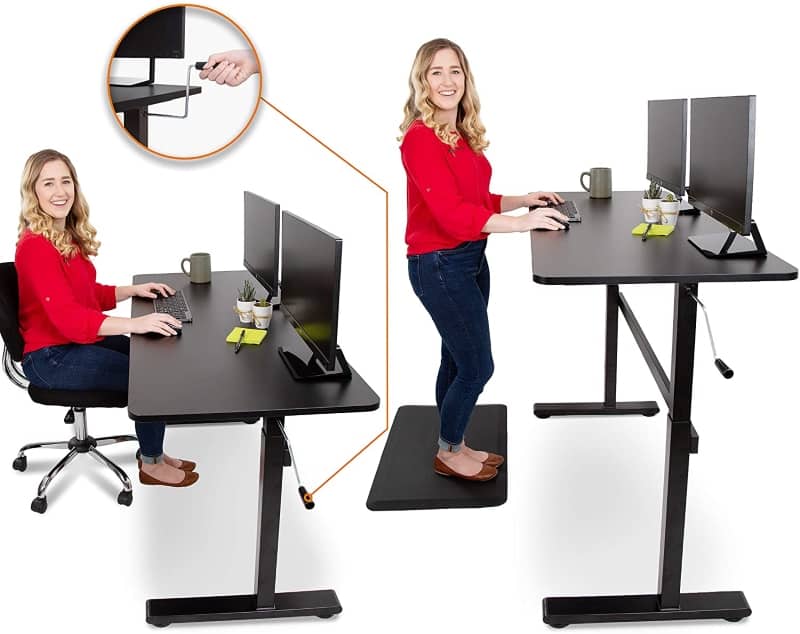
4.4-Star, 97 Ratings This is a health-compliant table with a sitting or standing arrangement. It has a height adjusting crank to go high or low anytime. This crank can attach to either side of the table, so you can put it wherever is convenient for you. It also has plenty of legroom to free your legs. It is sturdy and stable. Its leveling feet and strong steel base keep the desk firm as you work or adjust the height. It can also support up to 70lbs, so you can use it for a double monitor set up. Pros
  • Sturdy
  • Large workspace
  • Easy height adjustment for sitting or standing
  • Spacious top
  • Sturdy design
Cons
  • Some parts may be damaged when shipping
Get the desk here! 

10. Teraves Reversible L-Shaped Corner Computer Desk - $255.99

4.6-Star, 196 Ratings This is a reversible L-shaped work desk with open shelves for your gadgets and magazines. It has two workspaces that can take up to 450 lbs of weight. At its corner, the desk can hold up to 110lbs. It also has a monitor-mount hole to tightly secure your monitor and a dedicated CPU stand. The desk is sturdy, and the surface is made of P2 class particle board with a perfect edge and thicker steel frame for strength and durability. Underneath, it has an adjustable leg pad to keep the desk balanced, especially when placed on an uneven floor or carpet. Pros
  • Looks beautiful and well-structured
  • Reversible, spacious workspace
  • Easy to assemble
  • Sturdy and stable
Cons
  • The tabletop is not perfectly smooth for writing on a sheet but will work if you put another sheet under
  • Assembly might be a little difficult
Get the desk here!

The Bottom Line

When you’ve finally made a decision to place an order for your work desk, check for available varieties in terms of colors and sizes. Some prices may be higher or lower depending on the size you finally choose. There are also some products with optional components that you can also purchase to enhance your convenience when working. Remember, your ultimate goal is to feel comfortable and productive in your workspace, so choose a desk that will lend you a hand in getting there.

More Tips on Creating a Home Office


6 Delegation Examples that you can Follow

As useful as delegation is, this idea isn’t the easiest to fully understand. But to become a successful leader, you must be able to delegate effectively. If you’re confused about how to apply delegation in your work environment, you should look at some examples. The best way to understand this idea is to observe a real-life scenario. So, if you have access to another department in your organization or another organization that implements delegation, be sure to check them out. If not, the following delegation examples will give you as close as possible of an idea to real-life situations. Go through these examples to clarify your confusion so that you can implement delegation in the best form!

1. Developing Strategies

Strategies are an important part of every business. No matter what the niche of the project is, smart strategies are vital.((Chartered Management Institute: Developing Strategy)) With that being said, it is not a piece of cake to design successful strategies. It is a process of extensive research, analysis, and creativity. Meanwhile, you also have to keep in mind the vision of the organization and the allocated budget. If your project is on designing marketing strategies, it isn’t as simple as forwarding the task to the advertising department of your organization. For a campaign, you will have to delegate to extreme ends. Firstly, you have to come up with an advertising motive. Do you want more sales or do you want only aim to build your brand image? An advertising executive will do the research in this regard to figure out what your organization needs the most. With this information in mind, a copywriter will come up with taglines, scripts, jingles, and other written content. What will go on the screen, what is written as a social media caption, what is spoken, etc. are all this person’s job. Another subordinate will be a person with good contacts - somebody who can work as a lobbyist. This person will approach media platforms, influencers, and other relevant third parties to negotiate deals. Similarly, you also have to delegate to someone the designing of the visuals. Billboards, social media posters, video advertisements, and all other forms require a photographer, graphic designer, editor, and illustrator. You can either get one person to do the job or, if possible, delegate to individual experts. With all these people, a budget expert will have to work along. This person will make sure that the allocated resources are used effectively. Simultaneously, you or a PR manager will keep checking in to confirm that none of the elements go against ethics, violate the organization’s vision, or cause a backlash.

2. Full Delegation

Repetitive and recurring jobs in an organization are fully delegated. What this means is that the leader adopts level 5 delegation. At this level, once the task is delegated, the subordinates are not required to come back regularly to get their progress checked. The leaders have minimal interference whereas the subordinates are given maximum authority.((Inc: The 5 Levels of Delegation You Need to Know to Lead Well)) In a scenario like this one, effective delegation every step of the way is extremely important to ensure a good result. So, if your organization sells a particular product, it is highly likely that you conduct market surveys quite often. These surveys give you an insight into what’s going on in the heads of the consumer. These surveys also let you know whether the consumers are happy with the product or if they expect more. Similarly, such surveys are also great sources for figuring out the best marketing methods. You ask consumers where they found out about you and this way, you know where to allocate most of the budget in the next marketing campaign. Let’s assume that you’ve been conducting research this way for many years now. So, it is safe for you to let a research team do another survey. You communicate that your goal is to find out how to improve the product and the deadline for the task is 2 weeks. They can design the survey questions, choose the platform, and collect information their own way. After 2 weeks, the team will come to your office with the final results.

3. Delegating Half of a Task

Generally, it is a major no-no to delegate half a task. So let’s first clarify what this means. Most jobs have various aspects. As an example, consider a certain project that requires mathematical skills as well as technological expertise. If these two aspects are so closely related that they overlap, delegation is useless. In a scenario like this, it is required that the output from both the mathematical and technological work is coherent and similar. That isn’t quite possible with delegation. On the other hand, some projects are extensive. Such jobs can be easily divided into parts that aren’t co-related or can be easily fulfilled separately. Delegating a part of such tasks while keeping the rest for yourself is totally okay. A delegation example of half a task is when hiring new employees. Your organization posted about a free vacancy online, and thousands of people responded with their CVs. You as a leader or manager just don’t have the time to go through each one but at the same time, you want to look through all the options. You delegate the job of looking through CVs to shortlist them to a few senior employees. You communicate the shortlisting factors and qualities so that the subordinates select the right people. Usually, important decisions like hiring new personnel should never be delegated to maintain honesty and fairness. However, in cases when you are overloaded with work or when it is too time-consuming, you can delegate half of it. Some steps you can take to ensure a fair output is to hide out the names on the CVs. This will give you the peace of mind that the subordinates will only shortlist applicants based on their skills and experience. Most importantly, the final decision still remains in your hand. So, you’re not losing any authority at all.

4. Outdoor Delegation

Managers and leaders generally do not have the time to take care of work things outside of the office. This is where outdoor delegation comes to the rescue. This delegation example is most useful in the case of collaborations. If you’re planning on working side by side with another company, use delegation to its full potential. Most of the initial discussions can be done through email so you can communicate your agenda first hand. But when the other party wants to meet regularly for check-ins on the project, send your best negotiators. They can discuss all the details of the project - the reasoning behind each element suggested changes, etc. You can receive the brief with the details of the discussion to make the final decision without having to spend hours and hours on the commute and in meetings.

5. Intervention

This delegation example is the complete opposite of full delegation. For when you’re short on time but the task at hand is highly important, intervention is the way to go. It is level 1 delegation where the subordinates do the work but you can check in now and then to keep them on the track you want. It is also most useful with new employees who aren’t as skilled or experienced yet. You can use intervention when designing a new product. Ask your creative designer to come up with ideas and meet you every week to get approvals. This way you’re not risking a whole lot of time wasted on designing something you might not even like. At the same time, you haven’t taken on the full responsibility of sitting down with the creative designer to produce what you want.

6. Creative Delegation

Projects that require innovation should always be delegated. The simple logic behind it is that when more people are involved, there is a higher chance of coming up with something unique since it is a mixture of every individual’s thought process. In case a manager wants to plan an office party for the 25th anniversary of the organization, it can be done in two ways. Either the manager can make the entire plan and ask everyone else to execute it, or the manager can ask everyone to pitch in their ideas. Both these are forms of creative delegation. However, the level of authority varies. This allows you to decide depending on the environment of your office and the nature of the project.

Final Thoughts

The bottom line is that delegation is no rocket science, But at the same time, you have to follow some technicalities to ensure success. These delegation examples may not fit in your work-life exactly. Try to find similarities and improvise the rest. It is totally up to you to get creative with how you delegate as long as it’s working for you. So, put these examples to use in your real-life from today to make your life as a management leader way easier!

More Tips on Delegation


Monday, 1 June 2020

How to Cure Depression (Professional Advice from a Therapist)

Did you know that most people on anti-depressants are depressed again a year later? And between 2005 and 2015, the number of people living with depression worldwide increased by a staggering 18.4%((World Health Organization: Depression and Other Common Mental Disorders)). Even though people are taking more antidepressants than ever, depression is still increasing. It's paradoxical to think that the estimated 264 million people in the world living with depression are actually together in feeling alone and hopeless((Do Something: 11 Facts About Depression)). What the pharmaceutical companies seem to make consumers think is that antidepressants cure a chemical imbalance in their brains. But if that were true, why aren't we seeing depression disappear? That's not to say antidepressants don't reduce the impact of symptoms and act as a bridge to effectively address the underlying problems, but relying on them to "cure" depression is not the answer. We know this. So how to cure depression? Johann Hari, a journalist and author challenging what we know about mental health, poses that depression and anxiety arise because our basic needs aren’t being met. He challenges the chemical imbalance argument and argues that masking the symptoms is not the way to cure it. Overcoming depression starts by understanding that it's not just a diagnosis but a signal that something bigger needs attention, that something is missing or off-balance. And just as we would do for a car or a computer, we need to look inside to find out what's causing that flashing red light.

What Causes Depression?

Before we dive in, it's crucial that you know these three things first if you're suffering from depression:
  1. You're not broken.
  2. You can overcome it.
  3.  It's probably a natural reaction to the environment you're in and/or to the events that you've been through in your life.
It could be that you're in an environment that is lacking basic needs such as connection, meaning, and passion, or that you're holding irrational negative beliefs about yourself based on childhood or traumatic experiences, but one thing is for sure: whatever you're feeling is real((The Permanente Journal: Lost Connections: Uncovering the Real Causes of Depression—and the Unexpected Solutions)). Whilst this article is not an exhaustive attempt to address all possible causes, we'll talk about some of the most common causes of depression, namely the lack of meaningful connections and the negative beliefs that we hold from our past.  

A Lack of Meaningful Connections

One of the most basic human needs is the primal need to feel connected, to be a part of something. Our ancestral hunter-gatherers needed to be connected as part of a tribe in order to survive. Being rejected meant being exposed to the predators looking for weaklings, people who were alone and vulnerable. Yes, times have changed, and we're no longer expecting to be eaten alive in the middle of a city, but we still have that same need for a tribe, to have connection. The great irony is that we're more able now to "connect" to humans all over the world, but we're also lonelier than ever. We're not getting as many real, meaningful connections. The predators we face now are inside our own heads when we're sitting alone in our flat feeling hopeless, sad, or (worst of all) feeling nothing. The predator is the belief that death is a way out, a way to ease the nothingness. This is just one cause, but it's a big one. This isn't about just talking to or being in the presence of others. You can feel alone in a crowd, and you can feel alone in a marriage. It's not the physical aspect but the other bit that we get when we form a tribe: the meaning and satisfaction we feel when we share things with others. When we contribute some part of ourselves and improve some part of someone's something, that's when we feel a real connection. In the working environments we’ve created for ourselves, people are working long hours with little to no connection or fulfillment. Our ancestors never had to deal with this type of environment, and it's something which we need to be acutely aware of so that we can recognize and respond to the signals when we see them. Professor Caccioppo, previously a psychologist at the University of Chicago and an expert in loneliness stated that:
"The purpose of loneliness is like the purpose of hunger. Hunger takes care of your physical body. Loneliness takes care of your social body, which you also need to survive and prosper. We're a social species."((The Atlantic: How Loneliness Begets Loneliness))
We need these feelings to tell us something is off-balance. Feeling lonely and disconnected means you're not getting enough of the human connection you need, so you need to change your approach. But if you don't know that these feelings are signals, and you don't take the right approach, it's easy to just give up and say "I’ll never be able to solve this, I’m useless.” Your subconscious mind believes the things you tell it, and if you're telling it just how worthless you are, how useless and how unlovable you are, then there's no wonder you're feeling worthless, useless, and unlovable. This is another cause of depression: the scripts we tell ourselves.

Your Childhood Scripts

"I've always lived with depression, it's just the way I am." Believing that you're stuck or that you were born with depression is a major block stopping you from overcoming depression. If you're replaying the same negative scripts over and over, scripts you've written for yourself and scripts that others have written for you, then it's not surprising that your head isn't an easy place in which to live. Not feeling like you're enough. Not feeling like you deserve to be happy. Feeling like you're a lost cause. All of these types of beliefs are things learned over the course of a life, most likely when you were young. Your logical mind didn't develop until your early teens, so when someone told you that you weren't good enough or made you feel alone, different or weird, then your emotional brain took that to be the truth about you. But sometimes as adults, we need to revisit the stuff we let in when we were kids because it's almost always irrational and illogical. It's absolutely not your fault that you have them, but it is your responsibility to find and remove them. A client of mine believed that he couldn't change because it was the way he'd always been. When we overcame that belief, the next one was that he didn't believe that what he did was ever good enough. He tried to fit into a career that he thought he needed to, and when he couldn't face it anymore, he told himself he just wasn't good enough. He didn't contemplate that he was just trying to be someone that he wasn't and that there were things at which he was amazingly talented. But the shift happened when he started seeing that depression was just a sign for him to keep searching to find his passions, not to settle for a career he hated and to make peace with the relationship he had with his father. This is something all of us need to work on, and often it's easier with a therapist who specializes in the subconscious mind (as that's where it's all stored), but ultimately you can do this on your own with some real introspection.

How to Cure Depression

By now you're no doubt aware that there's no miracle "cure" to depression, but hopefully you can see that depression is a very real and often understandable response to things you've been through or things (or lack of) in your environment. It's not a matter of just "getting support" or "finding more friends"; that won't solve it, and it's not really what you need. Here are some things that will help:

1. Change Your Scripts

Overcoming depression starts by understanding how your brain works and how other people's brains work. When you know that your pain has a purpose, that it's a method of self-preservation, then you can start being aware of what it's causing you to do and think. When you are aware, you can then change it and rewire it. For more ways to shift your mindset and rewire your scripts, check out some tips here.

2. Build Meaning and Connection

Building meaningful connections with others will be easier by working on your emotional intelligence and communication skills. Understanding how to read people's facial expressions, voice, and body language, and focusing on what that person is saying and feeling will help you develop these. You'll be able to get control over your self-preservation instincts causing you to feel threatened, and you can see people in a different light. When others feel heard, they're going to want to hear from you. And if you actually open up, you might find that they feel the same or that you can show them a new perspective.

3. Do Selfless Acts

It has also been shown that we find meaning when doing something for others, doing something where you show human kindness and make a difference to someone. Start by passing on something helpful, or being there for someone, even if it feels really hard. When you step up and show someone you care, or when you open up about your struggles and be vulnerable, someone who needs it (be it in your office, at a homeless shelter, or just a friend) you'll be amazed at how good it feels. It's small, incremental changes here that really help.

Final Thoughts

Depression is really signalling you to stop and take stock of what's happening around you or what you've left unresolved from your past. Just know that you can work on it, that you can find out what ignites your fire and passion, and what makes you feel like you. Above all else, know that it's all figureoutable and that you're going to be fine.

More Tips on Dealing With Depression


Not Making Progress? 3 Ways to Get Moving Again

The best things in life never come easily. And it’s discouraging to work on a personal or career goal for a long time without seeming to get closer to the desired outcome. My work requires me to stay on top of things 24/7. It seems like I’ve had things figured out since day one, but that is far from the truth. More often than not, I spend my day reading online articles, watching YouTube videos, and doing everything except the things I need to get done. Sound familiar? Everyone has days like this. With time, it’s easy to feel like you’re not making progress — losing track of the big picture and your ultimate vision, being busy without meaningful results to show, and feeling overwhelmed and distracted all the time. After studying a number of research articles and experimenting with a long list of life hacks, here are three ways to get moving again if you’re feeling stuck and not making progress.

Extrinsic Motivation Vs Intrinsic Motivation

First, it's important to understand motivation as that is often what drives us forward (or what we're lacking). Most people feel stuck when they lose motivation. When that happens, you start to feel uncertain of your vision and goals. It’s easy to start doubting yourself and wondering if your goals are even achievable. Some might even take it personally and start seeing themselves as less than what they’re capable of. Without motivation, it’s challenging for you to charge forward, let alone to get moving again when you feel that enormous stress and resistance upon you. But when people talk about motivation, they think about external rewards, like more money and greater pleasures to push themselves forward. Extrinsic motivation doesn’t last. Instead, you need to cultivate intrinsic motivation if you want to make progress again. The big question is: How do you do that?

How to Start Making Progress

Getting stuck is normal. Some people feel stuck for a day, a week, or months, but we can always start marking progress again with a few tweaks to our routine. Try the following tips to get yourself motivated and moving forward.

1. Reconnect With Your Why

David Goggins is a retired Navy SEAL, an extreme endurance athlete, and now a successful author of the book Can’t Hurt Me((David Goggins: Can't Hurt Me)). He came from a tough background of poverty, domestic violence, learning challenges, and obesity issues. However, he then moved on to complete not one but two Hell Weeks — the toughest military training in the world — and finish multiple ultra marathons and ultra triathlons. To him, we all have limitless potential, and all of that is in our minds. When asked how he was able to become mentally tough and pull off those unbelievable feats, it came down to a simple question he asks himself: “Why am I doing this?” When the pain was too much to handle during the SEAL Hell Week or the 100-mile ultra marathon where his mind and body were telling him to give up, all he did was ask: “Why am I doing this?” It wasn’t easy. For most people, the why question might lead to the answer of giving up. But if it’s something that matters to you, there will always be a strong, fundamental reason that makes giving up not an option. Some examples of times when you may need to ask "why" include:
  • When you’re having trouble getting your client’s work done.
  • When you’re not making progress at your business.
  • When things get difficult in your relationship.
You don’t get into these career and personal goals for no reason. You commit yourself to them because there’s something bigger than your needs of instant gratification, your fears, and probably yourself. It’s crucial for you to reconnect with the why when things look less optimistic than you want them to be.

2. Create a Sense of Control

In 1998, Professor Carol Dweck from Columbia University and her student, Claudia Mueller, presented two groups of fifth graders with a simple test to carry out a study on how a compliment affects a student’s performance((The New York Times: Praise Children for Effort, Not Intelligence, Study Says)). After the test, both groups of students were told that they had scored well. The variants were what came after that. They acknowledged the first group of students for their intelligence: “You’ve done very well. You must be smart.” They then praised the second group of students for their effort: “You’ve done very well. You must have worked hard on these problems.” The key difference between intelligence and effort is the locus of control. Intelligence, to most people, comes naturally and falls under something outside of our control. On the flip side, hard work is considered as the internal locus of control because it’s something we choose to do. After that, they gave both groups of students a different test that was so hard that only a few students were able to solve it. But the interesting finding was not how well the students scored on the test, but how they responded to the challenge. Professor Dweck found that the first group of students who were praised for their intelligence spent less time trying to solve the harder test. The second group of students, who were praised for their effort, were more willing to invest time in solving it. The research demonstrates how different types of praise affects our performance, but more importantly, how having the external or internal locus of control affects our motivation to keep going when things get tough. In simpler terms, in order to get motivated, you need to feel that you’re in control of your current situation. Instead of staying in the state of helplessness when you feel stuck, do something — anything, however small it is — to regain the sense of control. It could be:
  • Feeling stuck with your fitness goal and don’t feel like working out? Stop overthinking and go do one single push-up.
  • Too many emails to reply to and not sure where to start? Type a five-word sentence to every reply you need to make, save it, and go back to them later.
  • Not getting new clients or sales for your business? Reach out to help someone with tips for free.
Remember, one small obstacle is never the thing that ruins your life. It’s the inaction that lets obstacles and setbacks stack on top of each other. Making progress isn’t about doing something perfectly, it’s about taking back the control and moving forward one step at a time.

3. Focus on Tiny Actions

Four years ago, I attended a Tony Robbins event. He said, “In order to change your life, you need to take massive action, massive action, massive action!” Yes, Tony repeated “massive action” three times. I disagreed with that. You see, every action we take requires effort and energy. Talking about massive action might make you sound smarter in conversations, but it’s not as practical as it seems in real life. The bigger the action is, the higher the resistance pulling us away from getting started, staying focused, and being consistent. Instead of focusing on massive action, try starting small if you want to start making progress again. Here's why:
  • Tiny action takes less willpower — most of the time, it takes little to no effort and energy. It means you can get started and stay consistent easily.
  • Tiny tilt in degrees (in any area: mindset, habits, vocabulary, etc.) can lead to monumental differences in trajectory.
  • The compounding effect of consistent, small action will eventually get you where you want to be.
We can also see massive action as a combination of many small actions — often, it means nothing without unpacking it. For example, big goals like “I want to lose weight,” “I want to become an author,” or “I want to start a successful business,” don't mean much without the steps to get there. Clearly, these goals are massive plans made up one step at a time. The solution is to break them down into smaller, manageable chunks of tiny actions. It may seem insignificant at first until they add up into something so big that it changes your life completely.

How I Did It

To give you a real-life example, I got stuck writing this guest post. I received an email from LifeHack about the topic, spent hours researching and outlining it, and then got stuck at making it flow. Weeks passed, and I was far from making any meaningful progress. One day I spent the time going through my personal blog — full of articles on motivation, psychology, and productivity — as an escape to writing this blog post. And then it struck me that I’ve learned how to get out from the rut all along. So here’s what I did:
  • Reconnect with my why. Why am I writing this guest post? Or better yet, why am I even writing? My vision is to build a successful blog and become an author — and writing is what I do.
  • Create a sense of control. To regain the sense of control, I scrapped the original outline and started dumping words onto the Google Doc. With words on the paper, my confidence and motivation to complete this guest post increased significantly.
  • Focus on tiny action. Instead of thinking about completing the entire article at one-go, I commited to 30 minutes of writing per day. I spent these daily sessions to edit and re-edit what I had from my brain-dumping session.
And that’s how I got what you’ve been reading here.. In fact, this doesn't only apply to smaller projects like writing a blog post. You can implement the same principles on improving your health, career, and relationships whenever you feel stuck.

Final Thoughts

Often, it’s not that you’re not making progress. We’re wired for instant gratification, so it’s usually hard for us to see things over the long run. That’s also why investors fail to invest for the long-term and people don’t give themselves enough time to succeed. If you’ve been focusing on becoming better every day, it’s inevitable that you’re making some kind of progress in one way or another. Unfortunately, you just don’t realize it. The solution is simple: keep track of every small win and celebrate it. The best way to do this is to keep a daily journal and review what you’ve done and accomplished at the end of a day. Ask yourself what have you accomplished today and how you can do better tomorrow. If you got something meaningful done for the day, don’t forget to celebrate it, however small it is.

More Tips on Making Progress


25 Best Apps for Apple Watch for Ultimate Productivity in Life

If you own an Apple watch, you have in your hand an incredible device that does more than just making calls and sending texts. With the right collection of apps, you can use your wearable device to enhance your productivity in life and get value for your money. Below are the best apple watch apps you can use to scale up your productivity, maintain a healthy lifestyle, navigate your way around, communicate seamlessly, and manage your expenses.

Apps for Health and Wellness

Health is wealth and keeping an eye on your numbers is something your watch can help you with. Here are some recommended apps to keep healthy.

1. Beachbody On Demand
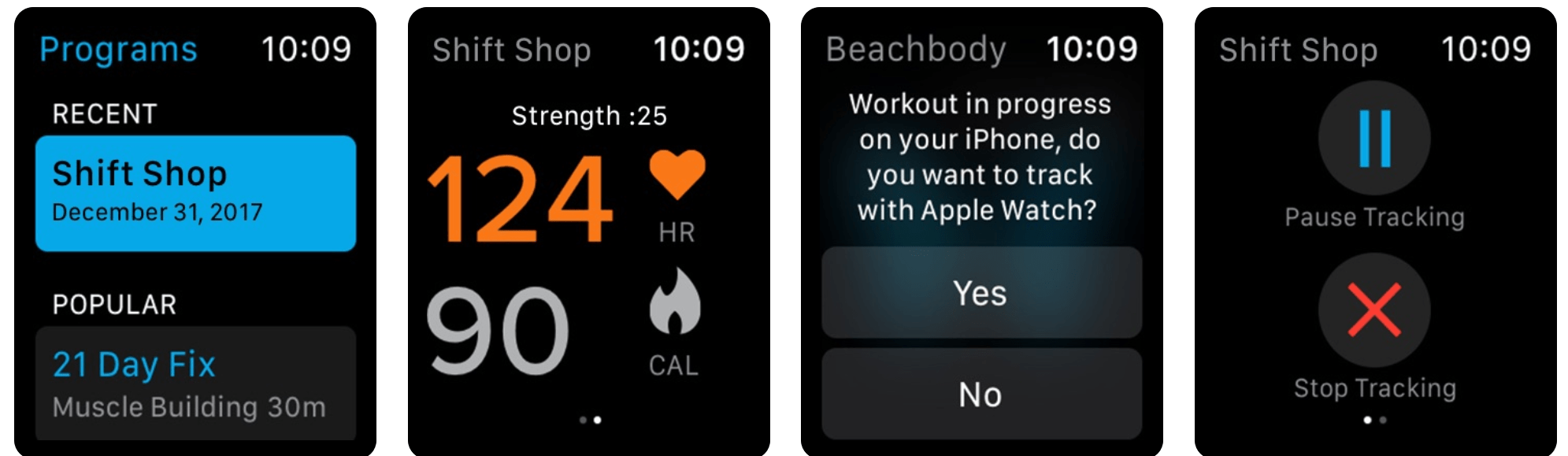
Beachbody is a top-rated app for fitness enthusiasts. This app gives you free access to over a thousand workouts that fit every requirement including several strength exercises, cardio, yoga, dance, mixed martial arts, etc. The app also comes with guides on nutrition and eating plans, and connects you to a community to motivate you and become accountable on your fitness journey. The fitness features on the free version are exhaustive, but there are subscription plans that can give you access to programs led by top trainers. Download the app here.

2. MyFitnessPal
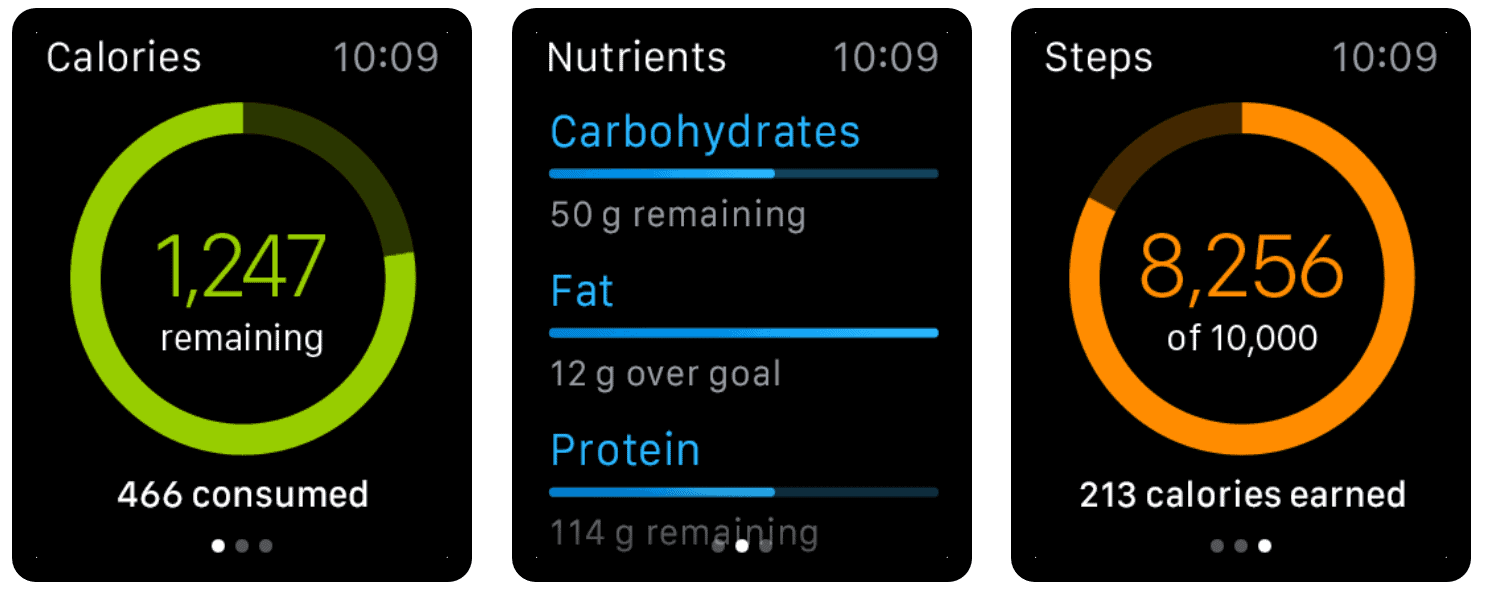
MyFitnessPal is your virtual friend when it comes to keeping track of your diet and health, losing weight, toning up, or starting a new diet plan. It is one of the best apps for apple watch in terms of health and lifestyle. This app has over 6+ million foods in its database and has a barcode scanner that recognizes over 4 million foods. If you want to know what is packed in your meals, the app gives you access to the nutrition information of the recipes you cook. You can also create your own food recipes to meet up with your health goals. Overall, the app helps you calculate the calories in your foods and match them with your goals so you know where you stand. The app is free to download and use but you will have to pay a subscription for premium access. Download the app here.

3. Headspace: Meditation & Sleep
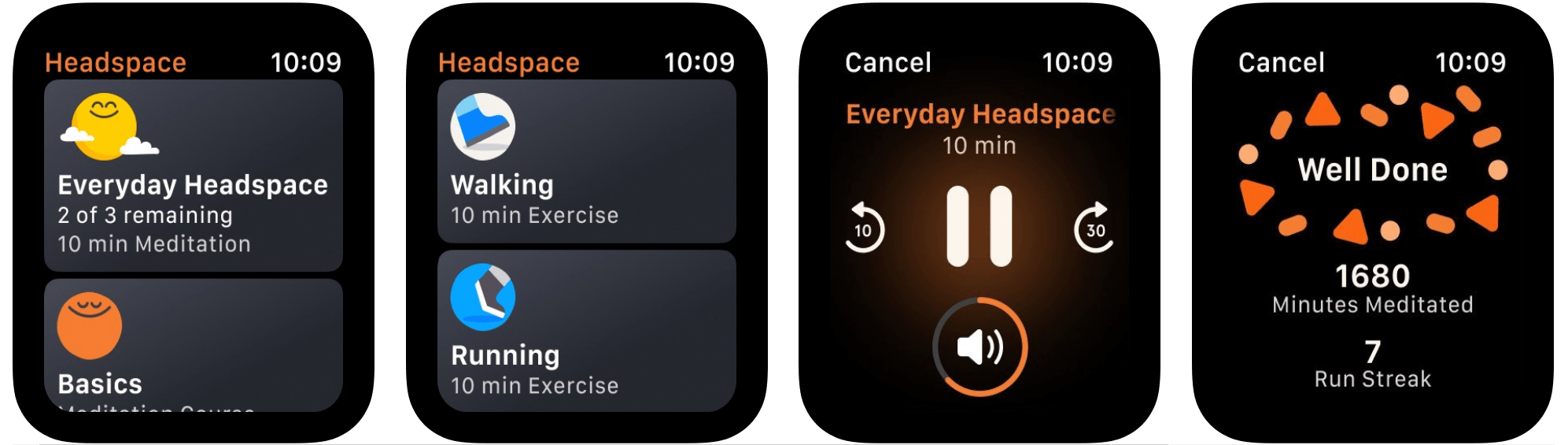
Stress is unavoidable as you strive to become more productive, but you have to reduce stress to stay productive. Headspace is a highly rated app that can help you manage stress, regain mindfulness, and boost your productivity. You can start your day with the app Wake Up short stories and expert advice to keep inspired throughout the day, or you can use one of the app’s on-the-go guided meditations to help you stay motivated, regain balance when stressed, and ‘keep present’ throughout the day. The app is free to use but premium access includes a subscription of $12.99 per month or $69.99 per year. Download the app here.

4. AutoSleep
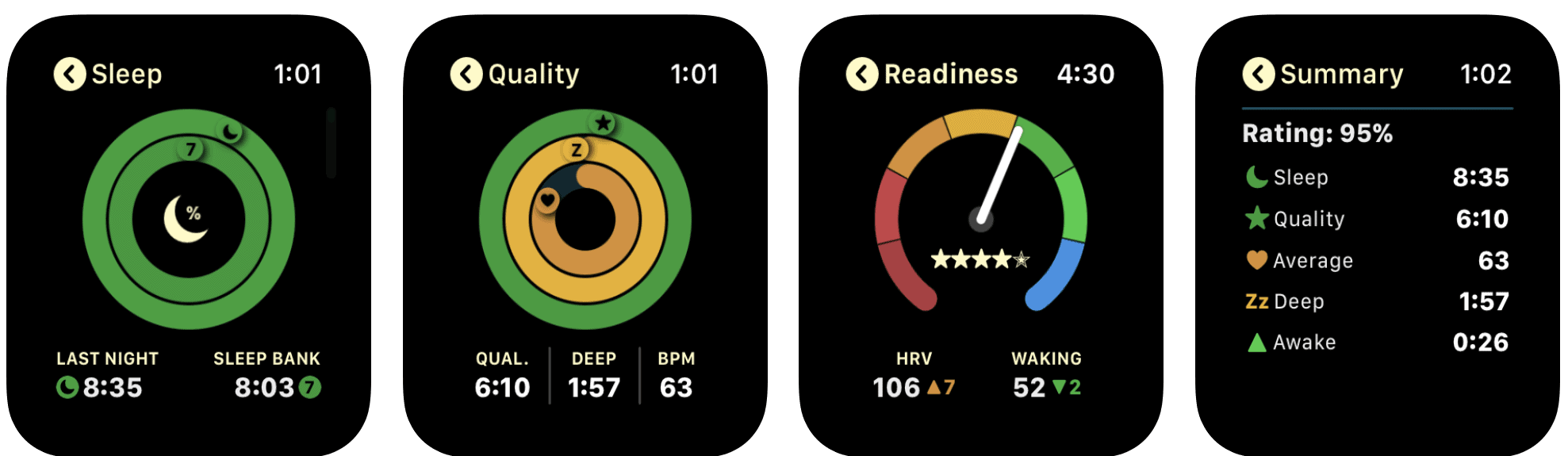
Monitoring your sleep cycle is essential to your health and work performance. An hour short of good sleep a night before can result in some feeling of tiredness or drowsiness during the day. AutoSleep can be your sleep companion if tracking how you sleep is important to you. This app works in two ways: you wear your watch to bed and it tracks how long you sleep, or you remove it just before sleep and wear it as soon as you wake up to let the app know you are awake. AutoSleep does more than just track the length of sleep, especially when you wear your watch to bed. It can also track the quality of your sleep by using algorithms based on time asleep, restlessness, time awake, and your heart rate to compute the quality of your sleep. The app can run on Watch OS 4 or higher but it is recommended to be used on Watch 5. Download the app here.

5. WebMD Allergy

Are you allergic to some food, drug, outdoor conditions, indoor conditions, insect bites, latex, skin irritants, etc.? Stay clear of allergies by installing the WebMD allergy detector on your watch. WebMD probes allergy levels in your area before your day starts and helps you control your exposure wherever you are. This app gives you access to allergy forecast, check symptoms for seasonal allergy, track how you feel, record your symptoms and treatments, and generate reports you can share with your doctor. Download the app here.

Apps for Work and Productivity

It’s possible to multitask but things might get cumbersome at some point. This is why your watch can be your trusted assistant to keep you productive if you have the right set of apps. Here are some recommendations for you.

6. Evernote
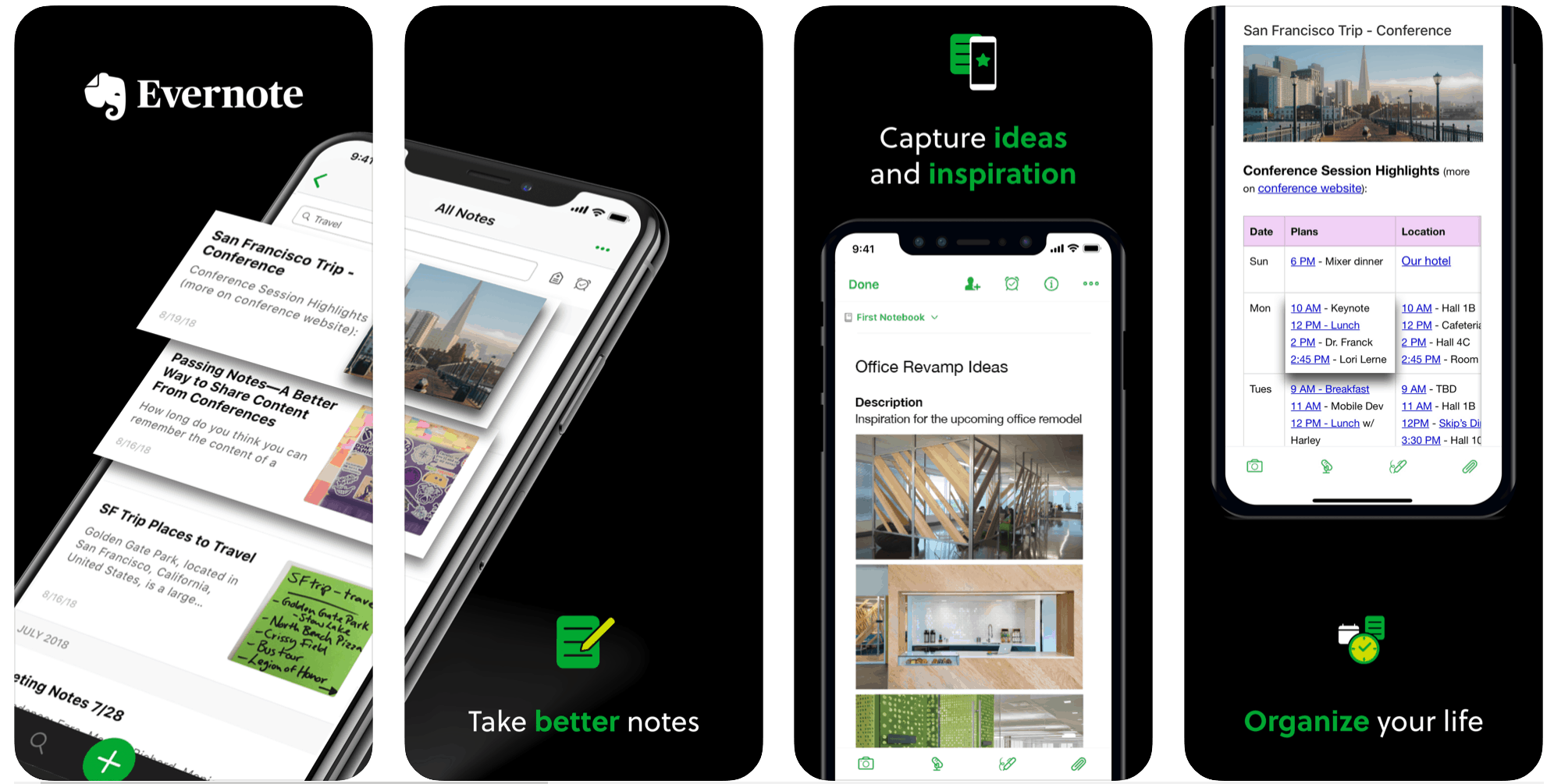
A list of the best apps for apple watch isn't complete without Evernote. With the Evernote app on your watch, you can access all your important information on the go. Add and access to-do's, typed notes, scanned notes, photos, images, weblinks, and more to your note and share them across different platforms. The app syncs across devices so you're able to access your information on your watch. Evernote is free to use but it has premium plans for more workspace and other premium features. This goes for $7.99 monthly or $69.99 annually. Download the app here.

7. Hours Time Tracking
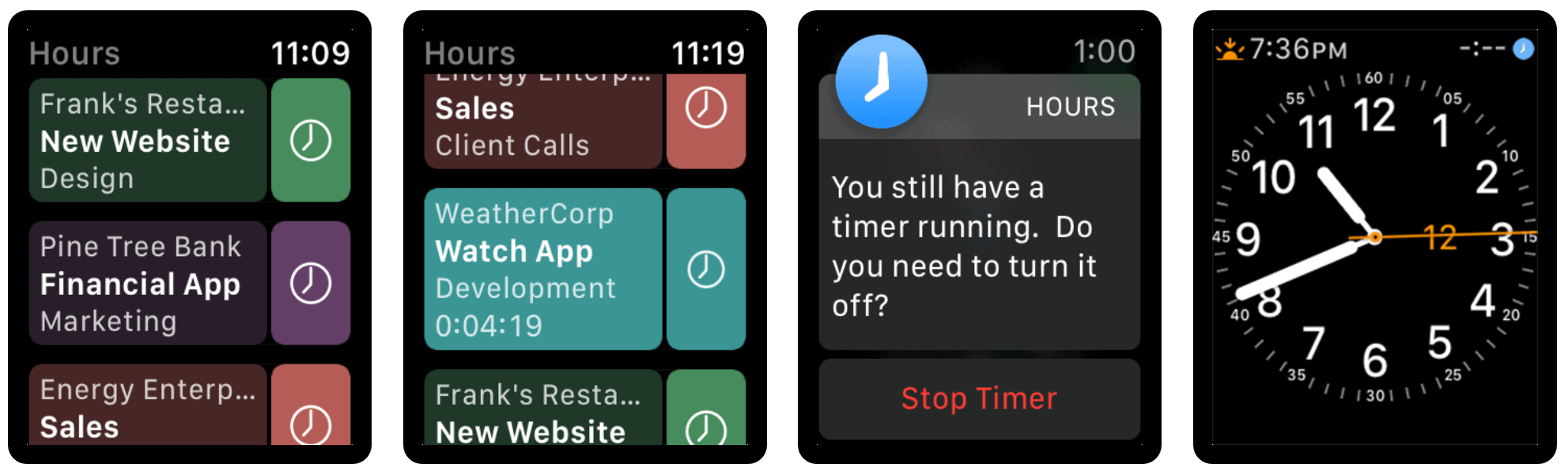
Hour Time Tracking is an invaluable productivity app for freelancers, contractors, employees, developers, and entrepreneurs billing on hours to track time on their projects. The app has a good interface with a visual timeline, smart reminders, and reporting features. Whether you are working alone or with a team, you can use this Time Tracker to keep pace with time and meet your targets. The app is free to use but it has upgrade features that go for an annual subscription fee of $19.99. Download the app here.

8. Things 3
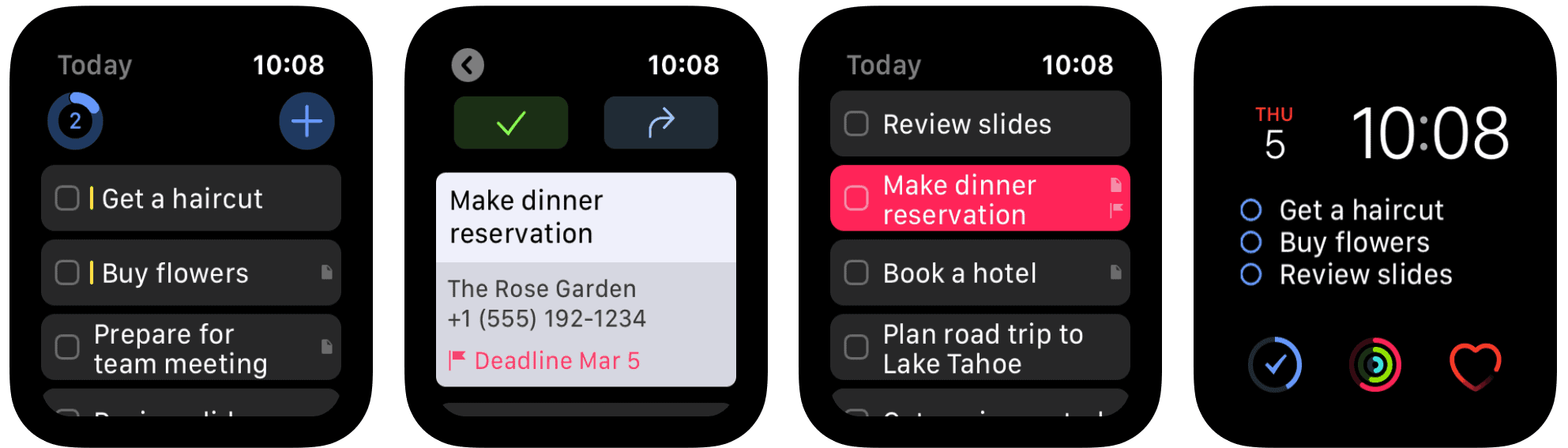
Things 3 can be your master organizer. It lets you collect your thoughts as you create to-dos, checklists, or talk to Siri on any device to give you important reminders. The app helps you to do more with your goals. Simply create a project for each of your goals and add the steps to reach them. The beautiful interface of the app makes your stuff uncluttered. You can also update a list with a drag and drop Magic Plus Button that lets you insert to-dos at any place in a list. Things 3 fully integrates with your calendar, Siri & reminders, Quick Actions, Today widgets, handoff, and notification. Download the app here.

9. Fantastical - Calendar & Tasks
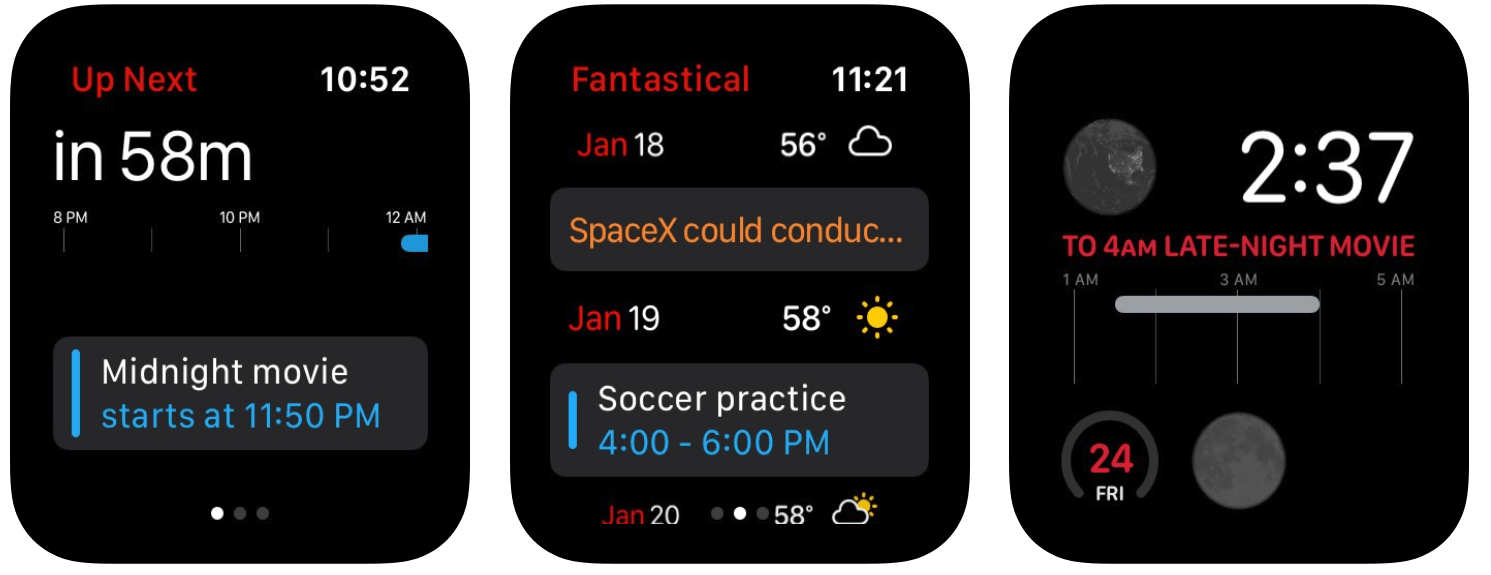
Fantastical is a calendaring app that lets you view and manage your events. The app supports your tasks including Todoist and Google Tasks and syncs your calendar sets and templates across devices. With Fantastical on your watch, you can manage your events and meetings on Google Hangouts, Google Meet, and Zoom. The app is free to download and use but you will only have very limited access until you subscribe for a monthly or yearly premium plan of $4.99 or $39.99 respectively. Download the app here.

10. Rules
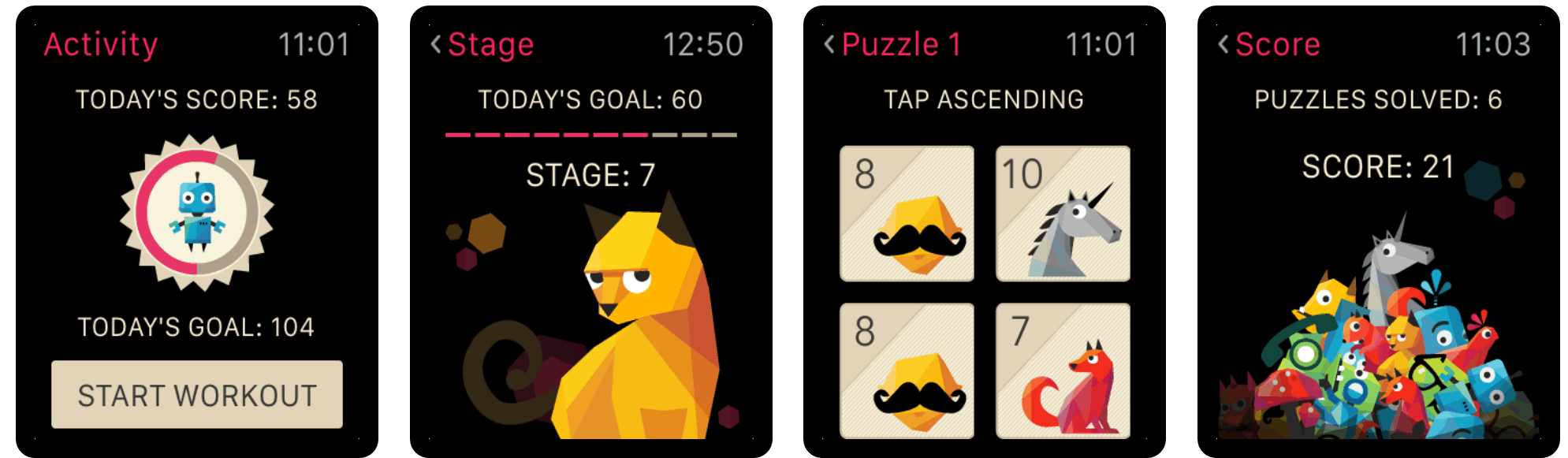
This is a game app with brain workout tasks that use colors, images, and numerical reasoning to test your memory and reflexes. You will find it interesting and fun to use. Try not to get addicted to the game as that can affect your productivity on your daily tasks. Download the app here.

11. Audible Audiobooks & Originals
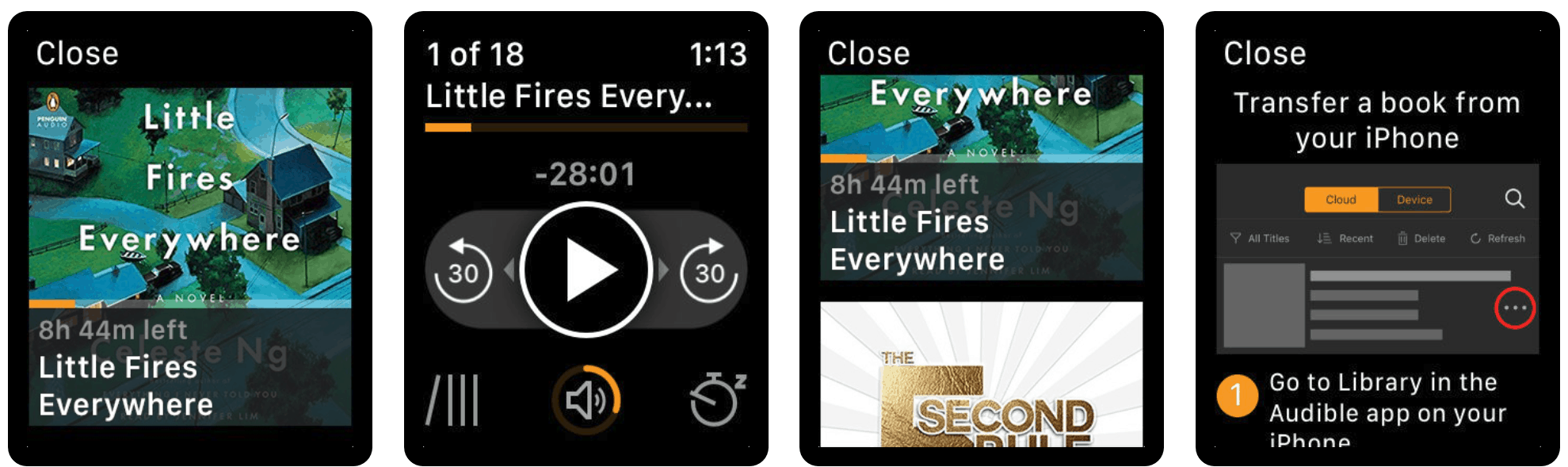
Listen to one of the world's largest selection of audiobooks through your watch speaker or paired headphones. Browse through various categories of books to unwind as you listen to bestsellers on productivity, communication, collaboration, self-care, memoirs, etc. Audible app is free to use but there are in-app purchases that can as much as $21.49 monthly. You can share this app with your family, up to six family members can use the app. Download the app here.

12. 1Password
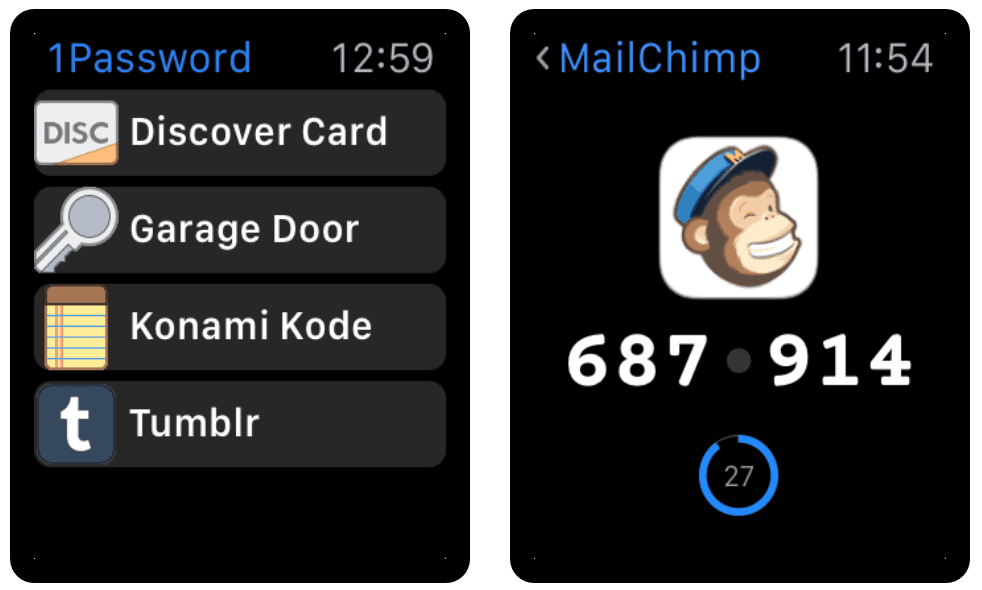
In your bid to keep safe online, you will have to use different passwords for different websites and apps. But how many of these passwords can you remember? 1Password helps you to put all your passwords in one place, securely. All you'll have to do is add your passwords and the app will handle the rest. You can also use the password generator feature to update your passwords and make them stronger. So, all you have to remember is the one Master Password that you'll need to login to the app. The app can be unlocked securely with Face ID, and it automatically locks to protect your data and you don't have to worry if your device gets lost or stolen. 1Password is free to use for 30 days after which you'll be required to pay a subscription. This can go for $3.99 monthly or $35.99 annually. Download the app here.

Apps for Money Management

Take charge of your finances with the following apps suitable for your watch.

13. Elk Travel Currency Converter
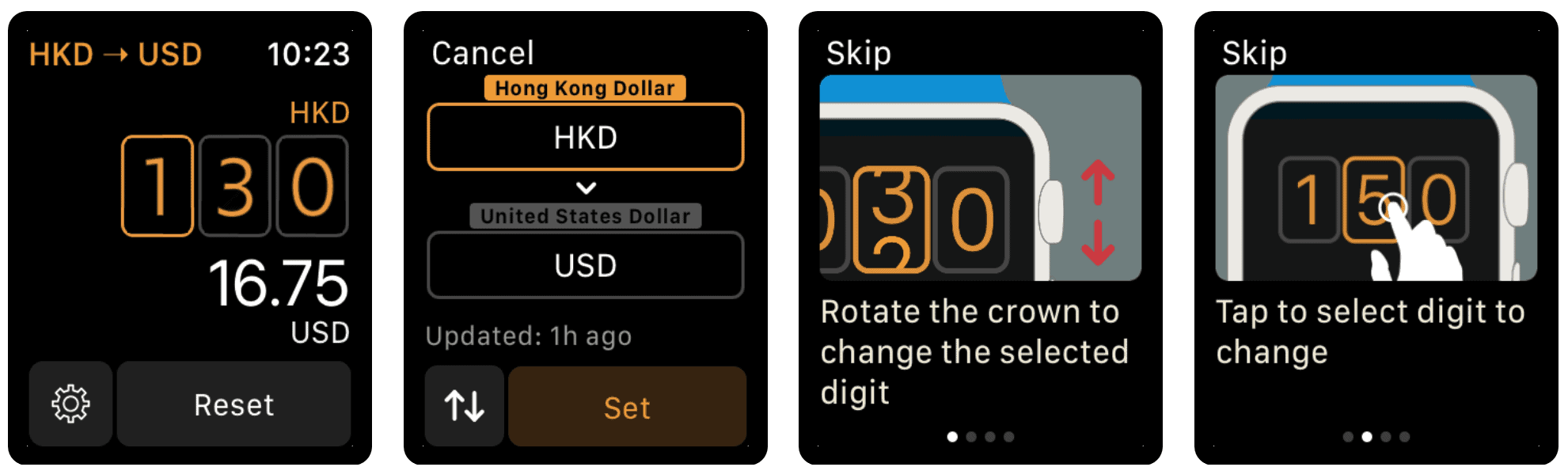
If you travel often, chances are that you'll want to know how much things are worth in your home currency before making a purchase. Elk helps you to eliminate the stress of punching keypads and makes your conversion fast. Whenever you raise your wrist, the app launches instantly and is ready to convert. It detects where you are and automatically picks the right currency for you. Elk is free to use on a 14-Day free trial but for continued use, you'll have to pay a premium unlocking fee of $3.99. Download the app here.

14. PCalc
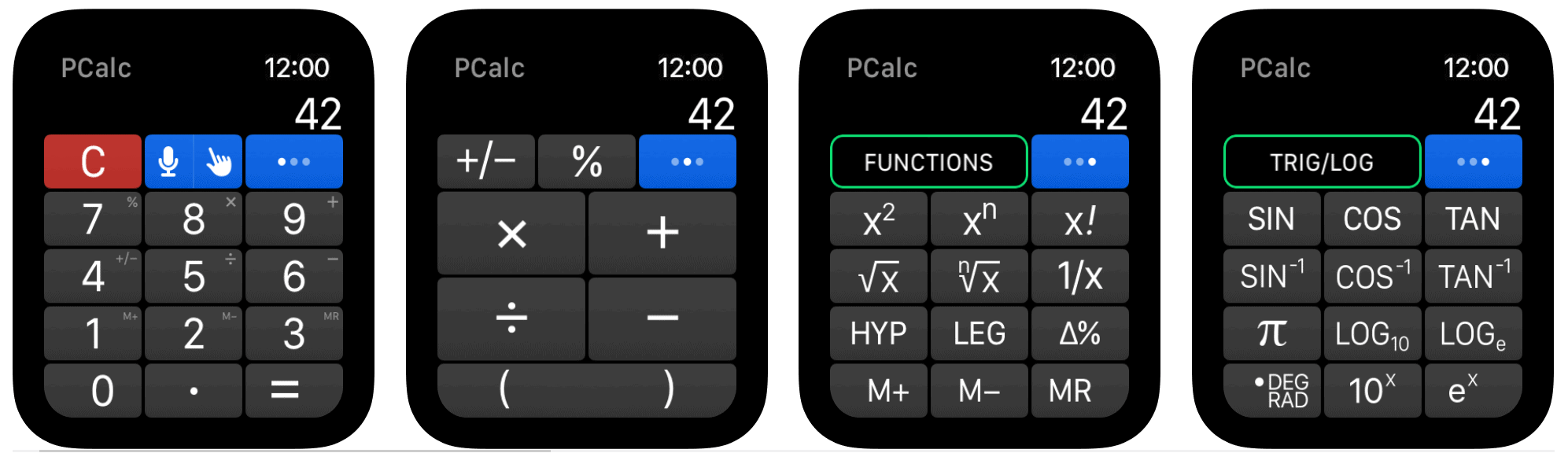
If you're looking for a feature-rich calculator that you can use for extensive calculations on your wrist regardless of what you do, PCalc can be your choice app. It has a variety of features that will make your calculation seamless right on your wrist. The app also has in-app purchases such as tips to guide in your calculations. This could be as low as $0.99 or as high as $9.99 for tips. Download the app here.

15. Pennies
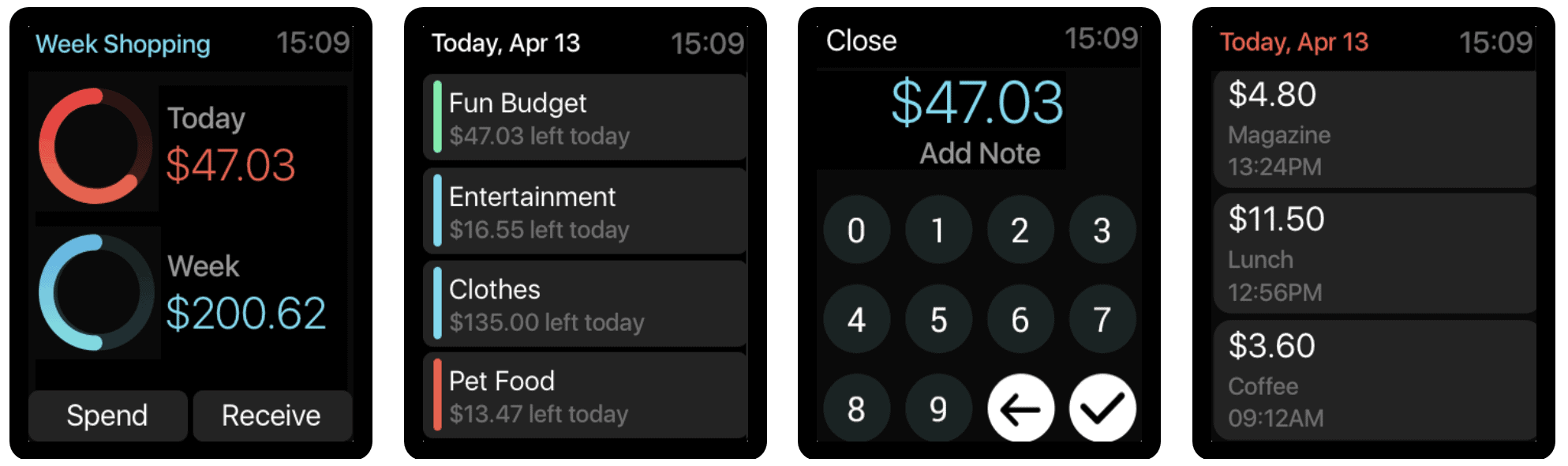
Pennies is a handy app for tracking and managing your expenses. This app lets you set your budget and track your spending, so you can save money. Once the app learns your budget, it will tell you how much you have to spend per day and carries over unspent money to the following day. With its multiple color display, the app tells you about your financial health and when to spend and when to save. Download the app here.

16. Apple Wallet
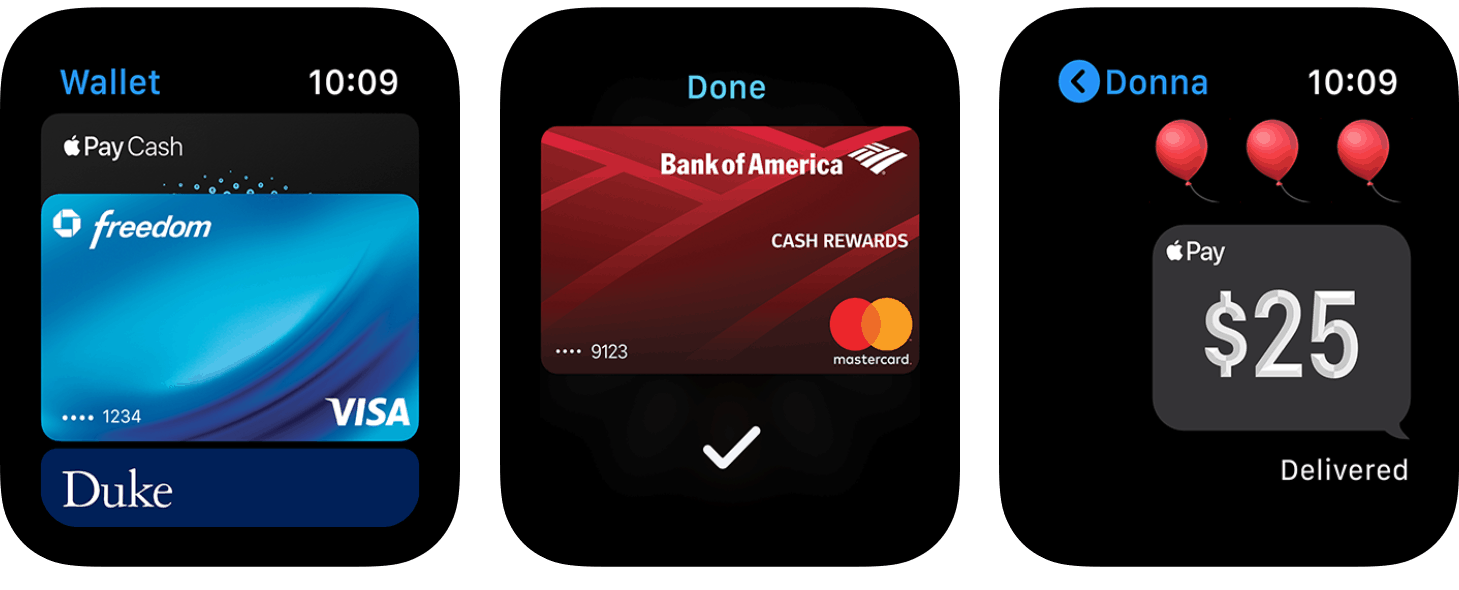
Use apple pay on your apple watch for secure payment. Your watch automatically detects when it is removed and payment cannot be made at that time until it is re-authenticated. Download the app here.

Apps for Traveling and Commuting

Get all the travel information and assistance you will ever need by installing the following apps on your watch.

17. Carrot Weather
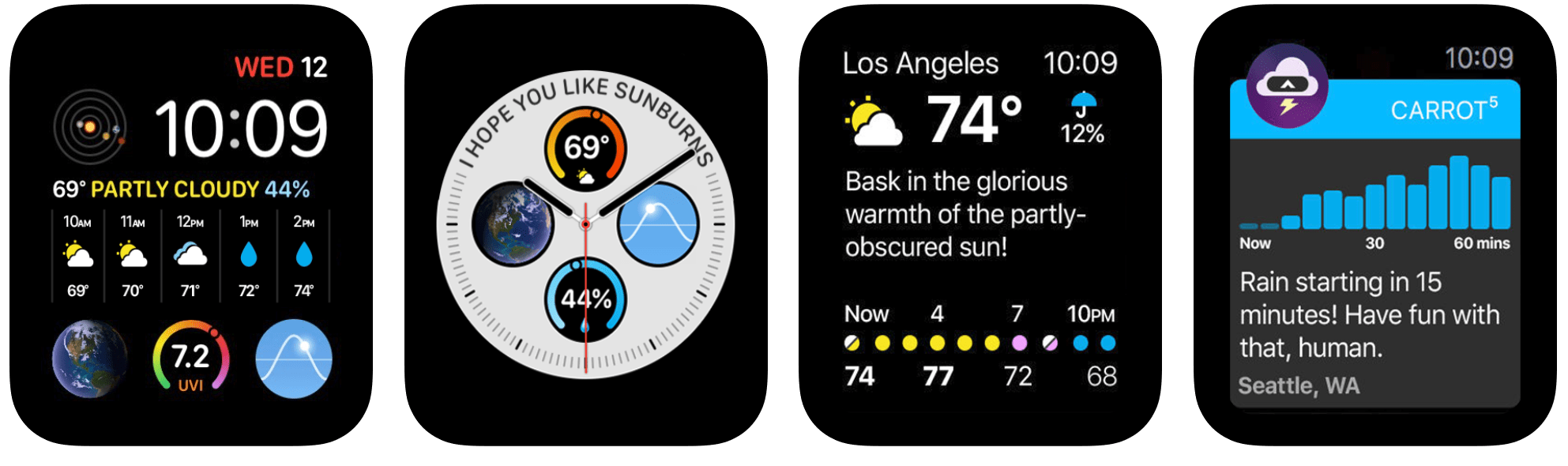
Carrot Weather gives you on-the-go access to weather forecasts on your watch as well as over 70 years of weather history of wherever it is that you are going. You can also upgrade to a higher premium club to enjoy unlimited features such as AccuWeather, ClimaCell, Foreca, MeteoGroup, Aeris weather, etc. One of the amazing features of the app is the change in the display as the app adjusts itself to prevailing weather conditions and notifies you. It also gives you clues to over 62 secret locations. Download the app here.

18. App in the Air

App in the Air helps you get security and departure times, airport navigation maps, and explore places you're flying over. It also lets you manage your miles across airlines. The app's sophisticated AI booking system can be used to search for best times, prices, or airlines to fly. Even without WIFI, this app gives updates about flight status changes and when you're expected to check-in. App in the air has global coverage. It is free to use but to enjoy unlimited access, but you have to pay a $29.99 annual subscription. Download the app here.

19. Citymapper
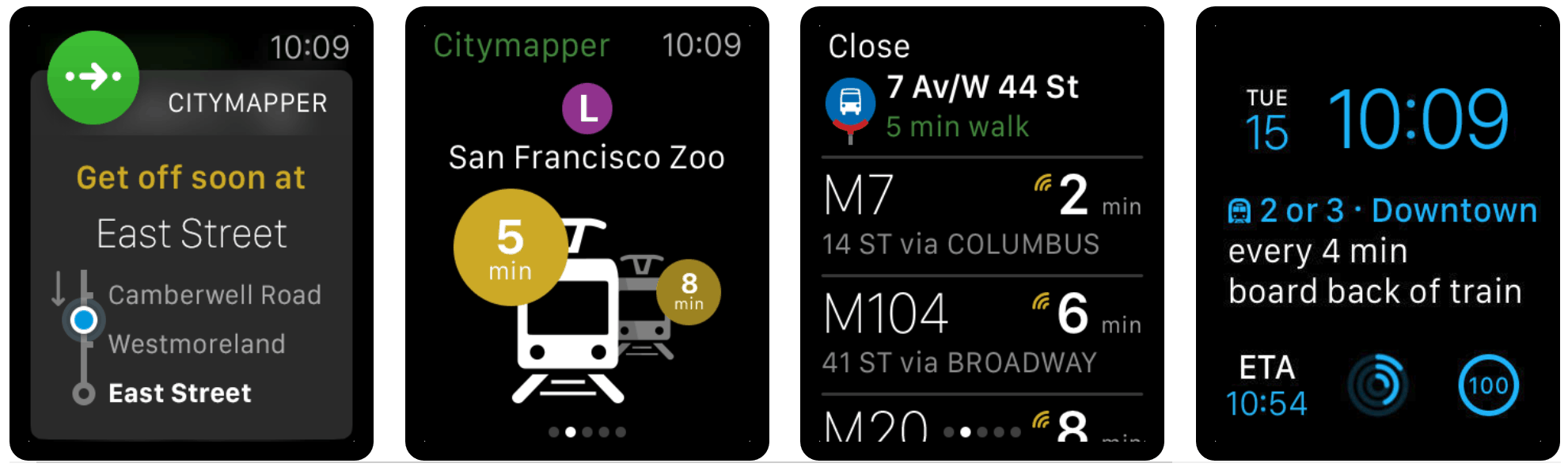
Commuting in a city you don't know might pose some challenge but not when you have Citymapper installed on your apple watch. This app provides you all the information you need from transit lines close to you to getting step-by-step directions on what buses and trains to take. The app can also integrate with Uber. It has coverage of notable cities around the world. It is free to use but some in-app purchases are required to access some features. Download the app here.

20. Uber
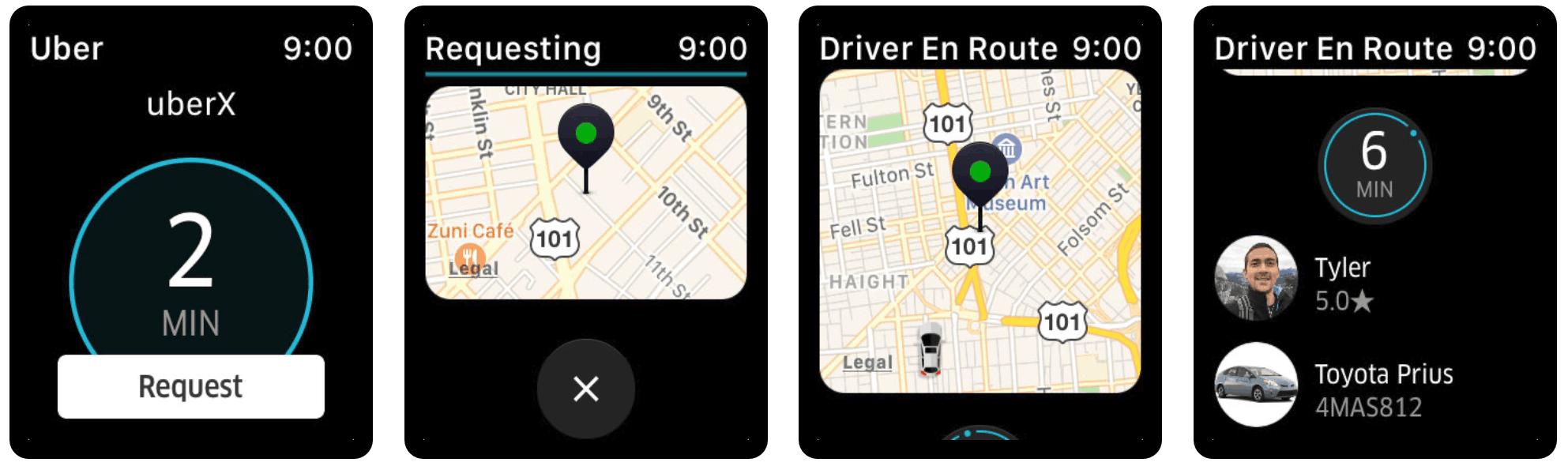
Uber is one of the best apps for apple watch for traveling and commuting. Use Uber on your watch to request a ride. Rent JUMP bikes or scooters and monitor how long it will take the driver to reach you and when the driver will arrive. Download the app here.

21. Yelp Food, Delivery & Services
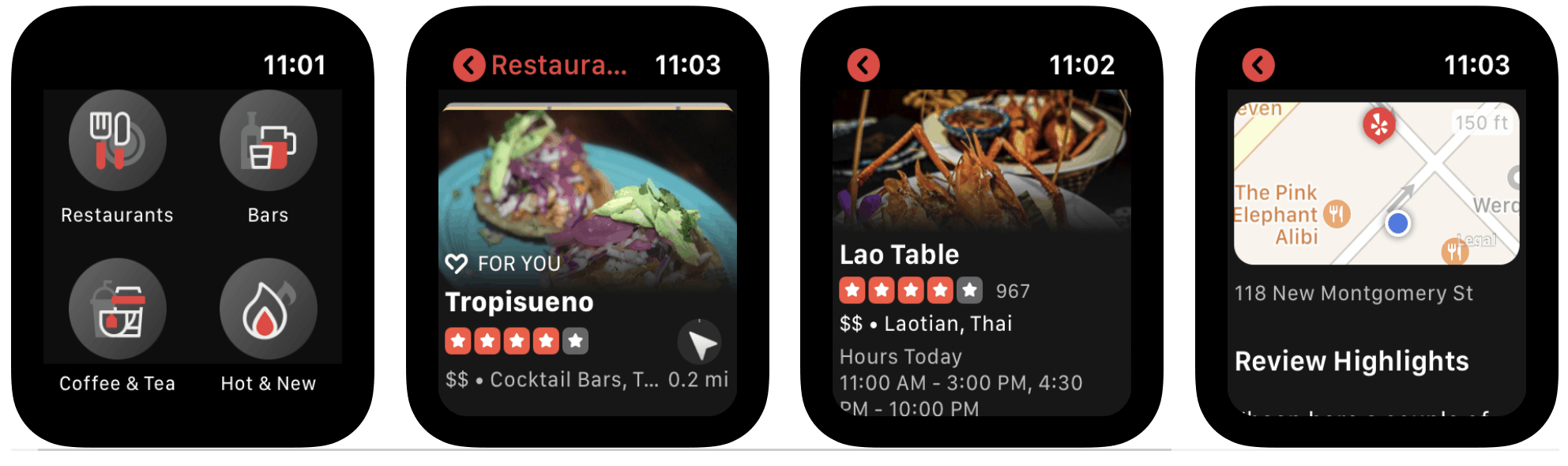
If you're looking for a food app, Yelp is one of the best apps for apple watch. Yelp is your trusted guide when it comes to finding restaurants and coffee shops near you or a place to shop, drink, or relax. You can also make reservations or order delivery or pickup from your watch. The app also lets you find local businesses and services such as top-rated salons, spas, trusted doctors, etc. Yelp is entirely free to download and use. Download the app here.

Apps for Communication

Prompt and effective communication is crucial to your productivity. Get the following apps to make your communication easier.

22. iTranslate Converse
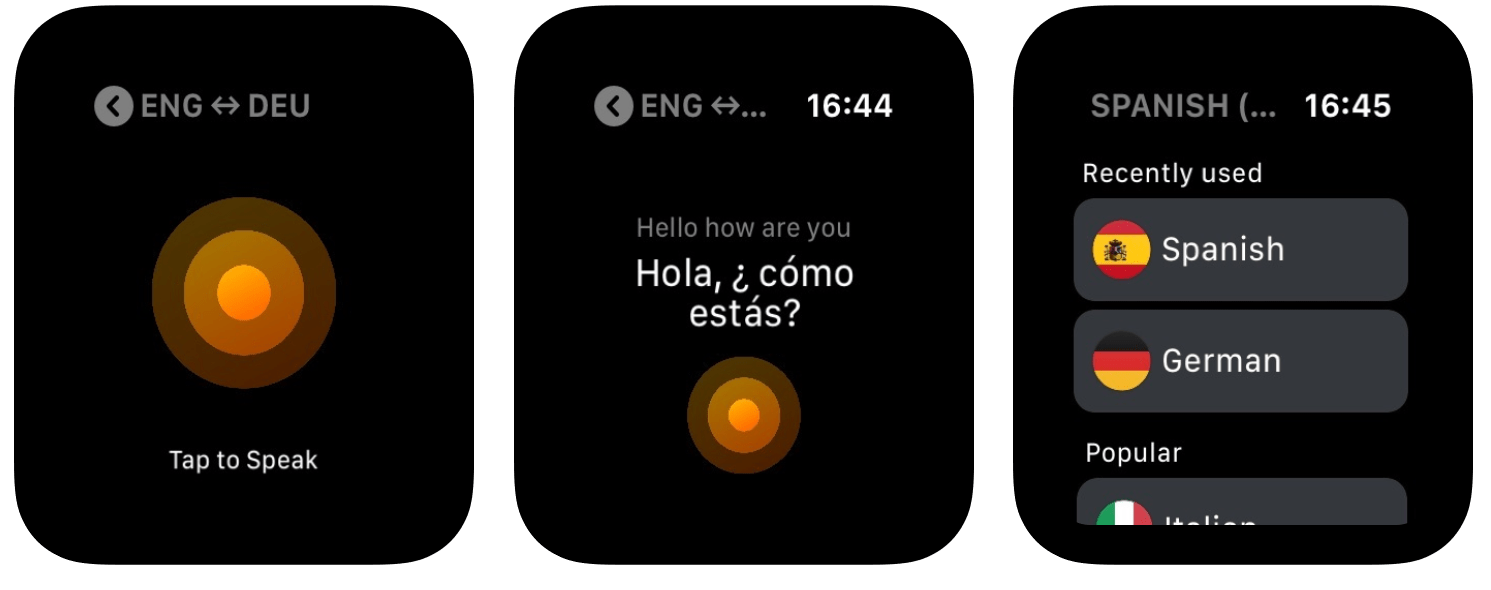
Turn your apple watch to a translation device with iTranslate. Speak directly to your watch and get it translated for you in up to 38 different languages. Only tap and hold to speak and release to translate. This app will come in handy when you find yourself in a country where you need to communicate but don't understand the language. The app automatically detects between two preselected languages and translates them while those languages are spoken to the watch. The app is free to use a trial period of 30 days after which it is automatically renewed to a paid subscription unless you turn off auto-renew. Subscriptions start at $9.99 monthly. Download the app here.

23. IM+ Watch
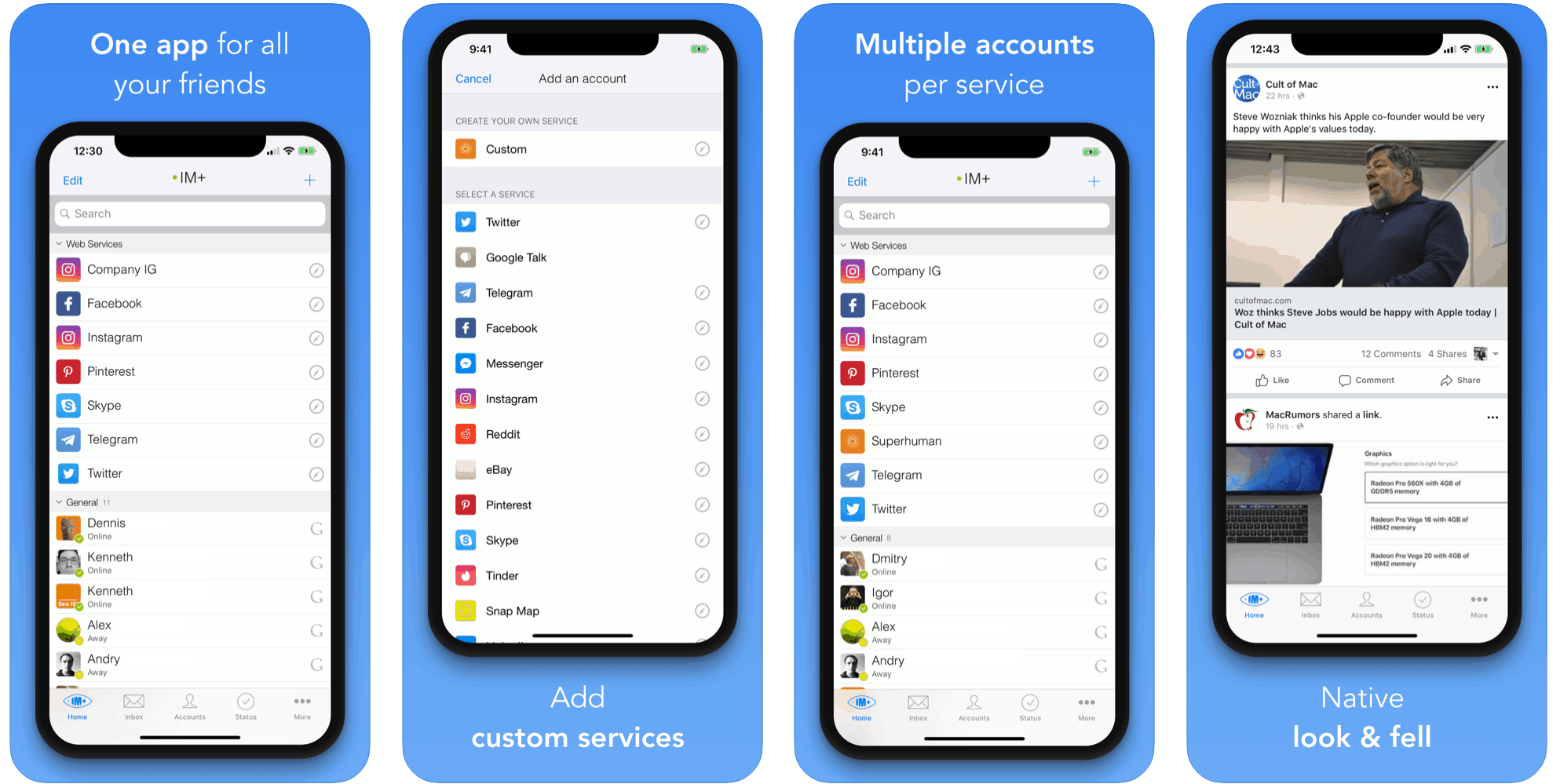
IM+ helps to connect your messengers in one App (supporting only WhatsApp on Apple Watch currently). You can receive and read through your chats and view images. This app is still in development. Future releases promise more features which include responding to chats, additional messengers, and improved media support. Download the app here.

24. Telegram Messenger
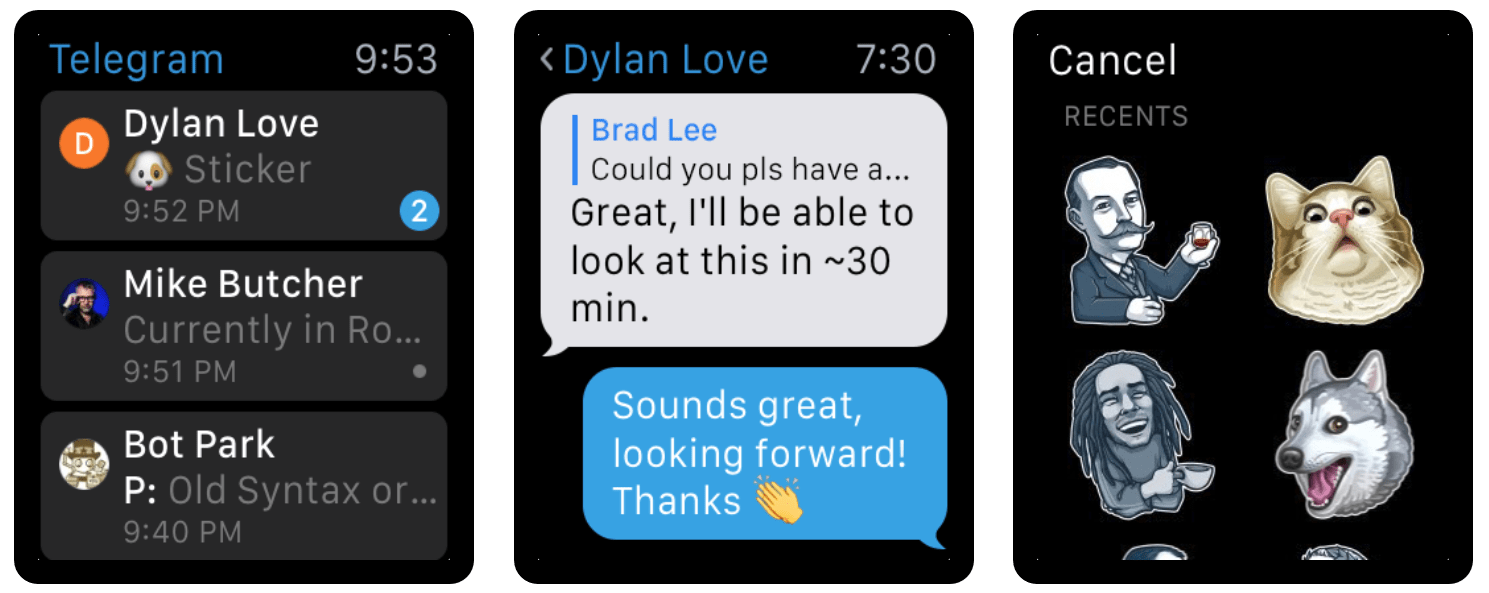
One of the best messenger and overall best apps for apple watch is Telegram. If you use Telegram, you already know that you can send messages, photos, videos, and files on your app, and also secret chat where your messages self-destruct automatically. You'll also be able to create group chats with up to 200,000 people. With your Telegram app on your watch, you can keep communicating on the go with your teams and associates. The app is free to download and use. Download the app here.

25. Outlook
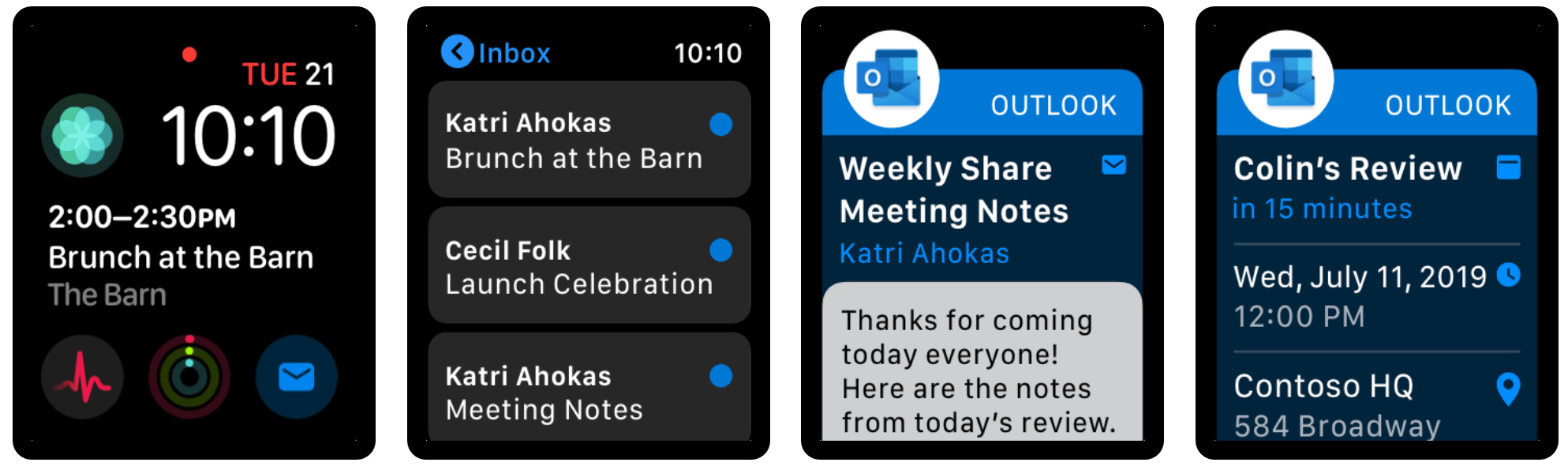
This is a combined email and calendar app that connects to Office 365, Microsoft Exchange, MSN, Hotmail, MSN, Gmail, Yahoo, and iCloud. It learns your most important stuff and shows you only those on your watch. The app is free to use but you can make an in-app purchase for Microsoft 365 Family or Personal at $9.99 and $6.99 respectively. Download the app here.

Final Thoughts

There is a whole of things you can do with your Apple Watch when you have the choice apps listed above. These are the best apps for apple watch to help you become more productive. You won’t just get value for your money, but you will also be able to make your life a lot easier by getting things done faster.

More Apps for Productivity


Friday, 29 May 2020

Delegating Work: What to Delegate and What Not to?

Here’s a fact: You might have heard a lot about the importance of delegating work. But if you’re a new leader or manager, it won’t be all fun and games. Like everything in life, delegation isn’t a piece of cake unless done the right way. You’re highly likely to face a lot of unexpected obstacles. And sadly, there’s no way around them. No circumstances in life are going to go easy on you just because you’re inexperienced. Luckily, you can tackle these hindrances very easily if you’re smart enough to learn. Learn from your mistakes, your surroundings, and this post! Today, you’ll find an answer to one of the most frequently asked questions by new delegators: What to delegate and what not to? Believe it or not, this is one crucial step in the process of delegating work. So, read through this article to clarify all your confusion in this regard!

Tasks That You Should Always Delegate

When you’re just getting into delegation, it is quite common to feel like you’re delegating too much work. Inexperienced managers usually feel like they are over-burdening their employees, giving away their own tasks, or asking subordinates to do what’s not their job. While all these concerns are 100% valid and should always be avoided, they can keep you from delegating the work that has to be distributed among your team. This defeats the purpose of delegation even if you are well-aware of how to delegate tasks effectively. Here are some tasks that you should always delegate. However, reason with yourself according to the environment of your workplace to make the final decision.

1. Repetitive Tasks

Every office has a fair share of a few projects that are recurring and repetitive. Now, these jobs are either the same every time or even with a slight variation, they require a similar work process and skillset. For example, auditing, budgeting, event planning, etc. Such tasks have to be done every day, weekly, fortnightly, or monthly. The problem here is that even if these jobs are quick and easy, a manager is wasting time doing them. You should always delegate projects like these so that you can save up a lot of your precious time in the long run. Simultaneously, you can train your subordinates to perfection for jobs like these. With regular practice, your subordinates can begin to work on level 5 of delegation, which is where the employees can work independently.((business.com: Develop Your Team Using the 5 Levels of Delegation)) Whether or not you want to categorize annual projects in this category depends on how often the employees in your organization are promoted or replaced. If the same people will be around to do the job for 3 to 4 years at least, it is best to train them for it.

2. Time-Consuming Work

One of the most prominent features of delegation is that it helps save time. So, it is only right if you delegate the work that will take up too much of your time. Instead of spending a week on one project, you should spend a few hours explaining the work to your subordinates and let them take charge. This way, not only will you clear your own schedule, but it will also get the job done quicker. Since delegation is all about distributing work among a team, more people can work together on one project simultaneously. This will cut down a huge chunk of the work that goes into it. What this means is that if there are tasks that are time-consuming but have a short deadline, you must always delegate them. It is an easy and fool-proof method to tick off big projects on your to-do list!

3. Projects That Boost Basic Skills

While delegating work, you shouldn’t forget that as a leader or manager, you also must encourage skills in your subordinates. Certain projects are too complicated for people that do not have the skills to do the job. However, some challenges are a healthy way to encourage your team to broaden their skillset. If you don’t offer opportunities, your team will never grow. And that is a huge failure as a management leader.

4. Whatever Is Beyond Your Job Description

Every person in an organization has a defined job description. These are the duties that the person has to fulfill. As a leader, you too will have a job description, and you don’t have to do anything beyond it unless there is no one else skilled enough to do it. Ideally, anything that isn’t a part of your job description should be delegated. This isn’t done with selfish intentions. Instead, it is important to do so, or else you won’t have enough time to fulfill the tasks that are actually a part of your job. Things that are out of your job description are generally tasks that can be done easily by your team. Even if they face difficulties, you should only offer help and assistance instead of taking on the entire job.

5. Interesting Tasks

Keeping the employees interested in what they do is one difficult job that a manager must do. To keep the motivation levels high, you should delegate more fun work. Things that your employees will enjoy doing, let them. So, for example, if you’ve noticed that your team enjoys outdoor tasks, assign them jobs that require work to be done outside your office building. Other interesting tasks include field research, event planning, etc.

6. Work That Your Subordinates Are More Skilled In

Just because you’re leading a group of people does not mean you have all the skills that they don’t have. There may be something that your subordinates are way better at. For instance, you might not be very tech-oriented, but someone in your team could be. So, jobs that require skills that someone in your team is better at should always be delegated. Do not take it personally or make it a matter of ego.

Tasks You Should Never Delegate

Generally, once a manager gets comfortable with delegating work, all the concerns that were previously there vanish. While that is a good thing, some leaders may begin to ignore those issues completely. They may over-delegate and assign tasks that aren’t in the job description of the subordinates. Sometimes, managers delegate every single task and they are left behind with so much free time.((Harvard Business Review: How to Tell If You’re Delegating Too Much)) To avoid this from happening, you should never delegate the tasks with the following nature. However, the final decision depends on the nature of the exact task and your workplace.

1. Work That Takes Long to Explain

Imagine spending 3 hours explaining something that you could’ve done in 30 minutes yourself. That defeats the entire essence of delegation, doesn’t it? So if something needs deep explanation and has a long instruction manual even though the task itself isn’t that elaborate, your best bet is to avoid delegating it. Similarly, if you think you can do a job quicker yourself, do it.

2. Confidential Jobs

Certain matters just cannot be put into the hand of the employees. High priority and confidential jobs should never be delegated. These tasks are highly important so your expertise should come in handy. Moreover, assigning such jobs to the team can lead to a breach of privacy and other similar issues. Decision-making tasks such as appraisals, employee hiring, and other similar things also fall in the same category.

3. Crisis-Management

Every organization has to plan for the worst-case scenario. Such decisions are of high importance. You cannot risk letting your team, which is generally less experienced than you, to make these choices. You should plan and develop for the future of your organization yourself. The subordinates are just not in the position to do these jobs due to the lack of their exposure and level of responsibility.

4. Boring Tasks

As mentioned previously, you have to keep the employees interested and highly motivated. Boring tasks can demotivate employees. They take away the enthusiasm which eventually cuts down on the quality of the output produced. Keep boring tasks to yourself. This is a sacrifice you’ll have to make to keep the morale of your team up.

5. Very Specific Work

This is only applicable to a work which is already broken down into a small task. There is little to no room for creativity, and the instructions are very detailed and exact. Now, the expectations are to produce an output that is exactly what is being asked for. Since such tasks are too specific, only one person should do it. If a project like this is delegated, there is a high chance of slight variation in the results caused by individual subordinates. Therefore, the best option is that you do tasks like these on your own.

The Bottom Line

In the end, it is up to you how you weigh each scenario. There may be exceptions where you’ll have to against the aforementioned suggestions. But, for the most part, these are pretty universal. So, start your journey of successfully delegating work by using these tips from today!

More Tips for Effective Delegation