Tuesday, 28 January 2020

10 Remarkable Traits of Successful Learners

If you look around, you’ll notice one key trait in all self-made people; they are successful learners who understand what they’re doing in life. These people are masters at the art of learning. Before initiating a project, they make sure they understand what they’re getting themselves into and this trait alone helps them avoid dozens of hurdles in the way. But in order to be a successful learner, there are a lot of other traits that you’ll need to develop. You see, learning is a multi-factorial trait that’s influenced by a number of factors and habits. In order to become a successful learner, here are a few traits that you need to inculcate in yourself.

1. Persistence

Successful learners understand that learning takes time. For them, persistence is the key to success because nothing worth learning is learned in a day or two. As an individual, I believe that the lack of persistence is what holds most people from achieving greatness. Almost everyone has grand ideas and ambitions in life. But only a handful of people manage to accomplish their set goals and targets because others usually don’t put in the amount of work needed to achieve their goal. I say this a lot: When it comes to dreams, most people are just in love with the final product and not the process. Successful people, on the other hand, are in love with both.

2. Patience

Persistence and patience often go hand-in-hand. And successful learners are masters of both. With that said, there’s some difference between both these terms. Persistence is usually for the known while patience comes in handy when the unknown strikes. Allow me to explain: When you plan ahead and work consistently on it, that’s persistence. In this case, you’re continuously working towards your goal and following the set plan or layout. However, patience is tested when that plan unknowingly fails or experiences a hurdle. That’s when there’s a huge chance of people backing out. But successful learners practice patience and take their time to work past problems. A good way to build patience is to accept that your plan or projection is bound to show deviations and discrepancies. People who can’t accept the fact that their plans could fail are the ones who fail the most. Successful learners avoid that problem by expecting their plan to not work out exactly the way it’s supposed to.

3. Conceptual Learning

Successful learners believe in understanding and grasping concepts instead of rote learning. A lot of successful people are of the view that grades aren’t important. That’s because what matters is your understanding of the concept, not the final grade that you get. In real life, the concept is what helps you to apply your learning and get something out of it. That’s why successful learners spend more time building and strengthening their concepts than they do on rote learning.

4. Strong Memory

Sure, concepts are important. But there’s a lot of stuff that needs to be memorized after building a strong concept. There are other things like language that require minimal concept and maximum memorization. That’s why successful learners have a strong memory and that’s something they spend a lot of time working on. In fact, you may find brain and memory games on their phone as they spend ample time working on their retaining ability.

5. Leading Abilities

Successful learners are often important people in social gatherings. That’s because people recognize them as learned individuals that need to be respected on the basis of their knowledge. Often, that knowledge results in an influx of wealth that further helps in improving the social status of these individuals. All these factors add up to create a personality that’s a leader by nature. It’s like their aura has a magnetic effect that pulls others around it. Now the thing about this trait is that it often isn’t acquired directly. It’s not like successful learners learn to lead. It happens at a subconscious level often as a secondary output of their learning ability.

6. Discerning Valuable from the Useless

When I went into college, I was right-out intimidated by the size of the books we had to study. And for a while, this used to bother me because I was under the impression that we had to study each and every word of those books. But as time progressed, I realized that merely 40% of the book was enough to get me 80% of the grades. Essentially, that 40% was the valuable part of those books that I needed to focus on before I decided to work on anything else. This is similar to the Pareto’s Principle, otherwise known as the 80-20 principle which suggests that 80% of the outcome comes from 20% of the effort.((Oregon Women Lawyers: Understanding Pareto’s Principle)) By focusing on the parts of books that mattered the most, I wasn’t just able to score good grades but it also allowed me to distribute my time to other activities. I would study, get good grades, maintain a social life and work on any side projects that I wanted. Most people thought that I’m awfully lucky or gifted, but the secret behind all of this was simply the ability to discern valuable from the useless. If that’s something that you want to learn, I’d urge you to look around yourself and see what sort of learning activities or topics take most of your time but are of least importance for your goal, be it getting a good grade or succeeding at your business venture. If the task doesn’t contribute to your goal, it’s not worth spending your time on.

7. Bold Attitude

Successful learning requires a bold attitude. I know it sounds absurd. But not everyone has the courage to learn everything. A lot of people are intimidated by the time and effort required to learn a skill or a subject. And that intimidation holds them back from even taking that first step. They look at the mountain worth of input required and avoid the whole task in itself. As I mentioned above, nothing worth learning is learned in a day or two; and successful learners understand that. To excel in their field, they take on a bold attitude that embraces hardship and uncertainty.

8. Questioning

The key to effective learning is to question the matter. In fact, a recent study showed that elaborative interrogation (or self-questioning) is a useful learning method.((Sagepub:Improving Students’ Learning with Effective Learning Techniques)) By questioning yourself and your logic, you’ll uncover aspects of the topic that you didn’t even know existed. What’s more, you’ll notice that by questioning while you learn, you’ll be able to look at the concept from a variety of angles and point-of-views which will help you attain perspective. In order to use this technique, set aside some extra time to ponder and question yourself about what you’re trying to learn. When you do that, go into specifics and ask yourself questions that you probably don’t know the answer to. You’ll be surprised to notice that most answers just pop into your head once you actually question yourself.

9. Following Routines

In a world full of distractions, managing one’s time is one of the most useful techniques to learn. And when it comes to time management, there’s nothing better than the good’ol daily routine. Almost all of us have a mental to-do list in our heads as we go about our day. However, what a lot of us lack is a routine and a priority order for that list. Successful learners, however, are great at creating and following routines that help them maximize their learning and implement it in daily life. Another aspect to consider here is that this ability of following routines stems from high self-discipline. A lot of people are great at creating routines, just not so much at following them. And that’s all that matters. Take a look at these Powerful Daily Routine Examples for a Healthy and High-Achieving You.

10. Sticking to Their Learning Style

There are many different types of learners in society. Some people learn best by listening while others write things down. Then there are individuals that like to have a hands-on learning experience. The thing about successful learners is that they know what sort of learning style works best for them. This allows them to focus their learning methodology according to their preferred style so they can maximize their learning. If you’re unaware of the major learning styles, here are a few:
  1. Visual Learners
  2. Auditory Learners
  3. Reading/Writing Learners
  4. Kinesthetic (hands-on) Learners
As soon as you know how you learn and the best way to learn, you can better retain information more effectively. So here you are, 10 things you can learn from the successful learners in order to become a faster and smarter learner.

More on Learning Fast


Monday, 27 January 2020

The Lifehack Show: How Exercise Slows Aging with Judy Foreman

In this episode of the Lifehack Show, we'll be talking with Judy Foreman about the major impact exercise has on aging, both physically and mentally. Judy is a nationally syndicated health columnist who has won more than 50 journalism awards. She received a Master’s degree from the Harvard Graduate School of Education and was a Fellow in Medical Ethics at Harvard Medical School. Judy is also author of A Nation in Pain: Healing our Biggest Health Problem and The Global Pain Crisis: What Everyone Needs to Know. Her newest book Exercise is Medicine: How Physical Activity Boosts Health and Slows Aging debunks some common myths about aging and shows that it is possible to reverse the effects we often think of as inevitable.

How To Leverage The Subconscious Mind

Do you remember the first time you tried to do anything? Walking, playing a musical instrument, singing, writing. Anything at all? Despite all of those skills being so different, each one goes through a similar cycle. When we first attempt it, we're terrible at it. We might even feel shameful or embarrassed about it later on. But after a while, things start to click. The movements feel natural. We require less mental awareness and energy. We do it without hesitation like a habit that we've long held. This is the power of the subconscious mind at work. Every automatic movement is guided by this force and it drives human behaviour. More importantly, it can be leveraged when we know how to.

What Is the Subconscious Mind?

To properly leverage the subconscious mind, we need to know what it is. Already, some of you may be saying you already know what it is. Indeed, I described what it was above. But it's so often that we overlook that aspect. We're not always aware that our subconscious is at work. Because of this, it's difficult for us to leverage it based on what most know. Going into more detail, the subconscious mind is, in reality, the second stage of a three-stage mind model.((The Mind Unleashed: The Conscious, Subconscious, And Unconscious Mind - How Does It All Work?)) This model was developed by the famous Austrian psychologist Sigmund Freud. He described the 3 levels like this:((iMotions: What Is The Subconscious Mind?))
  • Conscious - The first level. It defines all of our thoughts and actions within our awareness. Examples are our sense of smell, touch, and hearing.
  • Subconscious - The second level. These define are our reactions and automatic actions. We are still aware of them when we think about them. Examples are driving a car. There comes a point where you don't need to pause and figure out how to turn it on or drive it.
  • Unconscious - The third level. This defines all of the past events and memories we have. These are inaccessible to us regardless of how many times we recall them. An example is remembering anything when we were a baby or recalling the first word we ever said.
All of these minds are connected. As to how it affects our behaviour in specific cases, it's hard to say. It's one of the challenges psychologists and neurologists are addressing today.((iMotion: Understanding Human Behavior - A Psychological Approach))

How Does the Subconscious Mind Work in Everyday Life?

Your subconscious mind is always in the background doing most of the heavy lifting of course. But how much is it doing? Here is a general overview of what our subconscious mind really does at the core:

It's a Memory Bank

The capacity for information in your subconscious mind is unlimited. It permanently stores every detail and everything that has happened to you. Whenever we are recalling something, there is good odds that we are using our subconscious mind.

It Is Also Subjective

Your subconscious can't think or reason alone. It obeys everything your conscious mind wants. That's at least one connection we know that works.

It Provides Balance

Everything from your body temperature to your breathing and heart beating. Your subconscious mind is what controls that. On top of that, it keeps a balance of all the chemicals that are your cells. Not to mention it has good control over your mental level too. Mental in that you will think and act in a manner that aligns with what you said and done in the past.

Our Subconscious Mind Is Our Comfort Zone

It's your subconscious mind that works on keeping you within the confines of that comfort zone. This is one of the reasons for us being so hesitant towards change despite our initial desires to stretch ourselves further and grow.

Our Subconscious Shapes Our Reality

As mentioned, our mind stores past events, though it uses those events to shape reality. Everything we've experienced - from beliefs, and good memories, to fears, and bad memories - forms our reality. Through this map, our subconscious mind can move us in various directions in life.

How to Leverage Your Subconscious Mind

Now that you have a grasp as to what your subconscious mind is and does, we can begin to leverage it. We know we can because we are aware that while our subconscious mind can do amazing things, it is hesitant when we try to do something different. Going back to those activities I mentioned, I'm willing to bet that some of you did those things but stopped. Whatever reasons you have are your own, but there are good odds that those thoughts sprang from your subconscious mind. So, in order for us to grow, we have to overcome this hurdle. How we do that is through four steps:
  1. Asking
  2. Believing
  3. Taking action
  4. Receiving
Here is how each one is broken down.

1. Asking

Remember that our conscious and subconscious is connected. Think of our conscious mind as the seeds and our subconscious like a garden. Whenever we have a thought or a desire, we plant a seed and our subconscious mind will begin growing it. This subservient tendency can be in our favour as we can fill our minds with desires and begin to ask ourselves questions. What do you want in life? What goals do you want to be achieving? It also pays to be aware of what's happening around you and how you act. Are you someone who is optimistic? Or are you always complaining about things? All of our thoughts shape our view of reality and can dictate our actions. With this in mind, work on being intentional with your life. Don't be afraid to ask but also offer positive vibes through excitement, joy, and peaceful thoughts.

2. Believing

What it means in this specific scenario is that you are maintaining a positive expectancy from day to day. That's not to deny there won't be failures or setbacks. But rather despite the harsh road, you know you can get to your end goal. This step demands you to stick to your plan and have faith that it'll pull you through.

3. Taking Action

This goes hand in hand with belief. After all, asking and believing isn't what will move you forward. Like with anything in life, you have to create momentum. But the thing with taking action is that it feeds on your request and your belief. Asking is more or less a plan and believing is a motivator of sorts.

4. Receiving

The last step is receiving. What I mean by this is being open to receiving whatever is coming your way. The actions, thoughts, and beliefs that you have are what will move your subconscious mind to push you to do what you want to do. So with that said, you want to make sure that you are prepared for what will arrive in your life. It's not so much as knowing what responsibilities or perks come with a new change in life. Rather it being able to maintain this change in your life no matter what. Anyone in the world can become a healthy person. But some can only keep it up for so long. Anyone can have a great circle of friends and people they can count on. But they can easily break ties after a while. Remember that our subconscious mind will do anything to push us back into what is comfortable. Receiving is a way of telling yourself that this is your new comfort level. Even if you had to go through a life change to obtain it.

Final Thoughts

Our subconscious mind has the ability to tap into any possibility that we desire. So long as we have the technique, we will be able to leverage it in all aspects of life. That doesn't mean that we won't run into failure. Like with everything we started off with in life, it took time to learn and become skilled. The key here is to not give up and continue to push. Soon enough our subconscious will catch on and we can work hand in hand to achieve anything.

More to Boost Your Brain Power


30 Essential Core Values for Living the Life You Want

The weather will always change. Technology will always change. Trends will always change. We will always change. In a world that is constantly evolving and taking new forms, it can be somewhat overwhelming trying to make sense of this thing called life. One of the things that rarely changes in this world though and what can provide a guiding light for you throughout your life is your core values. This article will provide you with a core values list of 30 incredible values to adopt and use when all else seems to be changing.

What Are Core Values?

Core values are principles or beliefs that you hold most dear and that are of central importance in your life. When everything around you is changing, when the world is difficult to understand, and when you are riding up and down the emotion rollercoaster, your core values will always be there for you.

Why Are Core Values Important?

Core values are important because they act like a compass to help you lead the amazing life that you want, no matter where you find yourself in this world. Not only that, having the right core values can improve your decision-making, your productivity, your achievements and perhaps most importantly, your ability to love and be loved. They're kind of a big deal. And it isn't just us saying this, studies((Psycnet: Self-affirmation and Self-control: Affirming core values counteracts ego depletion)) have shown core values to have a whole host of other benefits.

30 Best Core Values to Live by

You might already have a few core values in mind or in your heart which is great. If you need some more ideas or haven't really thought about your core values until now, here are our 30 favourite core values that you can adopt right now.

1. Acceptance

The ability to accept what you can control and what you can't control. Being able to understand that on some days you are the hammer, and other days you are the nail. With acceptance as a core value, you can build either way and be happy while doing it.

2. Adaptability

Life is going to throw you curve ball after curve ball and if you aren't ready for them, you are going to strikeout. Your life and the life of those you surround yourself with are far too complex to confine yourself to one mould. Be adaptable and ready and willing to change when you need to.

3. Awareness

Awareness is one of the best core values that you can adopt. Period. Awareness means paying attention to yourself, to others, to the world around you, to emotions, to situations. It means being able to see everyone and everything clearly - most importantly yourself.

4. Balance

There are going to be times when you need to sprint in life, and other times when you are going to need to slow down. The yin and the yang. Balance is one of the most important core values in many ancient cultures because it reflects nature for what it truly is: perfectly balanced and able to bend, rather than break.

5. Calmness

As well as being a sublime state of mind, many people forget that calm is a simple decision to make. You can be calm in any situation should you allow yourself to be. No amount of angry drivers, long queues or frustrating technology can penetrate you when you adopt calmness as a core value.

6. Community

Every one of us is a social creature, whether we believe it or not, and community has been a key core value for us as a species for thousands of years. We are hard-wired to socialize; to eat, drink, gossip, laugh, tell stories, share ideas, give and receive amongst ourselves. Community also enhances the effect of other core values on this list, such as creativity.((Sage Journals: Beyond Individual Creativity: The Superadditive Benefits of Multicultural Experience for Collective Creativity in Culturally Diverse Teams ))

7. Compassion

Compassion is taking the time to understand the suffering of others and hopefully, being able to do something about it. There is a lot of struggle and suffering that can be alleviated in the world; with a core value like compassion you might be able to do help your fellow humans in some meaningful way.

8. Creativity

With technology taking most of the administrative jobs, creative people are going to be leading us into the future. Someone who cherishes creativity is able to think up new and big ideas, see things that other people can't and see the world around them through their own lens, not somebody else's.

9. Discipline

Discipline will lead you to the life that you want, should you adopt it as a core value. "Discipline Equals Freedom" is a term popularised by ex-Navy Seal Jocko Willink, and what it means is that if you can be disciplined in the right things, you will be free in the right things too. Discipline to workout means more freedom in your body as you age. Discipline to save means more freedom with your time and money in the long-term. And so it goes...

10. Empathy

There is perhaps no greater value on this list that will connect you deeper to not just the closest people in your life but to complete strangers too. Practising empathy requires the understanding that other people have a nagging voice in their own head, just like you do. That they have a worldview different to yours based on their experiences. And that's ok. It's not easy to adopt empathy as a core value, but it is certainly worth it.

11. Freedom

Freedom comes in many forms and that is why it is one of the ultimate core values to have. The freedom to choose, freedom to speak, freedom to live on your own terms, freedom to love and be loved. If freedom becomes a core value of yours, watch how your life changes for the better.

12. Gratitude

Gratitude provides a powerful perspective shift whenever you feel yourself get into a rut. You can become grateful for the big things like having shelter, food and great people in your life. You can also become grateful for the small things like the cup of coffee that you just drank or the soft sheets on your bed.

13. Happiness

Happiness is a powerful core value and is not just restricted to your own happiness but also friends and family. When happiness guides your decision-making rather than superficial things like money and status, you will find yourself in a much more satisfying position than if you chase other people's idea of happiness.

14. Health

They say that a healthy man has a lot of dreams and wishes whereas a sick man only has one - to be able to get out of bed. Health is the precursor to every other core value on this list; if you don't have your health, you can't do much else until you do. Because of this, health has to be a core value in your life.

15. Humility

Humility is the antidote to arrogance and selfishness and is a value to adopt if you want to keep your feet firmly on the ground. It is said that you are never as good or as bad as people say you are. Humility recognizes this and keeps you moving towards your goal, no matter what anyone else says.

16. Innovation

The act of innovation involves taking one existing thing and making it better. Although images of whacky car designs and complicated technology can spring to mind when thinking about innovation, it doesn't have to be that grandiose. Simply seeing something small and making it better in your own life is enough to make a world of difference.

17. Knowledge

Knowledge is power. Not power in the 14th-century medieval banker-sense but in the power to change your own life-sense. Knowledge about yourself, others and the world allows you to understand everything that you see a bit better. When you see things for what they are, you can act accordingly and get to where you want to be.

18. Leadership

It take guts, determination, confidence and humility to lead. All of these qualities are both rare and admirable and are the reason why leadership is such an excellent core value. The future is dark and unknown but also full of hidden treasures. We need someone to lead us, will it be you?

19. Love

It can be argued that all of the core values on this list can be tied together by the one, all-encompassing value of Love. When you value love deeply and try to show it in everything that you do, you make your world and the world of others a much better place.

20. Moderation

Forget this diet, that diet, eating there, eating then, working out before coffee or always in the afternoon. It's all noise that works for some people some of the time - moderation is the key. Not acting in moderation can also have some damaging consequences, especially for your health.((Psychology Today: Moderation is the key to life)) What works well for all people is everything in moderation. Of course, life should be fun too so even 'everything in moderation', should be in moderation.

21. Peace

Peace is another core value that takes years of practice to perfect. However, its rewards are boundless with both the journey and destination full of rewards. Peace enables clear decision-making, freedom in thoughts and actions as well as providing a deep understanding of the special life that you live.

22. Purpose

Purpose can be doubled up with 'meaning' as these are two values that provide the drive in any endeavour that you might pursue. Purpose is what gets you out of bed every morning, it is why you sacrifice what you sacrifice and often entails something bigger than yourself. If you don't have a purpose, it is unlikely that you will find much meaning in your life.

23. Responsibility

Nobody likes having to take the dog on a walk, having to clean the dishes or do things that they are reluctantly responsible for. However, responsibility can actually be an awesome way to add meaning and value to your life. When other people depend on you and you fulfil your role as provider, not only are they better off but you get the satisfaction that comes along with it too.

24. Service

Similar to the responsibility point above, when you adopt service as a core value, you will have very little time to wallow in any self-pity, anxiety or existential angst because you will be busy making the world a better place. Funnily enough, by serving others, many people find that they themselves are internally served with feelings of satisfaction and contentment.

25. Spirituality

Of course, there is the importance of physical health, mental health and emotional health, but spiritual health is just as important. Spirituality has nothing to do with religion, it simply means taking the time to listen to your body, to watch your thoughts, to connect with and appreciate the world and the universe that you find yourself in.

26. Trust

Trust is a core value on this list because it requires many other difficult skills that also help to develop you as a person. To be able to trust and be trusted, you need strong relationships, an ounce of risk, a healthy dose of vulnerability and a smidge of humility. All of this creates a recipe for a very positive life with trust at the centre.

27. Understanding

Understanding comes from a place of acceptance of what is, not what should be or could be. It is the ability to recognise someone else's viewpoint without trying to change it. It is learning that it is useless to fight against the way the world is and other people are, and to learn to dance with them instead.

28. Wealth

Not in the monetary sense but in the 'having everything that you need sense'. Someone who is truly wealthy possesses great relationships, plenty of freedom, a life filled with joy as well as many of the other values on this list. Adopt wealth as a core value and it will act as a magnet to other incredible things.

29. Wisdom

Contrary to popular belief, wisdom does not come with age but rather, experience. There are many young people with more wisdom than the oldest people that you know. What makes someone wise is their ability to see broadly and clearly, to use good judgement and to be decisive when necessary. Wisdom is something that we all should seek.

30. Wonder

The final value on this list is wonder and it is the ideal place to finish. Wonder is thinking about the possibility of what comes next, dreaming about how you and things could be better, pushing your own boundaries and what you think you are capable of each day. Wonder is practical dreaming, and you should start right away.

Final Thoughts

Now you have a good idea of some of the core values that you can adopt, it's time to not only decide which ones you like the best but also integrate and use them in your daily life. Core values are designed to guide your decisions in your most difficult moments. Now you have everything you need to go and live the life that you want to live!

More About Self-Discovery


8 Daily Habits of the Successful People (Which Are Rare)

I wrote an article on how to stop bad habits. The aim was to help you enhance your creative thinking, productivity, and establish a work-life balance as well as achieve mental health. However, once you have broken bad habits, there is a need for you to learn and imbibe the habits of the successful people, which the rest of the world doesn't have. This is crucial as it will propel you to superstardom and guide you on the road to success. But first, you must define what success is to you. To some, it is making more money, getting promoted at work, or becoming more influential. While to others, success is learning as well as upskilling, making progress on a career and in business. As soon as you are clear on the definition of success, it is crucial to learn and practice the habits of successful people. Here are 8 daily habits of the successful people:

1. Read Extensively

One common habit most successful people possess can be found in the library. Have you found a leader who does not read? Every reader leads. Reading is one of the notable habits of the successful people. P.J Worsfold, the head of product division for FTSY or footsy, an AI-powered platform that matches people to shoes that properly fit them said he spends an hour after dinner to digest information about relevant industries, pop culture, and current events. Reading is an avenue to sneak peek into the minds of great and successful individuals, visit locations that you may never reach physical and improve yourself in every aspect of life.

2. Work Out

Bill Gates founded Microsoft and he is one of the wealthiest individuals on the planet. He has given charitable courses via the Bill and Melinda Gates Foundation. So what does Bill Gates do daily that the rest of the World is not doing? He was known to work out on the treadmill back in 2008 after waking up. He combines that with watching videos from the Teaching Company series of Great courses according to a report by the Business Insider.((Business Insider: Inside the daily routine of billionaire Bill Gates, who loves cheeseburgers, tours missile silos, and washes the dishes every night)) Every successful people knows that it takes a great body to hold a strong mind. Success requires mental fitness. Tom Carley, in his book, Change Your Habits, Change Your Life, stated that 76 per cent of the rich population exercise for a minimum of 30 minutes daily. Most of them attribute their success and happiness to physical fitness. Mark Zuckerberg is a 35 years old billionaire with a worth of over $72 billion. He says,((Entrepreneur: How Do Your Exercise Habits Compare to Elon Musk's, Mark Zuckerberg's and Sheryl Sandberg's? ))
"I ensure I work out at least three times every week-first thing in the morning."

3. Eliminate Fear

Fear is a great threat to success. You cannot achieve remarkable results without courage. Do you know Warren Buffet used to be afraid of public speaking to the extent that he fell ill and even talked about it in an interview? He was anxious about delivering speeches in high school and during his university days. He revealed that he dropped out of a course on public speaking and avoided presenting by all means and at all costs. So how did Warren overcome his fear of public speaking and won an award of completion of the course? Here are Warren Buffet's habits on gaining your confidence in public speaking.
  • Take small steps to improve.
  • Re-frame your nerve endings as a positive reaction to opportunities.
  • Rehearse like it's the real deal
He took a teaching position, having completed his public speaking course to maintain his posture or risk drifting backwards.((Inc.com: Warren Buffett Was 'Terrified' of Public Speaking and Took 3 Steps to Conquer His Fear ))

4. Never Give Up

Successful people understand that tough times expire. When you hear the names of successful people like Jack Ma, the founder of Alibaba and Elon Musk, you may not believe they went through a hard time. Musk was not only bullied at school, but he was also fired from Paypal. Yet, he was not discouraged. His company, Tesla, recently became the most valuable company in America as it is now $2.1billlion richer according to Forbes.((Forbes: Elon Musk Gets $2.1 Billion Richer This Week As Tesla Becomes America’s Most Valuable Car Company Ever)) Harvard rejected Jack Ma for about ten times as his idea of escrow payment was not accepted. He was also rejected as a job candidate at KFC. Yet, he became one of the wealthiest personalities in China and the world.((Jack Ma: – THE INSPIRATIONAL STORY OF ALIBABA FOUNDER)) Here's a takeaway from me:
“If you find yourself in a trying situation, you may change your goals, but you must not give up. Every success story comes with sacrifice. Never give up!”

5. Stay Hungry, Stay Foolish!

When Steve Jobs and Steve Wozniak started what would be known as Apple today in his parents' garage, nobody knew that the giant step of 1976 would become formidable and relevant in this century. A significant setback for Steve was when the board of directors forced him out of his company in 1985 as they did not believe in his Mackintosh idea. He slept on the floor during his tough times, and he exchanged coke bottles for meal tickets at a local Hare Krishna temple. His focus was on his vision. By 1985, he founded NEXT and Pixar Animation Studio in 1989 with his co-workers and friends. By 1997, Apple was about to file for bankruptcy. Jobs was invited for the negotiation of purchasing NEXT and this led him to return as the CEO of Apple. The company regained profitability in less than a year. He shared his success habit at the Stanford University Convocation Speech in 2005- Stay Hungry, Stay foolish.((STEVE JOBS - YOU SHOULD NEVER GIVE UP))

6. Jot Down Notes

You could imagine the jam-packed schedule of Bill Gates. Notwithstanding, he keeps track of every idea and plan by jotting down notes. Another successful billionaire that shares the same habit is Richard Brandson. Richard is a heavy note-taker. Richard and Gates both spoke at a conference in London. While Gates was making the closing remark, he pulled out some pieces of paper from his pocket. The notes were scribbled on some paper he had kept in his pocket, according to Richard Branson. Richard attributed the habits of the successful people to this simple habit of jotting down notes.((CNBC: A habit Bill Gates and Richard Branson swear by is one most people overlook))

7. Plan Every Minute

Bill Gates is one of the posters for success when it comes to time management. Telegraph reported that he broke his schedule into five minutes intervals. And guess what? Elon Musk, the founder of Tesla and SpaceX, does the same. Every minute is carefully planned. He does not believe in procrastination. He shared the same philosophy on time management with Warren Buffet:
"Time is the only asset that money can't buy."
You can buy all the assets in the world but you can't purchase more time. Successful people have the habit of making every minute count. So let's talk about you! Do you leave the next thing for later? Do you do what comes by, or you have your time scheduled? Bill Gates and every successful people maximize their time.((Rebecca Gurgel: 10 Lessons on Time Management from Bill Gates))
"Anything that wastes your time wastes your golden opportunity to become successful."

8. Share

Sharing includes charitable giving or sharing of ideas. Giving is another common habit that most successful people have in common. They understand the significance of giving. They believe that:
"Life is not in duration, but a donation."
Bill and Melinda Gates, Mark Zuckerberg, Oprah Winfrey and Serena Williams are some of the successful givers. Recently, Serena ended a three years title drought and donated her winnings of about $43,000 to the victims of Australia fire.((DW.com: Serena Williams ends 3-year title drought, donates winnings to Australia fire victims)) You don't need too much money before you can donate, you can start with what you have. You can volunteer to teach orphans or provide help for communities recovering from a volcanic eruption in the Philippines. An impact should be a result of success and not only wealth accumulation.

The Bottom Line

Habits, be it good or bad, are what make or mar the success of any individual. If you want to become successful, you only need to break the bad habits and reinforce the habits of the successful people that I have shared so far so good. It takes consistent effort and routine to succeed. It may require more skills and consistent practice, but success is inevitable.

More Habits of Highly Successful People


Friday, 24 January 2020

5 Ways to Improve Your Parenting Skills (Psychology-Backed)

There is no such thing as a perfect parent. Parenting is hard. It takes a great deal of effort to be even a decent parent. My husband and I are raising our three children ages 6, 6, and 7. Yes, I have my hands full. Twin six-year-old boys and a seven-year-old girl keep me on my parenting toes, so to speak. It is not easy, but I do my best to be a good parent. Having a PhD in psychology is helpful, but I still devour plenty of parenting books and research articles to continually try to do better. I am still a work in progress just like all parents. It would be great if we knew exactly what to do and how to do it with our kids. But not all kids are the same and they are not born with a manual that provides us with instructions on how to raise them right. However, we do have research on parenting and psychology that can help us out and point us in the right direction. Below I have five tips on how to improve your parenting skills starting today! These tips are backed by research. The first step toward being a great parent is knowing how. It is difficult to be a good parent without knowing first and foremost the how and why.

1. Practice Loving without Conditions

Loving unconditionally seems like a given that we all assume we are doing as a parent. However, we may have behaviors or words spoken that undermine our ability for our children to feel unconditionally loved. For example, asking our child if he wants another mom when he is acting out is not practicing unconditional love. The message that is being sent to the child is that if they act out or misbehave, they are at risk of losing you as a mother, since you ask “do you want another mom” or “do you want to live somewhere else?” If you have ever made these statements, it doesn’t mean you are a terrible parent. However, if we want our child to feel loved unconditionally, then we need to stop saying things that make the child feel like the relationship could ever be severed because of their behavior. Another way to look at these threats is comparing them to threatening divorce. If you have ever been married, or lived in a home with married parents, then you know that when one person threatens divorce, it cuts to the core. Threatening divorce damages the relationship, because trust is lost. The other person begins to feel that that their relationship may not be forever, and that the relationship can be ended because their spouse is threatening divorce. Even if the person threatening doesn’t really mean what they are saying and they truly love their spouse, the words are damaging none the less. The same principles go for parent and child relationships. If a child has been threatened with loss of their current home life, the parent leaving them, or being placed in foster care, then that child does not feel loved unconditionally. They will believe that love from their parent is contingent on their behavior. It is conditional love which means that they are only loved under certain conditions. My son Charlie has recently gotten into the habit of saying “I love you Mom” every time that he gets in trouble. He kicked the dog the other day. Not hard, but nevertheless he kicked our family dog. I was fuming. I yelled at him and he was sent to his room for a long time out (I know the yelling was not a good thing to do). I couldn’t even think of a consequence in the heat of the moment so I said “go to your room, I don’t want to see you right now, I will think about your consequence later.” He cried, and as he was running up the stairs and he was saying “I love you Mommy, I love you Mommy, I love you Mommy.” Why was he saying that? Because in his six-year-old mind, he is worried that I will stop loving him if he has bad behavior. Kids don’t know that we love them unconditionally. They are learning though and we must teach them that we do. My response in this situation and always is to say “I love you too.” I then usually follow it up with “I don’t like your behavior right now, but I will always love you.” Kids need to be told that they are loved regardless of their behavior. It needs to be ingrained that they are loved even if they act out, break the rules, or misbehave. An article by Elite Daily examined several research studies on unconditional love.((Elite Daily: The Psychology Behind Unconditional Love, According To Science)) The findings from these studies showed that children become more well-adjusted, emotionally healthy, and physically healthy adults when they experience unconditional love in childhood. When children are exposed to conditional love in their parent-child relationship, the research showed that, children have higher levels of anxiety which in turn negatively affects their long-range health, such as heart health. Loving unconditionally means loving without conditions. Unconditional love is loving someone just the way that they are, flaws and all. Tell your children that you love them, even when they break the rules, misbehave, or they tell you that they hate you (most kids say this to their parents at some point in time). You must always respond with “I love you regardless of your behavior.” It doesn’t mean that you are accepting or allowing the bad behavior. There should always be reasonable consequences to match the behavior. However, they shouldn’t ever be made to feel that the love of their parent can be revoked because of bad behaviors.

2. Develop a Bond That Will Last a Lifetime by Creating Memories

You need to spend time with your kids in order to create a bond. Quality time matters, but so does quantity time. Kids want to be with their parents. Spend time together as a family. For example, make it a point to have dinner at the kitchen or dining room table at least a few nights a week. Make a rule that no technology is allowed at the table during that time, so that you can talk and spend time together. Before you know it, that child will be grown and out of your home. Take the time to spend meal times together, talking and truly getting to know your child before they leave your home as an adult. Barking Up the Wrong Tree looked at research on how to create happy memories that last a lifetime. Some of the things discovered in the research included:((Barking Up the Wrong Tree: This Is How To Create Happy Memories That Will Last A Lifetime: 3 Secrets From Research))
  • Memories are made when our senses and emotions are elevated.
  • If we are pulling out the camera phone, it is likely an elevated experience that you want to remember.
  • Celebrating milestones and praiseworthy moments (graduations, winning seasons, etc.) helps to create positive lasting memories.
  • Struggling together creates a bond. If you have worked through conflict in your relationship and made it better in the process then you have created a bond. Fraternities haze, soldier fight together, and families overcome struggles together. These all make for lasting bonds. When you struggle together as a family, celebrate the success at the end of your victory, once you have overcome the challenge together.
Take the time to make memories with your children. They are only little once. Go on those vacations, hike to the top of a mountain together, sail across an ocean, go camping, or teach them to ice-skate. Do anything and everything that will help create memories, bonds, and experiences that will last a lifetime in their memory. Those memories are what will carry them into old age with happiness in their heart.

3. Stop the Yelling

Yelling at our kids is not good parenting. Yet it is still happening on regular basis in most homes. I admit, I am still continually working on this one. I think this quote summarizes the situation. However, I know I need to continually work to not yell or raise my voice, as I would prefer a household with zero voices ever raised. Yelling causes our children to become anxious. It also affects them emotionally and mentally in a negative manner. If you have ever been yelled at by a boss or superior, you probably remember it and it is not a fond memory. It made you feel bad. It is hard enough to be reprimanded in a calm voice. When someone, whether adult or child, is yelled at while being reprimanded it causes anxiety, stress, and negative emotions to abound. When the yelling involves name calling or insults it becomes emotional abuse. Heathline Parenthood examined research on the topic of yelling and found that parents who yell at their kids end up with children who are more aggressive verbally and physically.((Healthline: The Long-Lasting Effects of Yelling at Your Kids)) Children learn from their parents' example. If yelling is a regular occurrence in your household, then your child is learning that when dealing with behavior or situations that they don't like, it is appropriate to yell. None of us want to teach that to our children, so we must take action to stop the yelling. Healthline provides some tips on how to stop yelling:
  • Know what triggers the yelling. What are the behaviors occurring or situations where you find yourself yelling at your children?
  • When you feel that you are going to yell, give yourself a time out or count to ten.
  • Practice responding in a calm, even tone. Practice makes the action a habit.
  • If you do yell, then admit the mistake and apologize to your child. They will then learn that it is not an acceptable behavior and that they too should apologize if they make a mistake and end up yelling. (Yes, I apologized to Charlie for yelling and he had to apologize to our dog Max.)
My article about yelling less at your kids less is also helpful: The Only Effective Way to Talk With Children When They Are Acting Out. This article outlines the steps to use the "one-ask" parenting approach. This approach is used to help parents follow up with consequences more quickly so that situations don't escalate to worse behavior by the children and yelling from the parents. Some tips from this article on talking to your children without yelling include the following.
  • Get on their level, talking face to face in a calm voice.
  • Don't make repeated threats about a consequence that is coming to them and wait for the situation to become more heated.
  • Follow through with the consequence (i.e. loss of playtime or time-out) immediately after they violate your warning. Don't wait for them to repeat the bad behavior several more times. One warning is all that is needed. Then, if they break the rule or don't obey, the consequence should be immediately implemented.
If you find that your yelling is so entrenched in your daily behaviors that you have a hard time kicking the habit and you need more support, then buy, or find at your local library, the book Triggers by Amber Lia and Wendy Speake. Their tips were even featured on the Focus on the Family national radio program and were rated as a number one show for 2019. Their gentle parenting methods simply work. A quote from the book:
"Peacemaking moms produce peacemaking kids."
Wendy and Amber also have a Facebook group that is free to join. It is Gentle Parenting with Amber and Wendy. In this group, you will find thousands of other parents looking for support to yell less in their homes. Check out the group if you want more connected support to stop yelling at your kids. I am a member of this group too. Nobody is perfect, but we can do better as parents by yelling less starting today.

4. Provide Experiences Over Toys

Toys are fun. But our kids don't need an excess of overcomplicated, electronic, and expensive toys in order to be happy or develop in a healthy manner. Focusing on experiences over toys is a way to improve as a parent now. The next holiday or birthday that comes up, think about gifting your child an experience, for example, a year membership to the children's museum or zoo. Another experience is a trip to someplace interesting such as a National Park. These experiences help to create memories. They also help to make your child a more well rounded individual as they are out in the world experiencing activities rather than sitting in their room playing the newest video game. Motherly posted a recent article that delved into the science that experiences are better for our kids than toys. Here is a quote from that article that is worth noting.((Motherly: It's science: Giving experiences instead of toys boosts your kid's intelligence + happiness))
And if we need one more reason to cool it on the toy giving, researchers have discovered that gratitude and generosity increase when experiences are given instead of objects. Thomas Gilovich, a psychology professor at Cornell University, conducted many studies over many decades and found that happiness is derived from experiences, not things. Bottom line: The happiness derived from a childhood experience is far more significant than the fleeting excitement of toys under the Christmas tree. Giving experiences that involve spending time together instead of gifting toys brings greater and longer-lasting joy. Don't stress about the number of toys, mama. Focus on making memories.
Creating family experiences and making memories go hand-in-hand. Our money and resources get more bang for their buck when they are used on experiences for the family instead of things. The research from the Motherly article shows that families are happier overall when they have more experiences together and less toys.

5. Let Them Play and Be a Child

Play and childhood development go hand-in-hand. However, the amount of playtime our children are getting has been diminishing in recent decades. We are so intent on our children learning, that we take away from their playtime. Play is learning. We need to get our children back to basic playtime so they can develop and learn in a natural way. Increase their playtime and limit the electronics. Research by Very Well Family found that too much technology is damaging to our children.((Very Well Family: The Harmful Effects of Too Much Screen Time for Kids)) When children get too much time on electronic devices, their research found that children have sleep issues, obesity, behavior problems, academic problems, and emotional issues. Limit your children's time on technology. According to We Can, we need to aim for less than two of screen time per day for our school aged children. The American Academy of Pediatrics recommends far less time for children under the age of five. We Can offers a free screen time chart so you can track your child's time on digital devices. The goal is to get children playing and off the technology. Playing will help them developmentally. In my book Let Them Play, I explain the importance of play and provide 100 child developmental play activities. Some great play activities that promote development and learning that are listed in the book including Play Doh, magnet blocks, Legos, puppet shows, and hopscotch. Parents can teach their children different play activities while they actively play with their children. Fifteen or twenty minutes of playtime together can help to create bonding time between parent and child. Then the parent can allow their children to continue playing the activity on their own. This play time is crucial to the child's healthy social, emotional, physical, and cognitive development. They are only little once. Let them be a child when they are little. Two-year-old children aren't meant to sit at desks for hours completing school work. They were made to play, explore, and be active physically. This is how they learn and develop best.

Final Thoughts

These are not the only ways to improve as a parent. However, these are five ways that you can begin improving as a parent starting today. Nobody is a perfect parent, which means we all have room for improvement. Look at your own parenting methods objectively and decide where you can improve. Then do something about it.

How to Find Inner Peace and Lasting Happiness

When in conversations about finding inner peace and lasting happiness, everyone seems to have a definition or ideology about the topic. Some of these definitions are correct or at least point us in the right direction but a couple of others are just misconceptions. Peace, as you rightly believe, is the absence of fear and pandemonium but that doesn't mean that fun doesn't exist where peace is. This is what some people picture inner peace as. No fun, no pleasure, just plain boring. But is that true?

What Is Inner Peace and Happiness?

As Wikipedia puts it,((Wikipedia: inner peace))
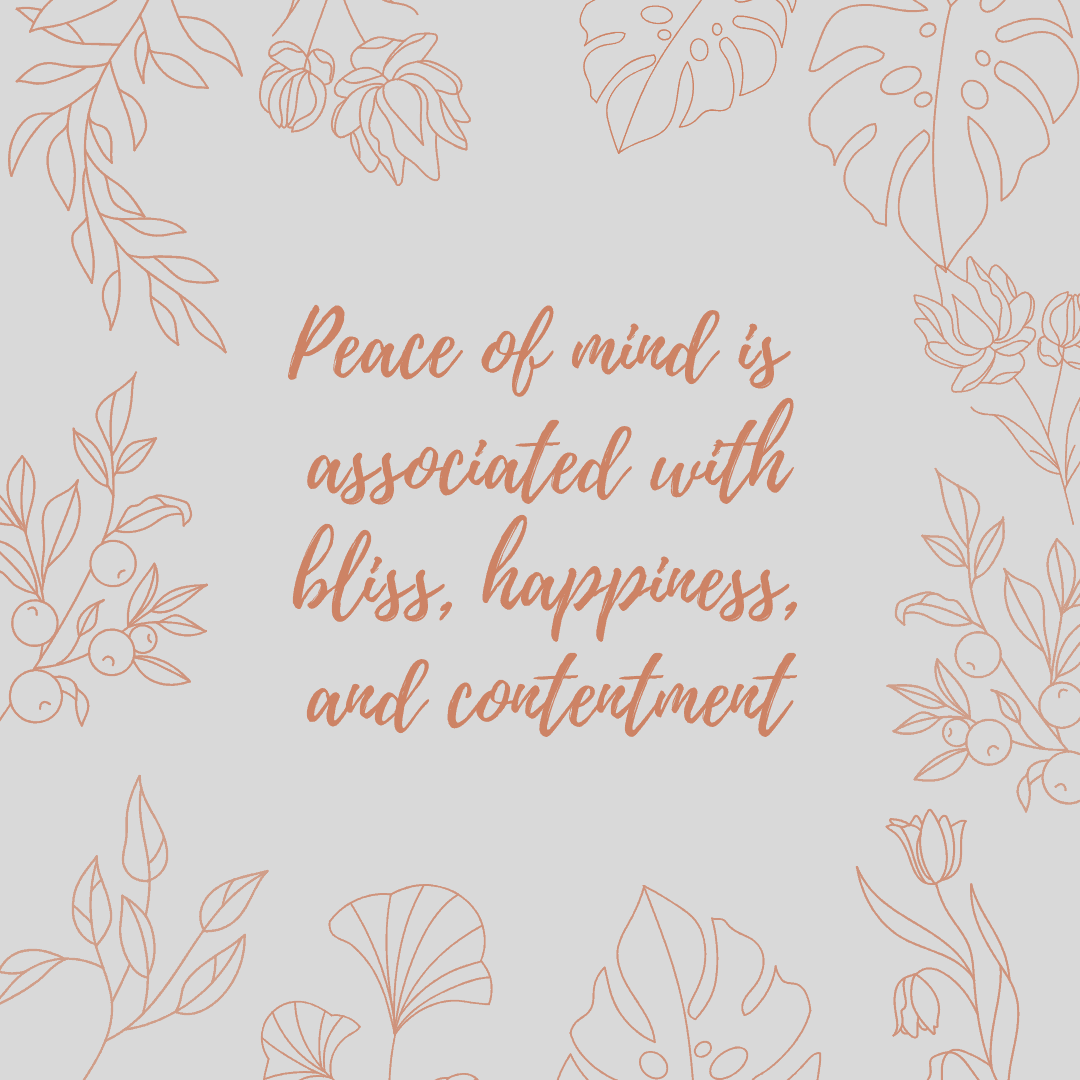
"Inner peace refers to a deliberate state of psychological or spiritual calm despite the potential presence of stressors. Peace of mind is thus, generally associated with bliss, happiness, and contentment."
The first line says, "Despite the potential presence of stressors." Do you realize that it doesn't say "in the absence of stressors?" This goes on to suggest that inner peace doesn't take away your problems. It doesn't take away national issues that affect you either or just instantly solve all the jigsaws in your life. Note again that it doesn't just say "stressors" but "potential stressors." What does that mean? Everyone knows that life isn't a bed of roses so even if anyone happens to be lying on the side with an abundance of roses, there is this constant thought of "what if?" What if I lose everything tomorrow? What if someone I love dies tomorrow? What if I fail my finals? What if I lose my job? As much as you try to ignore these thoughts, you can’t deny their presence or stop them from coming. So what’s the point of the whole inner peace thingy? It makes you calm even when these thoughts abound. The literal meaning of inner peace is, "a state of mind where calmness and satisfaction exist with all other unwanted factors being constant.” This brings leads to the definition of lasting happiness. People say that happiness depends on happenings which means that bad events take away our happiness. In reality, bad events tamper with our minds but this is where peace of mind comes to play. When inner peace exists, it does so with happiness so when these so-called bad events come around, the worst they can do is make you sober and more reflective. Your mind remains at peace.

What Does It Mean to Have Inner Peace and Lasting Happiness?

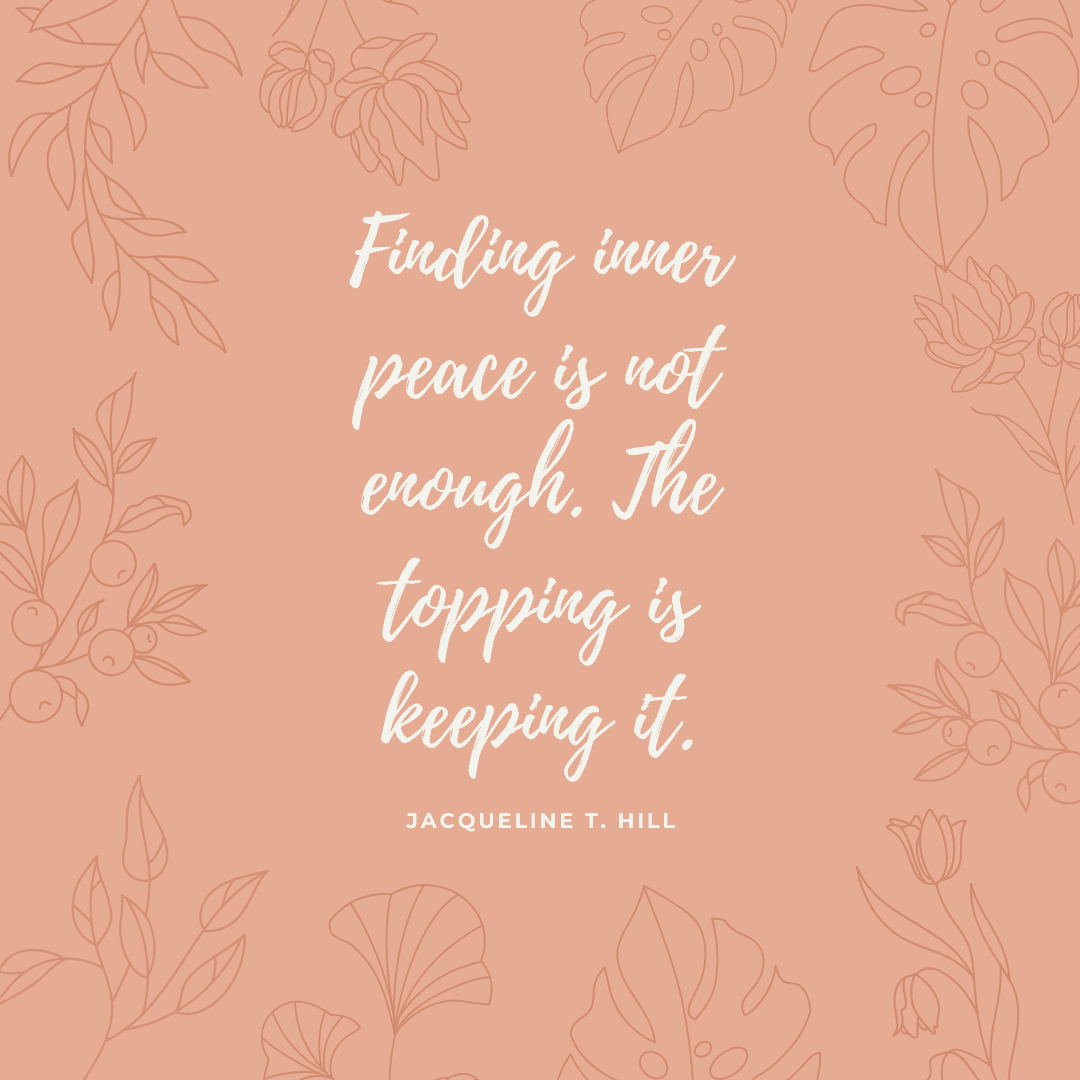
Knowing what inner peace and happiness mean is quite different from having it. Ironically, many people know about this concept and can even teach it but nothing about their lives depicts it. You may have seen people who always appear happy and lively no matter what happens and you just keep wondering if they live on the same planet as you do. Probability is that they have mastered the art of finding and keeping their inner peace. You heard that right: they have mastered the art. Finding inner peace is not enough. The topping is keeping it. Look at it as a messy room – our minds can rightly be likened to a room. You eat, sleep and work in that room and with all the activities going on, you barely have time to clean it up. You keep postponing clean up time until one day you decide to do it. It feels like a brand new house. The next day, you go back to eating and throwing trash in the same place and one week later, you are back to square one. Cleaning is an art and so is the concept of inner peace. It is something you learn and re-learn all the days of your life. The day you stop the practice, your mind begins to go back to being occupied with unnecessary stuff that makes it very unattractive. When your peace or happiness is threatened, the first thing that comes to mind is "find a quick fix." Sadly, this quick fix doesn't even lead you to talk it out with people who could help but instead, you take to Netflix, ice cream, binge-eating, and binge-watching or drinking all night. By morning, you get sober and the feeling of sadness and emptiness dawns on you again but this time, heavier... This keeps you moving in the same cycle; hence the increasing number of health-related cases globally. One thing we fail to realize at that moment is that all those solutions are fleeting and that is the distinguishing factor between all of them and inner peace. Inner peace is not a quick fix. It takes years of mind-conditioning but the results are always glaring and cannot be ignored.

Why Is Inner Peace Important?

Inner peace is important for the following reasons:
  • You begin to see and appreciate all the little things you never thought were important like the ability to walk, eat, breathe, having a roof over your head and even the sun that never fails to rise.
  • It teaches you to be patient because, at the end of the day, we'd all be on the same day. Nobody has ever hurried into the next day.
  • You learn how to maximize every single moment knowing fully well that we would all leave this world someday.
  • It teaches you to take things one step at a time. We all tell ourselves that phrase especially when we find ourselves in a mess but we never really actualize it until we find inner peace.
  • You would begin to see drastic changes in your health and wellness. Food and alcohol are no longer an escape route because you realize that there is really no escape from this life.
  • Your relationships and friendships take a positive turn because you have learned to appreciate every moment you have with the ones you love.
  • As your health improves, you will also notice that you stop aging so fast. In other words, peace of mind is an anti-aging factor.
  • You steadily gain control over aspects of life that you can control. Habits and lifestyles are some of the things you can control and the realization of inner peace help you handle those aspects well.
  • You feel more confident to take on challenges and tasks you would ordinarily shy away from.
  • You would be able to handle losses and other unfortunate events gracefully and not pretending to be handling them well.

How to Find Your Inner Peace and Happiness

Like many other concepts, there is no one-size-fits-all when it comes to finding inner peace. However, all of the points provided here would prove effective in your journey to finding it. Use these steps to find inner peace:

1. Declutter Your "Room"

As mentioned earlier, your mind can be likened to a room. When that room is occupied with thoughts of "what if" and "how not" plus work issues and family matters, there is no way you'd have enough space to do other things. This would take lots of practice and patience with oneself because you can't just tell yourself, "Hey, stop thinking" and boom! You just stop. You have to consciously remind yourself to not overthink things and only take what you can handle. Even the bravest people break down, so take some time to clear your mind of unimportant matters. You need that space.

2. Take Responsibility for Your Actions

It takes a whole level of maturity to take responsibility for your actions, especially when it's something you're not proud of but to find your inner peace, you have to accept your faults and all.

3. Accept the Fact That You Are Human

Alongside taking responsibility for your actions, realize that you do not have control over everything. You’re human and there’s only so much you can do about anything. When you finally come to terms with this, you would stop blaming yourself for stuff that you did not cause and could not prevent.

4. Your Issues Don't Define You

When facing a long term illness or disability or going through a series of tragic experiences, many are tempted to look at themselves through the eyes of their experiences (which is no surprise when others do the same). You are NOT your issues. Yes, you may have anemia or have lost someone but that is only a minute part of your life. It doesn’t entail your whole life and it certainly doesn’t describe you. Constantly remind yourself of this and watch people change their perception about you as well.

5. Set Boundaries for Yourself

We all like to be free and do whatever it is that we dream of, so boundaries may sometimes look like our enemies but they aren’t. Instead, boundaries help us stay in check and be in charge. Therefore, the sooner you start setting boundaries, the better. Some of the boundaries you should set include social media time, talk time, TV time and work time.

6. Take a Break

If you struggle to take breaks, then you are the one person who needs it the most. Even phones and laptops begin to overheat and lag when they are used for long periods at a stretch. It’s okay to put your life on hold for the world. Go on a vacation. Travel the world. Visit a park.

7. Be Early

This may not sound like an "inner peace hack" (because there's no hack to this thing) but it does help with keeping your inner peace. Have you noticed how confused and disorganized you get when you're running late for an event? You just get tensed and worked up trying to figure out things if any goes wrong. So, when you have to be at an event try to get there at least fifteen minutes before the time. You would notice how calm you’d be even if anything goes wrong because there would be a few minutes to sort it out.

Final Thoughts

Once again, there is no one-size-fits-all when it comes to finding your inner peace, so these steps may not be exactly what you expect. The good news, though, is that these steps provide the basic foundation you need to find it. As you work on these, you will begin to find out other things you need to start or get rid of to hit that climax of inner peace and lasting happiness.

More to Calm Your Mind