I’m going to tell you the secrets on how to start taking action on your dreams. The even better news is that these are actionable tips you can start today! The first thing I want you to do is think back to when you were a child. Our childhood selves hold many of the secrets to realizing our real life dreams. Think about what you loved to do most and how you told yourself it was possible without worrying about what might get in the way. I’d like you to reconnect to your imagination and playfulness. By taking the following steps, you’ll do some playing and storytelling to reveal your dreams and start making them come true.
1. Tell Your Story
Your life story is unique and has brought you here today. The next chapter of your life is in your power to write and to realize. Not everything that happens to you is in your control((Forbes:
6 Ways To Stop Stressing About Things You Can't Control)), but the actions you take and how you choose to feel about what happens
are in your control. Finding out what our future lives and dream lives might look like can be done effectively through the eyes of our childhood selves. Can you remember what you loved to do most as a child? Maybe you enjoyed collecting things like me–I always had a collection of pebbles in a carrier bag that smelled of seawater nestled under my bed. Perhaps you loved taking care of your pets: I had a dog, a tortoise, and many guinea pigs. Or maybe you were really great at making stuff. You can use the instincts, passions, and skills you had as a child to fuel your progress toward your adult dreams. I’m inviting you to really think about what you wanted to be when you grew up((CNN:
What's the perfect job for you? Ask your five-year-old self)) and the memorable activities you enjoyed as a child, the ones that gave you a real sense of freedom and excitement, or the pursuits that you truly lost yourself in. What we call getting into our flow state((BBC:
The ‘flow state’: Where creative work thrives)) as an adult is what came naturally to us as children. So, go back there now and think about how that felt. It may clue you in to what still remains true and important to you today.
2. Define Your Dream
The first secret when you want to take action on your dreams is to know what they are. This sounds obvious, but so many people only have a loose definition, such as: "more free time," or "more money." Busy people know there is something else to life apart from slaving away for a job, or a boss they don’t like, but if you’re too busy to even know what your dream looks like, how can you make it come true? Once again, I’d invite you to connect to the optimism and playfulness of your childhood self. Go back to thinking about what your dreams involved at age seven or eight. Some of those may still be what you want today. Now write down what it is that you want and when you want to achieve it. Note down how you’ll know when you’ve got there and made this dream come true. How will you measure your success?
Be as specific about your goals as you can. A study at the Dominican University in California((Dominican University:
Goals Research Summary)) proved that writing down your goals, accountability, and commitment are three key ingredients to successfully achieving our goals.
3. Picture Your Dream Coming True
Think about exactly how it will feel when you do achieve your dream. The sense of freedom and excitement. What will it look like, smell like, taste like. Imagine it in as much detail as you can. If you’re finding it hard to imagine a different life, imagine a childhood memory with all its sensations. As a little girl, I loved to ice-skate, making huge swirly patterns across clean expanses of beautiful glistening ice. The feeling of freedom, of trust in myself to balance, of speed. It felt very immersive, the coldness and my breath turning into little clouds in front of my face. Rosy cheeks and the happy ache of my legs afterwards. Imagine a childhood memory like this, then imagine the future you want, with as much detail and attention paid to how it looks, feels, tastes, smells and sounds. Draw, paint, speak, or write your
future story. If you loved to create pictures like I did as a child, or write stories, or play on the computer, use your natural creative skills and what you love doing to map out your exciting future. You could create a picture,
vision board, written story, or audio file. Remember to include specifics. What is your dream exactly? What does it look and feel like, and how will you know when you’ve reached it? Let’s put that future story somewhere you can easily access it. Make sure that you include a timescale for when you want to achieve this dream by, how you will measure your success, and what you need to get there. If possible, start breaking your dream down into small, manageable steps.
4. What Part Do You Play?
You can’t control everything, so you need to be realistic about your role in making your future dreams come true when you really want to take action on your dreams. Think about where you need help. Once again, go back to childhood. We were not afraid to ask for help from a parent, friend, or sibling to realize our dreams and plans. Whatever we needed, our eager and enthusiastic childhood selves would reach out for support. We’d be resourceful with whatever we had to make our creative ideas a reality. As adults we also need to ask for support and help, and at the same time to notice what is in our control and what we can do to take action towards our dreams.
5. Who Can Support You?
If you’ve noticed you need a bit of help, then get the gang together. Which friends can cheer you on and which can connect you? Who in your family will indulge in your dreams with you? What about the pragmatic ones who might help you work out what you need to get there? Whether you need someone to check in on you and see how you’re progressing, or need a buddy to brainstorm with to help the ideas flow, bring a few of your friends into the plan to help you move forward.
6. Ensure Your Dream Is Realistic
Maybe the dream you’ve outlined just feels impossible. It costs too much or will take too much time to achieve. Instead of telling yourself "no, but," try the "yes, and" approach. This is much more representative of how a child’s mind works. When we were little, we weren’t scared to fail as failing was not a concept to us back then. Let’s harness some of that kid energy and see how "yes, and" can move us forward when our dream feels unrealistic. Let’s look at an example: maybe your dream is to have a hit record, and you think you can’t sing, or you don’t believe you have any musical talent. Instead of closing that down, if we "yes, and" it, we can say: “I want to have a hit record. Yes, and there are so many ways to achieve that. Some people have a hit record by working for a music business, and others might design the cover art. Some people speak on records instead of singing… yes, and someone has to write the lyrics or have the idea for the song. Yes, and I know someone who organizes a choir every Christmas at their local bar, and everyone in the bar is on the record. That amateur choir even got on TV as it was so much fun and all the money went to charity.” So, before you decide your idea is unrealistic, try "yes, and-ing" it to see how you can take action on your dreams, even if you think it sounds impossible!
7. Use Small Wins and Rewards
On your journey toward achieving your dream, there will be
small wins and important milestones; it’s not just about going straight to the destination. Measuring your progress is important and can be a chance to celebrate. Finding a way to measure it that is visible can really help. Whether it’s a chart or an app, whatever you choose, following and celebrating your progress is key, and celebrating that win is part of the joy. Being in the process and on the journey is just as important as reaching your target. Celebrate with the happiness of a small child…do a dance, take a photo, tell your friends.
8. Update the Map
You might find the plan you made isn’t working for some reason. Things have changed, and your goals and targets are not working out for you. That’s ok! Let’s look at how you can change things up and put new life and energy into the project. Take it apart and put it back together again. Define the new plan and the new goals, and start on the next phase of the journey, equipped with the knowledge and learning from what didn’t work.
9. Make Space
Achieving our dreams might mean losing something else, and that’s ok. It could be a literal swap, such as giving up wine to save money towards the goal. Or it could be something more ideological, like giving up saying yes to everything to make more time to focus on your pursuits. Think about what you can give up to make space for your dreams.
10. Use Your Superpower
What’s
your superpower? Use this to take action on your dreams today! Perhaps you’re awesome at using your network to find solutions to problems. If that sounds like you, then consider picking up the phone and start asking for some ideas and connections. If you prefer to research, get reading or watching TED talks and presentations to find practical ways to achieve your particular dream. Who else has overcome a similar problem? How did they do it? What can you borrow from what they learned, and what can you learn from how they won or lost along the way?
11. Keep Your Energy up
Remember to take a rest and recharge on the journey towards your dreams. Take breaks, eat and sleep well, exercise, and listen to and tune in to what your body and mind needs to thrive.
Final Thoughts
Achieving your dreams is unlikely to be an overnight task. It’s more likely to be a winding road with setbacks, lessons, obstacles, and new discoveries. Enjoy the journey! It might take years, but every step, no matter how tiny, can be enjoyed, even the struggles. Maintaining a mindset around enjoying the journey will really equip you to thrive and see those ambitious dreams become a reality.
More to Get You to Take Action Towards Your Dreams

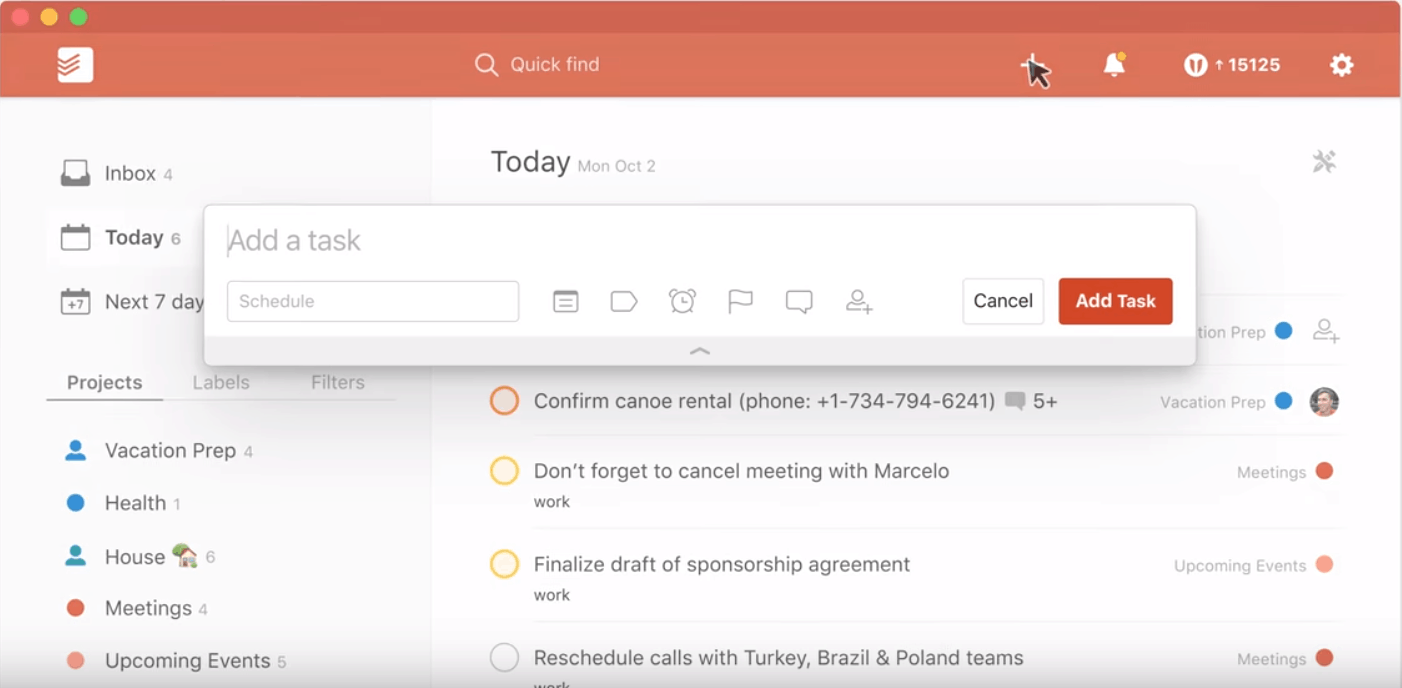 Available for all iOS devices, Todoist is a note-taking and organization app that can keep you on top of all your projects—both personal and professional. Its best features are all free to use, including browser extensions, task creation, and interactive boards you can use to organize all your notes. If you want to pay the optional $29 yearly fee, you can get even more advanced features like backups and automatic reminders. Even with the free version, you’ll stay far more organized. Download: Todoist
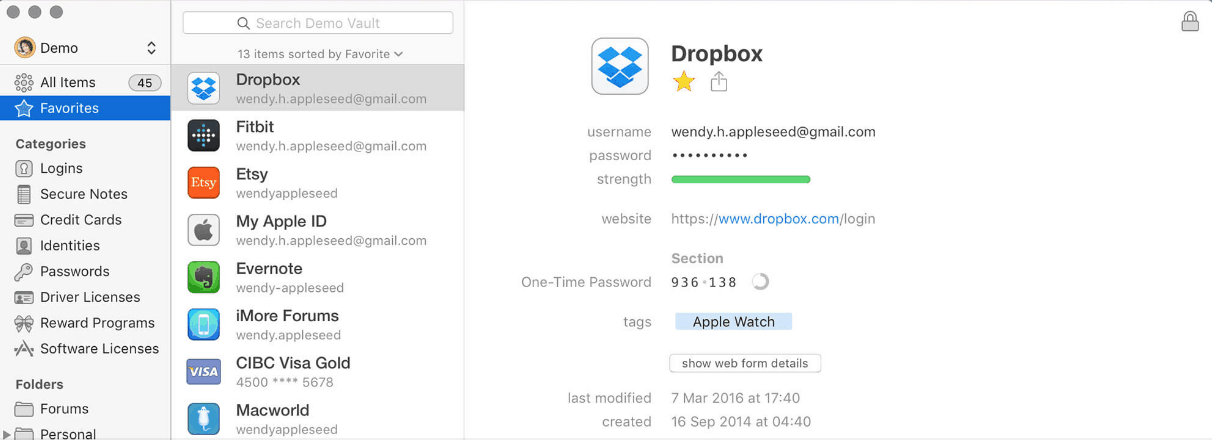 You may not realize it, but you probably spend a ton of time recalling your passwords, especially if and when you forget one to an app you use on a regular basis. 1Password is an app for Mac that saves and remembers all your passwords for you in one place, so you can access all your favorite sites with a single click. You’ll save time and keep all your accounts secure simultaneously. A personal plan is $2.99 per month. Download: 1Password
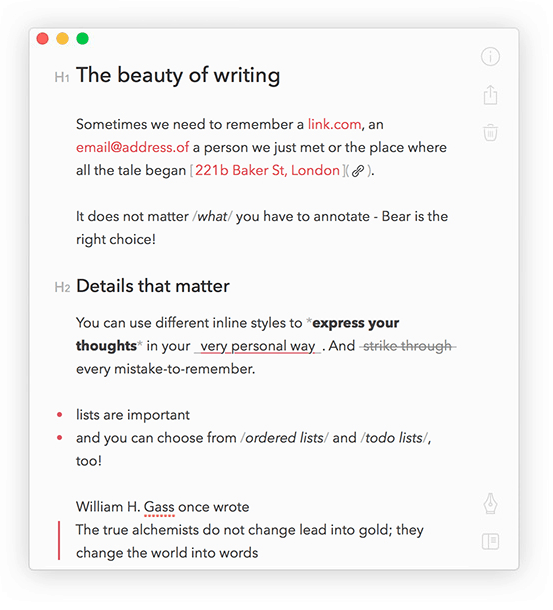 Bear is a unique kind of note-taking app designed to make it easier for Mac users to jot down notes on the go. With it, you can create to-do lists, give yourself reminders, and outline concepts for future brainstorming sessions. It comes with many different inline styles so you can customize your notes to your personal preferences, and remember the context in which you wrote them. The core version is free, with a $14.99 per year version available as well. Download: Bear
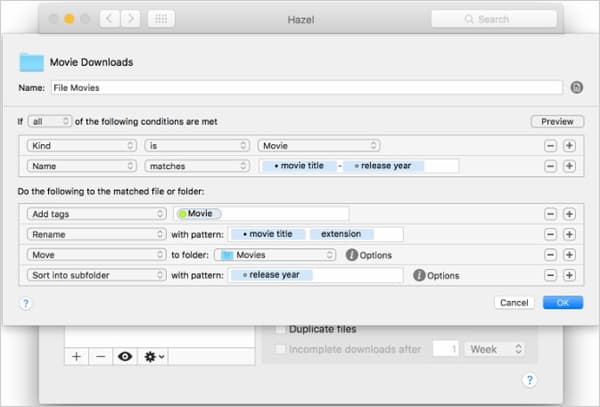 Hazel by noodlesoft is an automated organization tool designed for Mac that will help you automatically organize your files based on any custom rules you want to create. For example, you can set it to move untouched items from one folder into another folder labeled “action items” if they haven’t been addressed within a week. It can save you hours of organization over the course of a few weeks. A single license is a flat $32. Download: noodlesoft
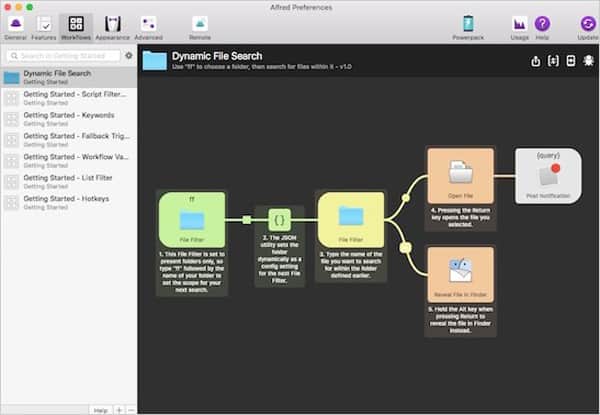 Alfred is an all-in-one app designed to save you time with Mac shortcuts and convenient custom actions. You can use it in a variety of ways. For example, you can access Alfred’s clipboard memory so you don’t copy and paste the same material over and over, or set up custom workflows to automate some of your most repetitive tasks. It’s a paid app, with multiple price points based on the features you desire. Download: Alfred
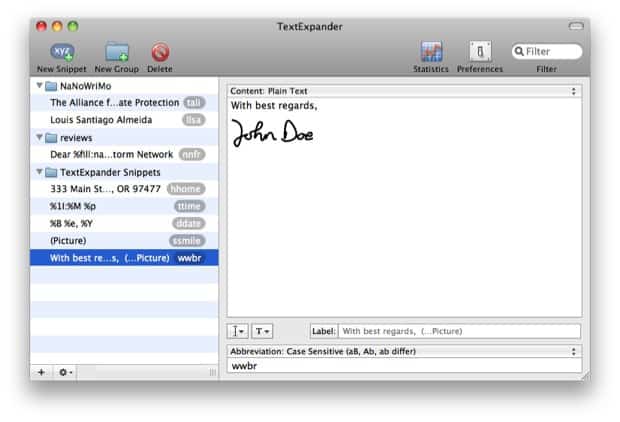 TextExpander does exactly what the name suggests; it allows you to type a short snippet of text, and expand that text automatically. For example, you can create a custom expansion that allows you to conjure a full paragraph you type repeatedly by simply typing a unique abbreviation. Once you get used to your custom combinations, you’ll spare your fingers from typing thousands of words. An individual account is $3.33 per month. Download: TextExpander
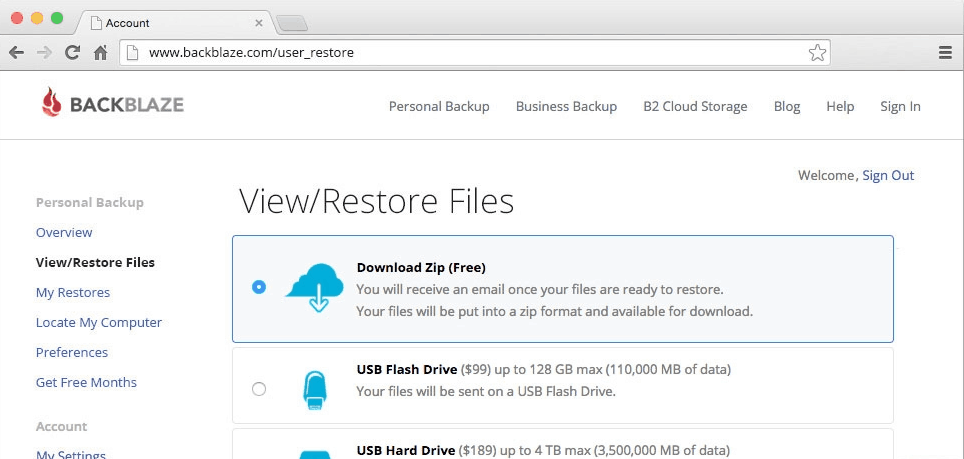 If you’ve ever experienced a crash, or theft of your Mac, you know how much time a system restore can cost you. You’ll spend hours replacing the files you lost, and lose thousands of files that are irreplaceable. Backblaze is an automated, inexpensive way to back up your entire Mac for just $5 a month. Download: Backblaze
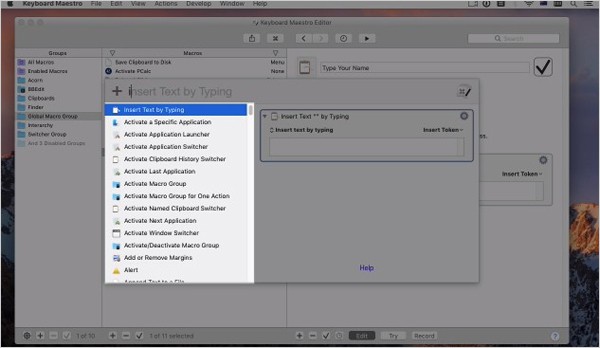 Keyboard Maestro is an older app that still has the power to make your life easier. With it, you can automate any number of tasks based on a certain trigger (such as a hotkey combination, or an event like connecting to a wireless network). A single license only costs $36. Download: Keyboard Maestro
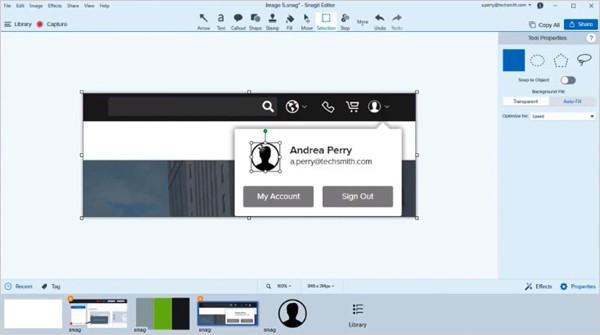 There are many applications for a good screen-capture app, whether you’re trying to illustrate a tech problem you have or just want to make an interesting meme. Snagit makes it easy, with built-in editing for both still images and video. A single license covers two machines, and costs $49.95. Download: TechSmith/Snagit
 Bartender is the cleverly-named app that helps you clean up and organize all your menu bar icons. You can also access them quickly with keyboard shortcuts. If you’re like most Mac users, those icons get cluttered quickly and stop you from working efficiently. It’s free to try for 4 weeks, after which you’ll need a $15 license. Download: Bartender
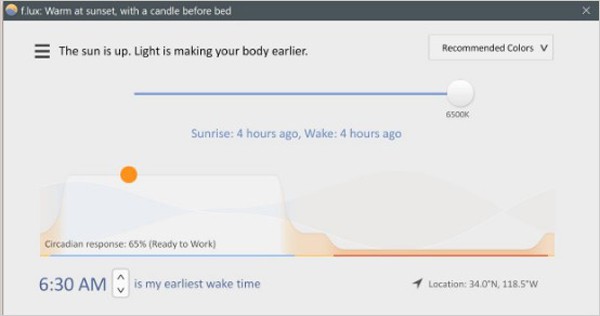 Do you often find yourself feeling tired throughout the day, or feeling unable to get to sleep after a day of staring at your computer? That could be because of the unnatural blue light that radiates from your Mac. Flux naturally adapts your display to emit light that matches the time of day, so you can sleep better and feel less tired. It’s also free! Download: Flux
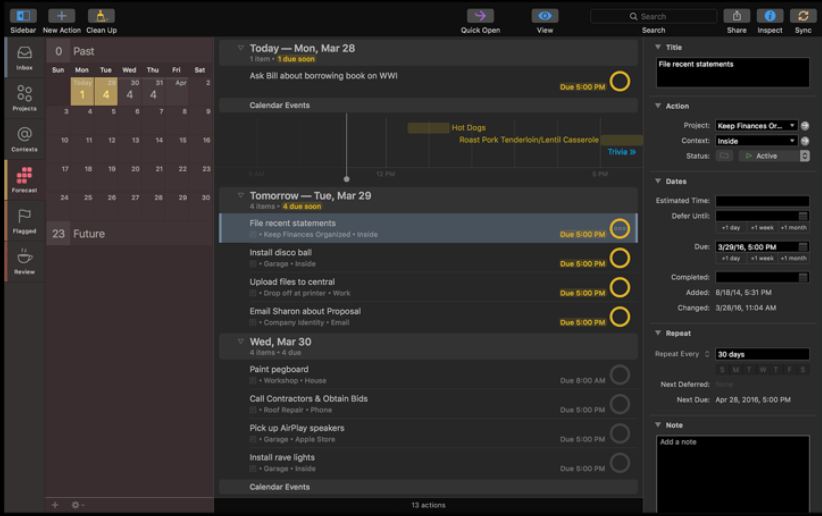 OmniFocus is all about task management. It has a clean interface that allows you to tag your tasks, schedule events, and even automate certain features. It’s one of the most comprehensive solutions on the market, so there’s a bit of a learning curve to get the most out of it. A standard license is $39.99, while the pro version is $79.99. Download: OmniFocus
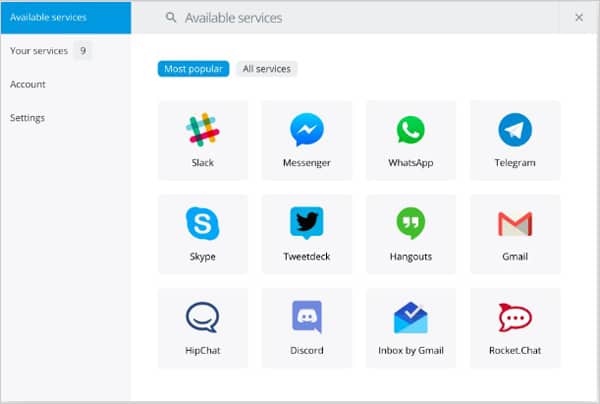 It's tiring to switch between dozens of different chat programs like Facebook Messenger, Slack, and WhatsApp, whenever you want to have a conversation with a different contact. Franz’s solution is simple; offer access to all these apps in one convenient package. And best of all, it’s completely open source. Download: Franz
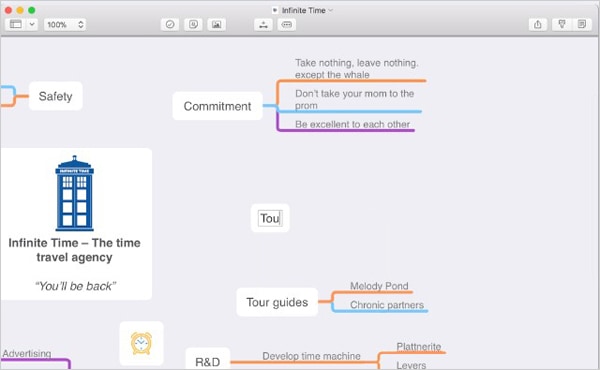 If you’re the brainstorming type, you need an app like MindNode to help you efficiently organize your thoughts. There are dozens of tools you can use to connect ideas in a mind map, or simply jot down notes for future reference. The core app is free, with in-app purchases available. Download: MindNode
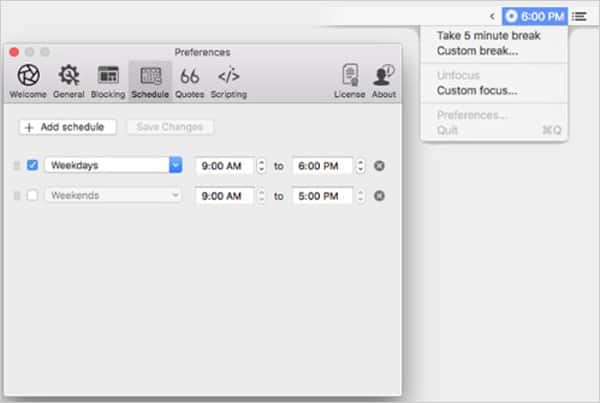 The internet is a wonderful thing, but it can be awfully distracting. And if you’re like the majority of us, you’ve interrupted work on a project because of some attention-grabbing site or bad online habit. That’s where Focus comes in. This app allows you to block the worst offenders with custom time limits and other constraints, so you can focus on the task at hand. A single license is $19.99. Download: Focus
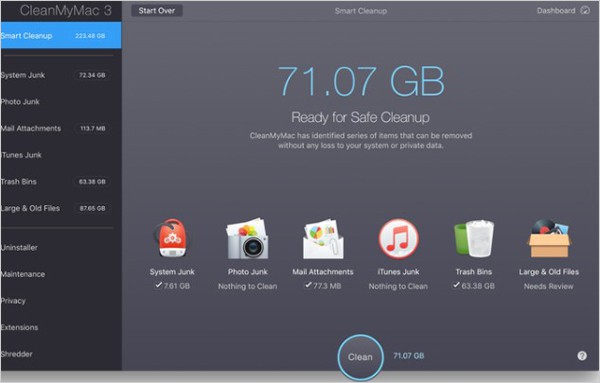 Chances are, your Mac isn’t working as fast as it could, thanks to gigabytes of clutter and unnecessary files on your system. CleanMyMac helps you scan your Mac, monitor its health, and ultimately clean it up—so you can handle all your tasks that extra bit faster. A single license is $39.95. Download: CleanMyMac
 A spelling error or grammatical mistake can cost you big time. It could be the source of a worse grade on a big paper, or compromise your credibility in the workplace. Thankfully, Grammarly can help you. This Mac-integrated writing assistant monitors all your writing and makes live corrections, so you’re alerted to your potential mistakes before they become permanent. A free version exists, but the premium version will cost you between $11 and $30 a month, depending on how you pay. Download: Grammarly


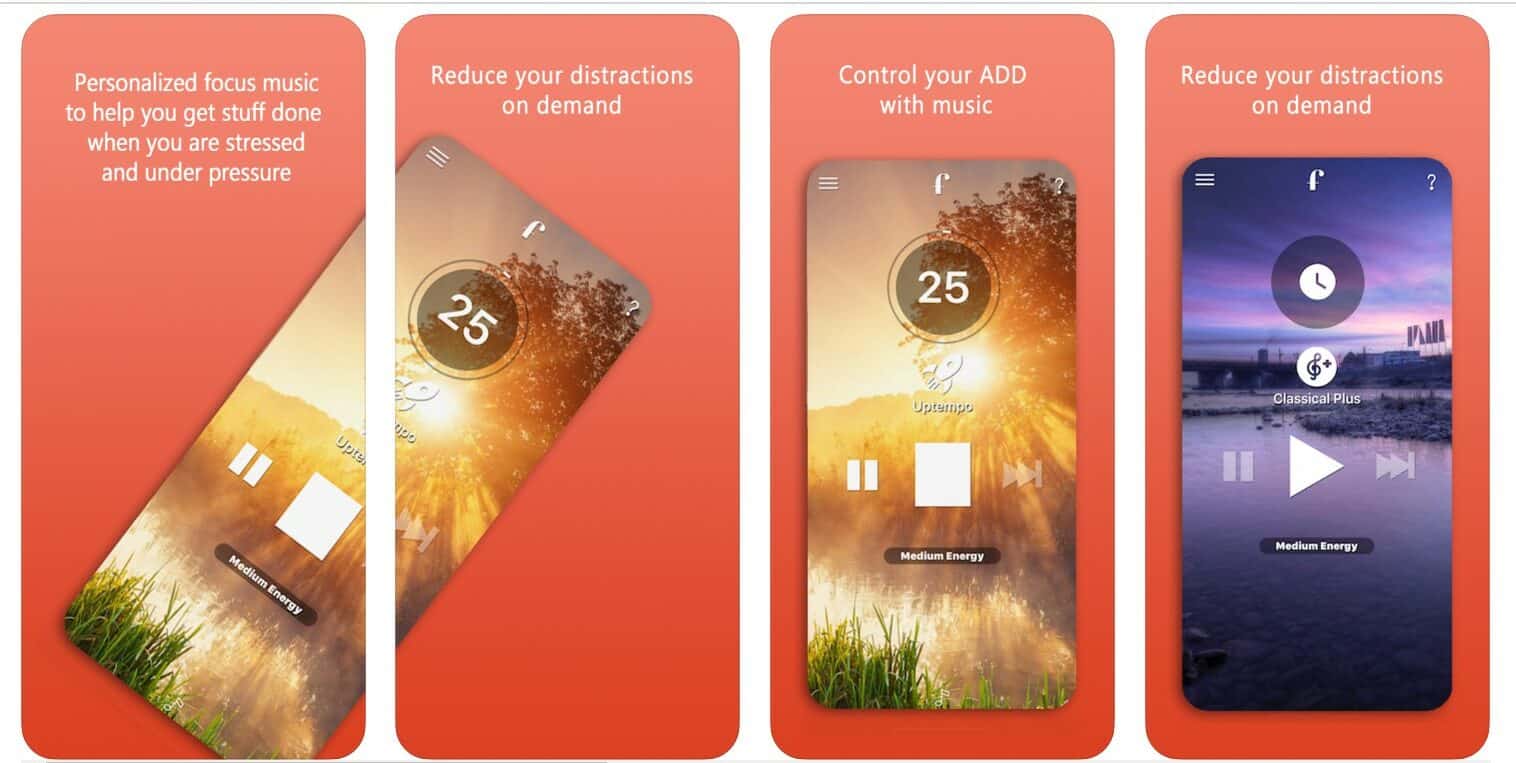 Based on neuroscience research, Focus@Will uses music to boost concentration and get you into a productivity flow. You can choose between different channels, ranging from Baroque piano and ambient music to Electro Bach and the funky beats of Alpha Chill. According to research, the app can extend your focus periods by 200-400%. It also offers a timer function and productivity tracker. A channel recommender helps you pick the right music for your needs, depending on your personality type, the kind of task you’re dealing with, and whether you're struggling with mental health issues such as ADHD. Focus@Will is available for both Android and iOS and as a web app. Subscriptions start at $69 annually.
 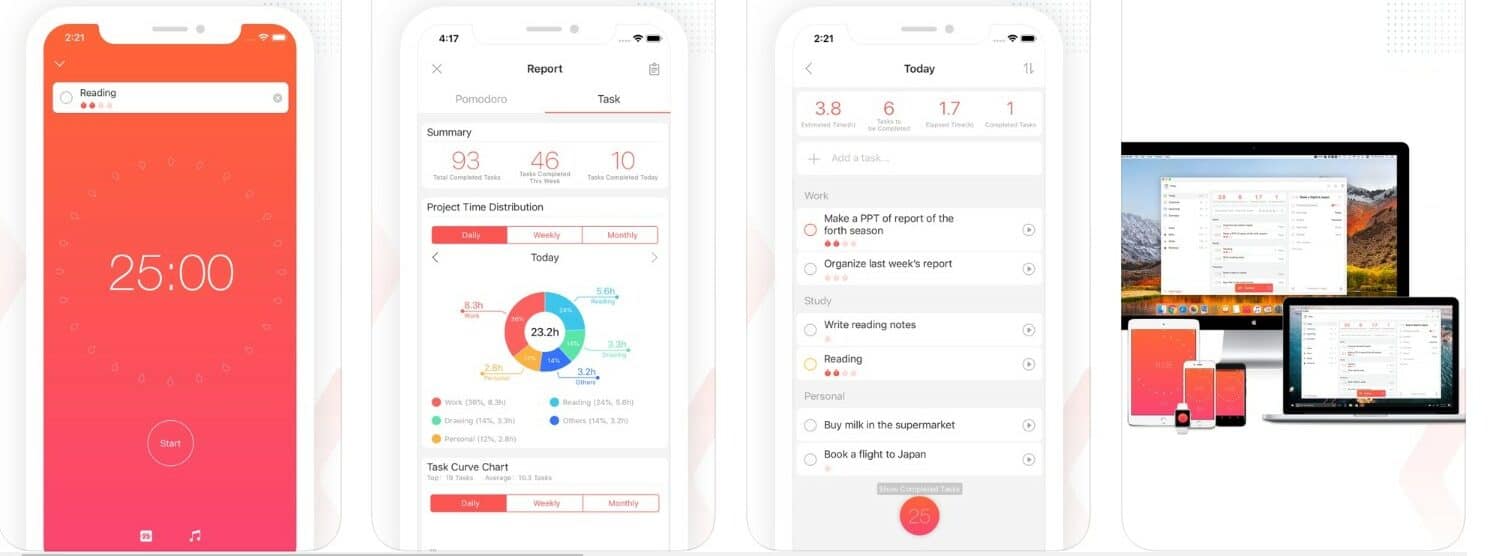 As a great stop procrastination app, Focus To-Do combines the
 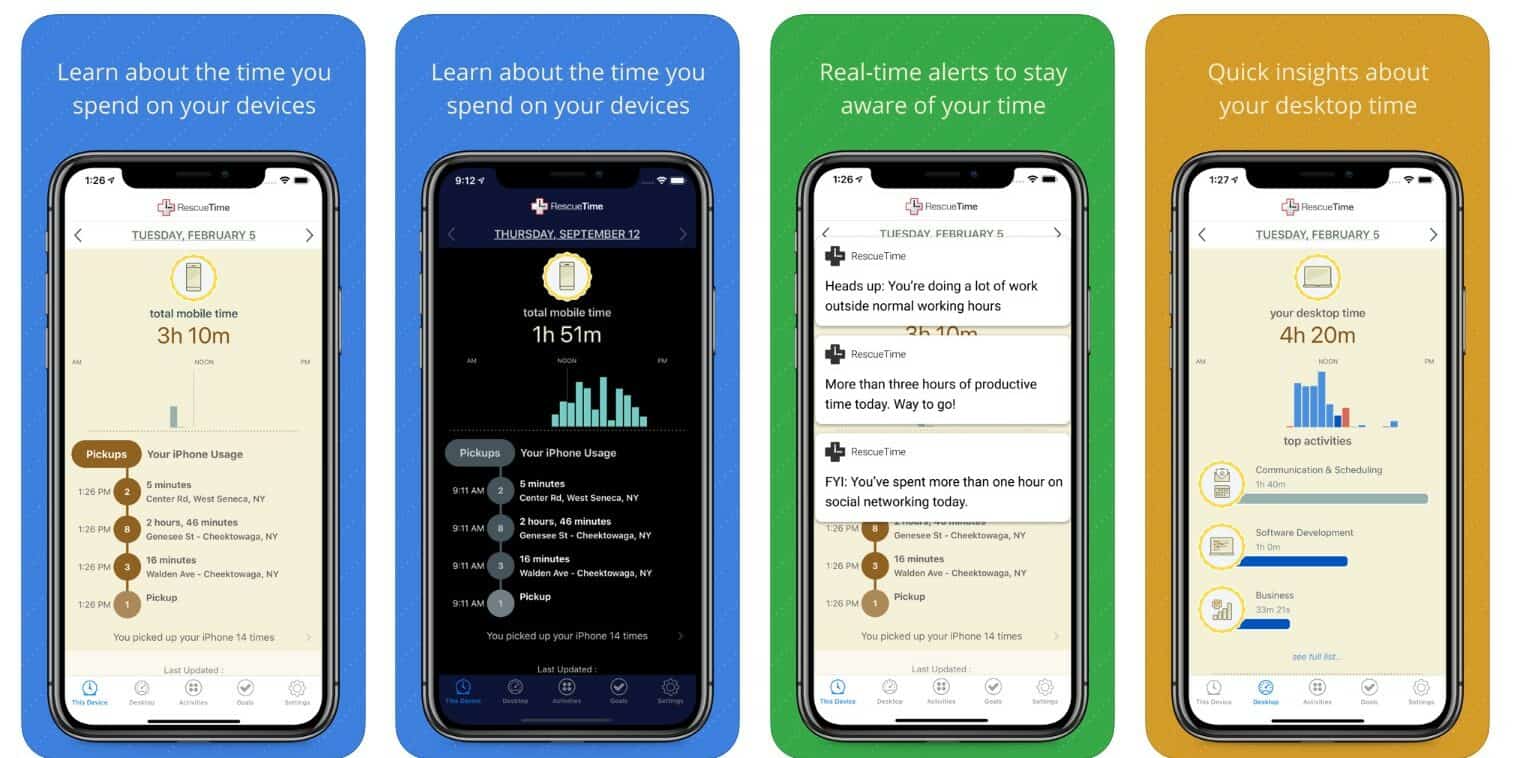 RescueTime boasts a rare 5.0 “outstanding” score by PCMag and is one of the most widely-used productivity tools popular with freelancers, designers, and developers((WP Beginner:
 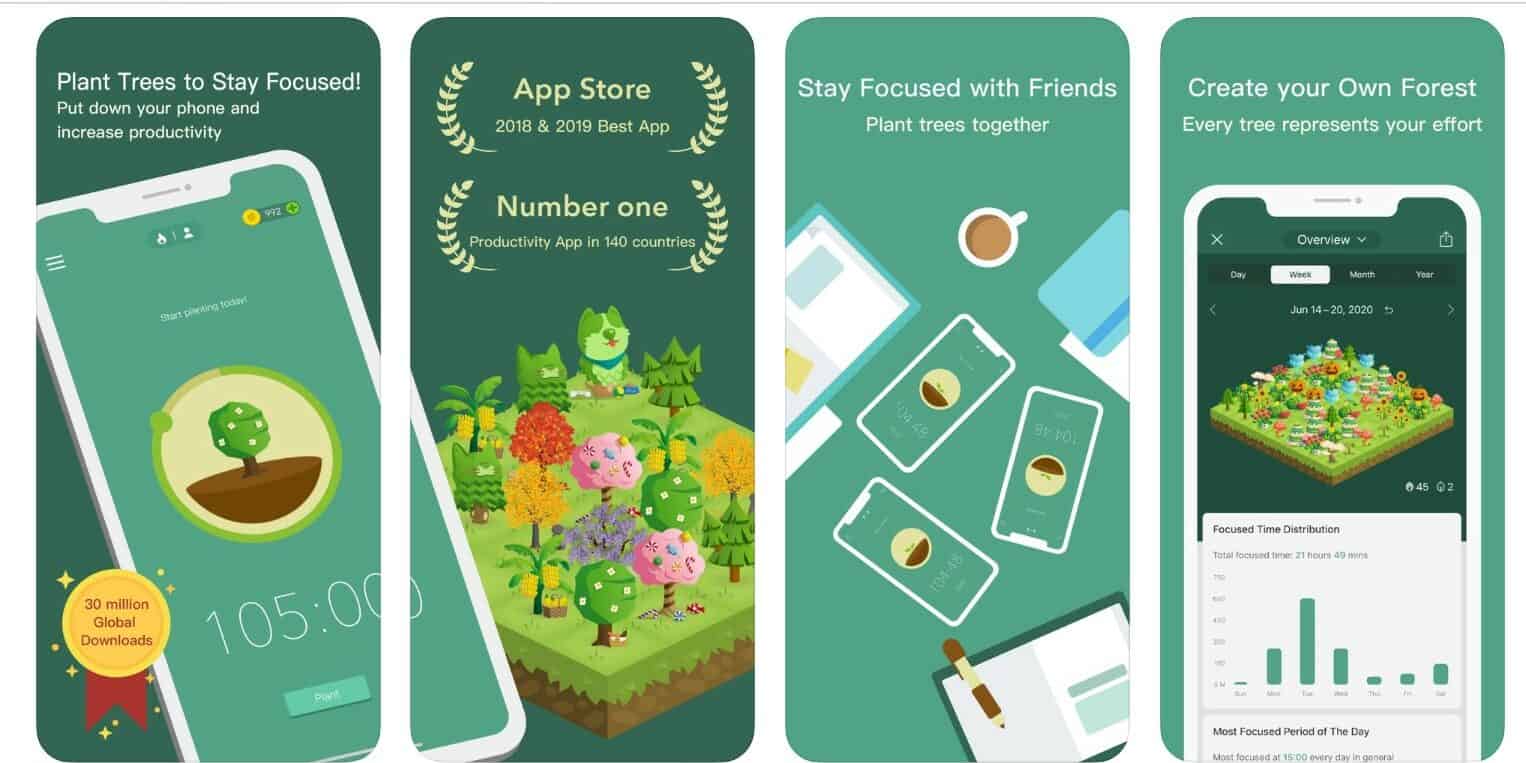 As a gamified stop procrastinating app, Forest is a great way to motivate yourself to stay focused. Each time you start a focus session, you plant a tree in the app. While you work, it will grow on your screen. However, if you leave the app during the session, your tree dies off. The goal is to motivate you to not use your phone, removing a significant source of distraction. By completing your focus sessions, you can grow an entire forest over time. This isn’t just visually appealing, but an uplifting representation of how much work you've managed to get done. Your forest has a real-life impact as well. The larger you grow it, the more “coins” you can earn in the app. And using those, the app team plants actual trees. Forest is available on iOS, Android, and as a Firefox extension. It’s $1.99, with optional in-app purchases.
 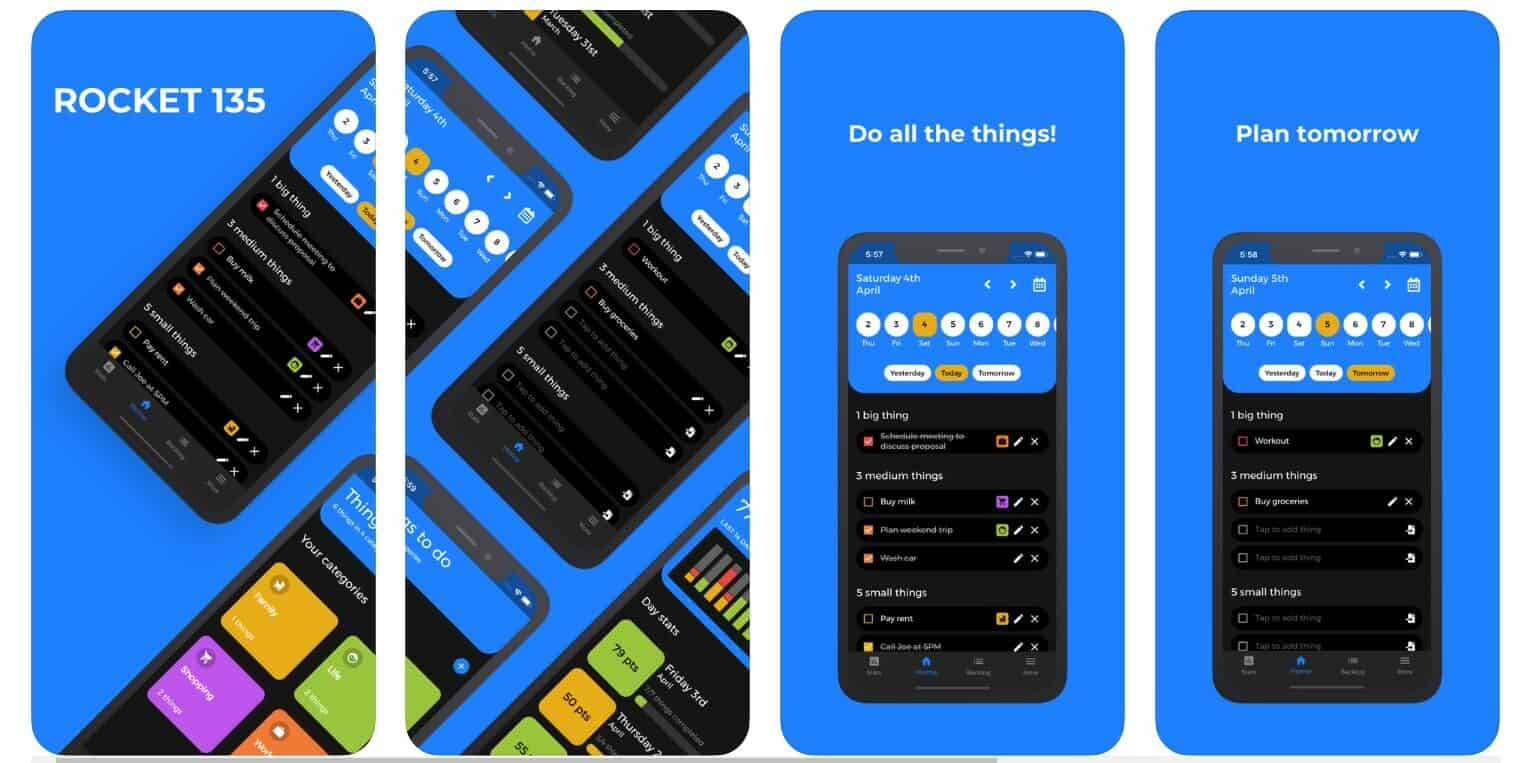 For those overwhelmed by to-do lists, Rocket 135 allows you to prioritize your tasks. Rather than having to face multiple stressful, anxiety-inducing tasks per day, you pick one important project, three of medium importance, and five of low importance to complete. This app lets you customize basic list types, archive tasks, assign them to themes, and collaborate with other users. It synchronizes across devices and offers a limited free version. The premium version is available at $2.50 monthly or $25 annually.
 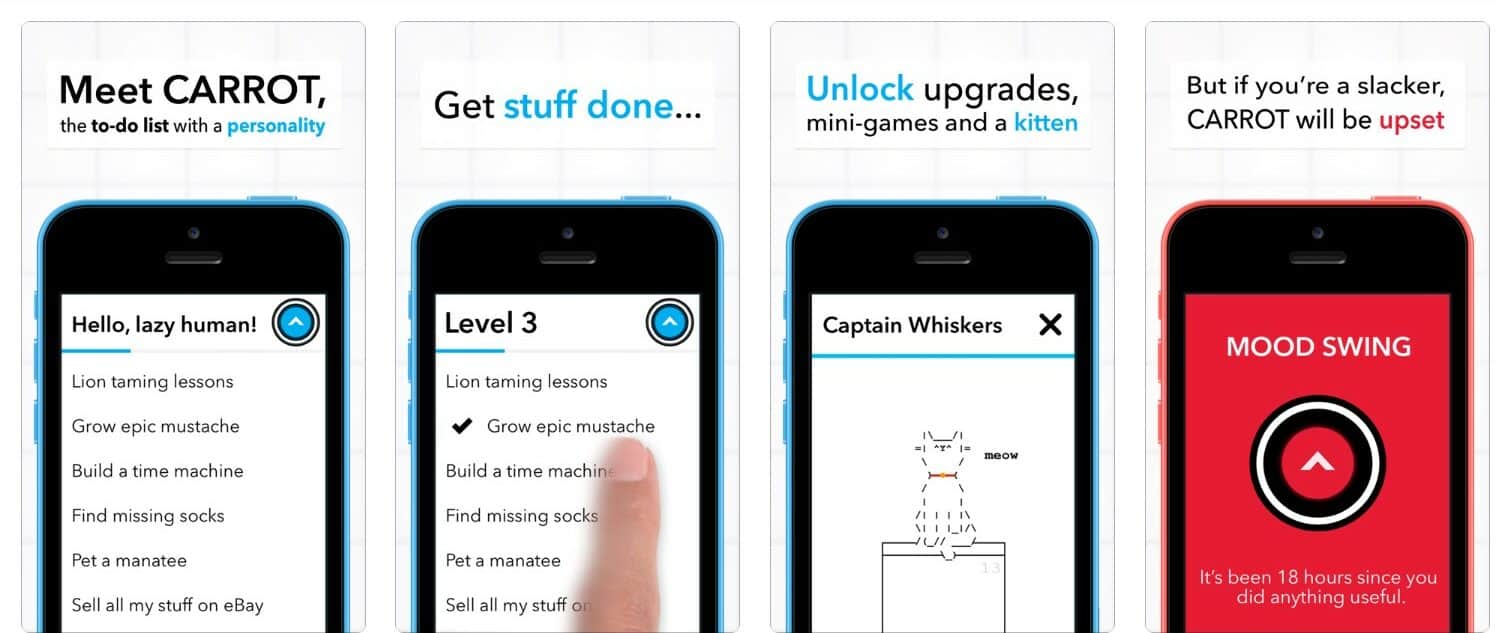 Like Forest, CARROT To-Do is an iOS app that turns productivity into a game to beat procrastination. You can set yourself a simple
 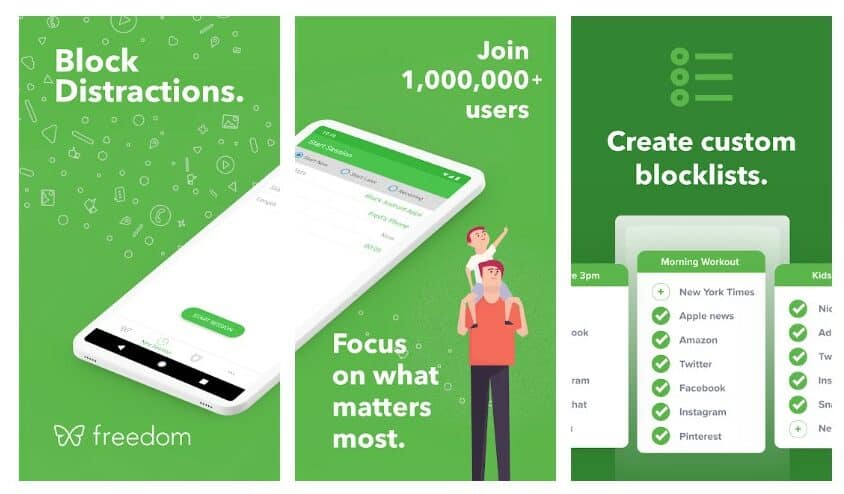 If gamification isn’t your style,
 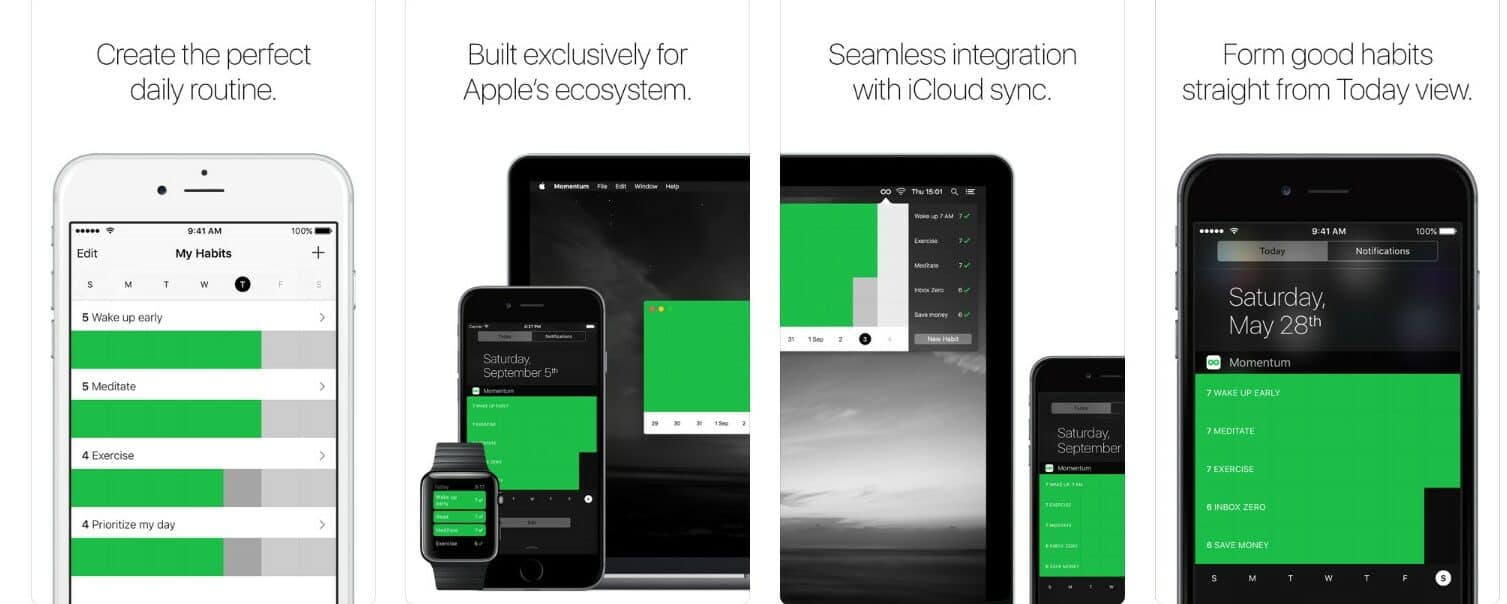 With an aesthetic approach to productivity, Momentum is sure to keep you focused. This browser extension for Chrome, Firefox, and Edge combines beautiful nature wallpapers, a distraction-free time display, inspirational quotes, and a prioritized to-do list. In the free version of the app, you can set yourself daily priorities and other tasks. The premium option, at $3.33/month, also includes a Pomodoro timer and syncs with popular task managers. Momentum is perfect for arriving at work after a stressful commute, or for creating an atmospheric setting in your (home) office.
 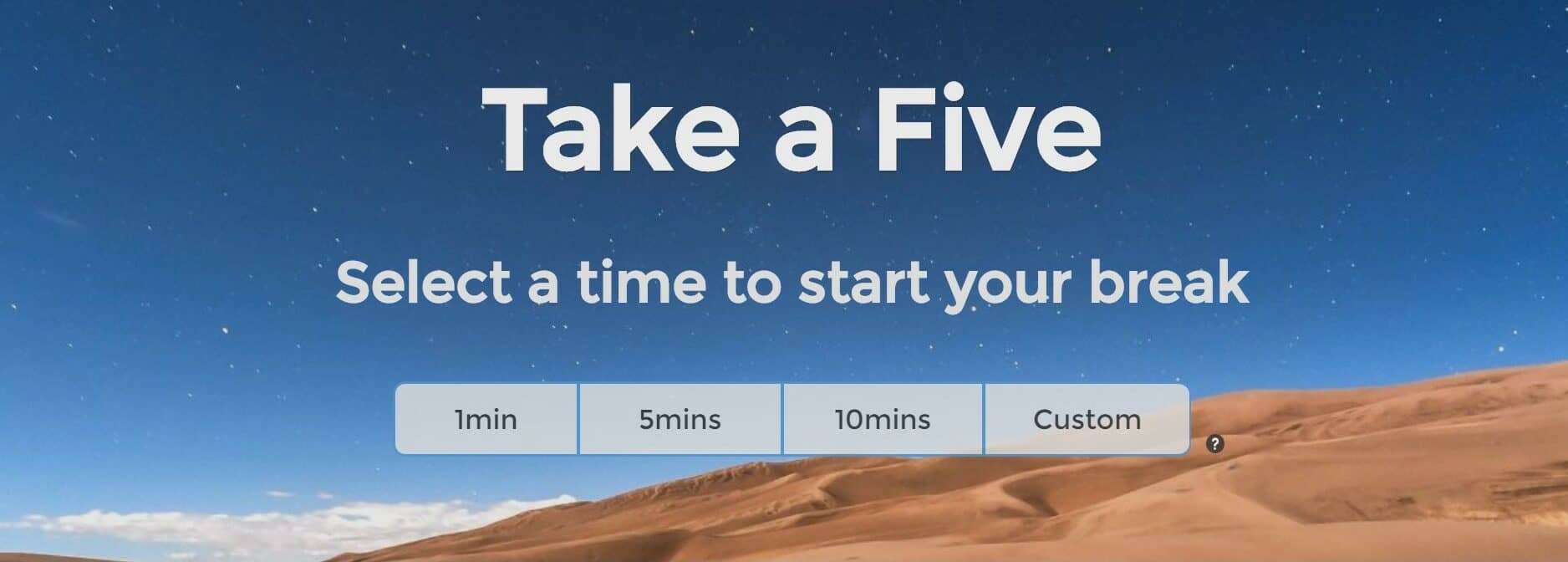 Breaks are essential. Unfortunately, they are also procrastination pitfalls. A quick five-minute breather can only too easily turn into an hour wasted on Facebook. This stop procrastinating app, Take a Five, helps you avoid that. You set a timer for however long you want your
 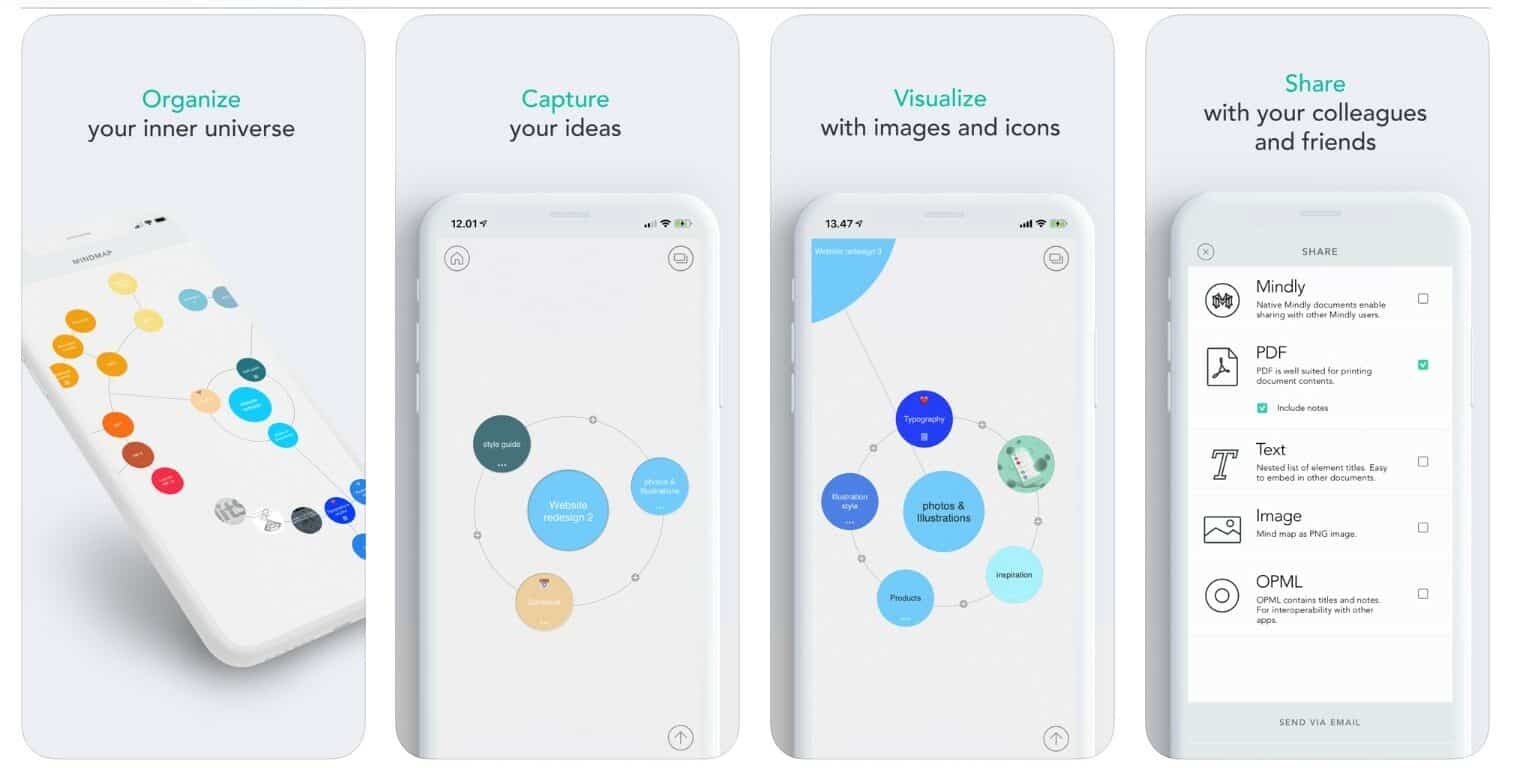 If a single look at your growing, deadline-laden to-do list sends you into a cold sweat, Mindly is the solution for you. This app helps you organize the deadlines, lists, and reminders cluttering your mind in a three-dimensional manner. You can create an infinite number of circles that connect related ideas and projects. Each circle can be color-coded, tagged with summaries, and annotated with emojis. Harnessing the power of associations, you can keep your inner universe organized. Mindly syncs across devices. It offers a limited free version for Android and iOS that can be upgraded to premium for a one-time $6.99. Furthermore, a desktop app is available for Mac at $29.99.

